Bulgur Wheat: The Caribbean Guide to Cooking, Serving, and Enjoying Ble
Bulgur wheat, known simply as ble in Haiti, has long been a staple ingredient in Caribbean kitchens. While many people associate bulgur wheat with Mediterranean and Middle Eastern cooking, it has earned a special place in Haitian and Caribbean cuisine thanks to its affordability, versatility, and ability to absorb bold flavors.
Growing up in Haiti, bulgur wheat was never considered a specialty food or a trendy health grain. It was simply part of everyday cooking. A warm bowl of akasan ble (wheat porridge) often appeared at breakfast, while savory bulgur dishes cooked with beans, vegetables, smoked herring, or fresh herbs were served for lunch and dinner. Like rice, cornmeal, and beans, bulgur wheat was seasoned while cooking and served alongside Haitian legume, stewed meats, poultry, and seafood.
Today, bulgur wheat remains a practical pantry staple that deserves a place in every Caribbean kitchen.

What Is Bulgur Wheat?
Bulgur wheat is made from whole wheat kernels that have been parboiled, dried, and cracked into smaller pieces. Because it has already been partially cooked during processing, bulgur wheat cooks much faster than many other whole grains.
Its mild, slightly nutty flavor and tender texture make it an excellent base for a variety of dishes.
Unlike white rice, bulgur wheat retains much of the bran and germ, making it a whole grain rich in fiber and nutrients.
What Is Bulgur Wheat Called in Haiti?
In Haiti, bulgur wheat is commonly called ble.
Depending on how it is prepared, you may hear terms such as:
- Ble bouyi (cooked bulgur wheat)
- Akasan ble (wheat porridge)
- Ble ak pwa (bulgur wheat with beans)
- Ble ak aran (bulgur wheat with smoked herring)
For many Haitian families, bulgur wheat serves the same role as rice, providing a hearty foundation for everyday meals.
Health Benefits and Nutrition of Bulgur Wheat
Bulgur wheat is more than just a filling grain. It is packed with nutrients that can help support a balanced diet while adding texture and flavor to your meals.
Because bulgur is made from whole wheat kernels that have been partially cooked, dried, and cracked, it retains much of the grain’s natural fiber and nutrients.
A Good Source of Fiber
One of bulgur wheat’s biggest benefits is its fiber content. Fiber helps support healthy digestion, promotes regularity, and may help you feel satisfied longer after meals. Pairing bulgur wheat with beans, vegetables, and lean proteins can create a well-rounded meal that keeps you feeling full and energized.
Contains Plant-Based Protein
While bulgur wheat is not a complete protein on its own, it provides plant-based protein that supports your daily nutritional needs. When combined with beans, peas, lentils, or other protein-rich foods, it becomes part of a satisfying and nutritious meal.
Rich in Important Nutrients
Bulgur wheat contains several essential nutrients, including:
- Manganese
- Magnesium
- Iron
- B vitamins
- Phosphorus
These nutrients help support normal body functions, including energy production, bone health, and overall wellness.
May Support Heart Health
Whole grains like bulgur wheat are often included in heart-healthy eating patterns. Their fiber content may help support healthy cholesterol levels when combined with an overall balanced diet rich in fruits, vegetables, legumes, and healthy fats.
A Nutritious Alternative to Refined Grains
If you’re looking to add more whole grains to your meals, bulgur wheat is an excellent option. It offers more fiber than many refined grain products and cooks relatively quickly, making it a practical choice for busy weeknights.
Naturally Versatile and Satisfying
One of the reasons I enjoy cooking with bulgur wheat is that it works well in both sweet and savory dishes. Whether prepared as a warm breakfast porridge, combined with beans and vegetables, or served alongside your favorite Caribbean dishes, it provides a hearty texture and wholesome nutrition without requiring complicated preparation.
As with any wheat product, bulgur wheat contains gluten and is not suitable for those following a gluten-free diet.
What Does Bulgur Wheat Taste Like?
Bulgur wheat has a mild, nutty flavor with a slightly chewy texture.
Many people describe it as:
- Earthier than white rice
- Softer than brown rice
- More delicate than barley
- Mild enough to absorb seasonings and spices
Its neutral flavor makes it an ideal ingredient for Caribbean cooking, where herbs, aromatics, and seasonings play a major role.
Types of Bulgur Wheat
Bulgur wheat is available in several sizes.
Fine Bulgur
Fine bulgur cooks very quickly and is often used in salads and porridge.
Medium Bulgur
Medium bulgur works well in side dishes and grain bowls.
Coarse Bulgur
Coarse bulgur is commonly used in Caribbean cooking because it maintains its texture during simmering.
Extra Coarse Bulgur
Extra coarse bulgur takes longer to cook and is often used in hearty grain dishes.

How Haitians Cook Bulgur Wheat
Unlike many recipes found online, Caribbean cooks rarely prepare grains without seasoning. One thing that often surprises people is that in many Caribbean kitchens, grains are rarely cooked plain. Just as we season our rice, cornmeal, and beans, bulgur wheat is usually cooked with epis, herbs, and vegetables. A pot of plain ble would have been unusual in my family’s kitchen.
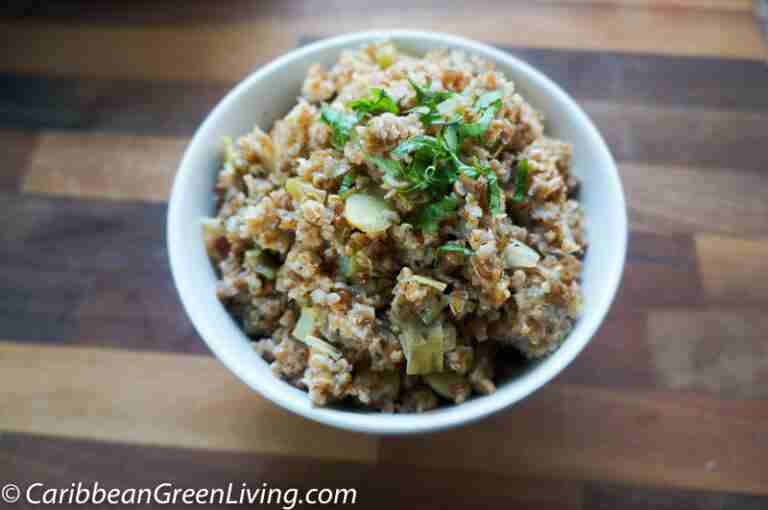
In Haitian cooking, bulgur wheat is often cooked with herbs, vegetables, and aromatics to create a flavorful side dish rather than a plain grain.
Bulgur Wheat with Epis
Epis, Haiti’s signature seasoning blend, adds flavor to bulgur wheat through ingredients such as:
- Scallions
- Garlic
- Parsley
- Thyme
- Bell peppers
- Onions
The grain absorbs these flavors as it cooks.
Bulgur Wheat with Beans
Beans and bulgur wheat are a classic combination.
Popular choices include:
- Red beans
- Black beans
- Lima beans
- Pigeon peas
The combination creates a filling and nutritious meal.
Bulgur Wheat with Vegetables
Many Caribbean cooks add vegetables directly to the pot, including:
- Tomatoes
- Okra
- Spinach
- Leafy greens
- Bell peppers
These ingredients add flavor, texture, and nutrition.
Bulgur Wheat with Smoked Herring
Smoked herring is commonly used throughout the Caribbean and pairs beautifully with bulgur wheat.
The smoky, savory flavor enhances the grain while creating a complete meal with minimal ingredients.
Bulgur Wheat Porridge (Akasan Ble)
One of the most beloved preparations is wheat porridge, known as akasan ble.
Traditionally served for breakfast, it is often flavored with spices and enjoyed warm.

Why Caribbean Cooks Season Their Grains
One characteristic that sets Caribbean cooking apart is the way grains are prepared. Grains are rarely treated as an afterthought. Instead, they are viewed as an opportunity to build flavor from the very beginning of the cooking process.
Rice is seasoned.
Cornmeal is seasoned.
Beans are seasoned.
Bulgur wheat is seasoned.
Across the Caribbean, cooks often elevate the taste of grains by adding fresh herbs, spices, aromatics, and homemade seasoning blends. Ingredients such as scallions, garlic, onions, thyme, parsley, bell peppers, epis, green seasoning, and sometimes tomatoes are commonly used to infuse grains with flavor as they cook.
Rather than relying on plain water alone, Caribbean cooks understand that every ingredient in a meal should contribute to the overall taste. A pot of bulgur wheat, rice, or cornmeal becomes much more satisfying when it absorbs the flavors of herbs, spices, broth, and seasonings. This approach transforms simple grains into flavorful side dishes that can stand on their own or complement stewed meats, seafood, legumes, and vegetable-based dishes.
How to Cook Bulgur Wheat
Cooking bulgur wheat is simple.
Basic Method
- Rinse the bulgur wheat.
- Add water or broth.
- Bring to a simmer.
- Cover and cook until tender.
- Fluff with a fork before serving.
Caribbean Method
For additional flavor:
- Sauté epis, onions, garlic, and peppers.
- Add tomatoes or vegetables if desired.
- Stir in bulgur wheat.
- Add liquid and seasonings.
- Simmer until tender.
This method produces a more flavorful dish that can be served as a side or main meal.
What to Serve with Bulgur Wheat
Bulgur wheat pairs well with many Caribbean dishes. In Haiti, bulgur wheat often appears alongside legumes, stewed meats, fried fish, or poultry in a sauce. Because it absorbs flavor so well, it works beautifully with richly seasoned dishes.
Vegetables
- Legume
- Stewed vegetables
- Okra dishes
Poultry
- Chicken en sauce
- Roasted chicken
- Fried chicken
Meat
- Stewed beef
- Curry goat
- Braised pork
Seafood
- Smoked herring
- Fried fish
- Stewed fish
Grilled Favorites
- Grilled chicken
- Grilled turkey
- Grilled pork chops
Why Caribbean Cooks Season Their Grains
One of the defining characteristics of Caribbean cooking is that grains are rarely cooked plain. Instead, cooks build flavor from the start by seasoning the cooking liquid and adding fresh herbs, spices, and aromatics.
Common grains and starches that are traditionally seasoned include:
- Rice
- Cornmeal
- Bulgur wheat
- Millet
- Beans and peas cooked with grains
To elevate the flavor of these everyday staples, Caribbean cooks often add:
- Scallions
- Garlic
- Onions
- Thyme
- Parsley
- Bell peppers
- Epis or green seasoning
- Broth or bouillon
- Tomatoes and tomato paste in some recipes
This approach allows the grains to absorb flavor as they cook rather than relying on sauces or side dishes for taste. A well-seasoned grain dish can be enjoyed on its own or served alongside stewed meats, seafood, legumes, and vegetable-based dishes.
How to Store Bulgur Wheat
Uncooked Bulgur Wheat
- Store in an airtight container in a cool, dry pantry.
- Properly stored, it can last up to one year.
Cooked Bulgur Wheat
- Store leftovers in an airtight container in the refrigerator for up to 4 days.
Freezing
- Cooked bulgur wheat freezes well for up to 3 months.
- Allow it to cool completely before transferring it to freezer-safe containers.
Frequently Asked Questions
Is bulgur wheat gluten-free?
No. Bulgur wheat is made from wheat and contains gluten.
Can I cook bulgur wheat in a rice cooker?
Yes. A rice cooker works well for preparing bulgur wheat.
Can bulgur wheat be frozen?
Yes. Cooked bulgur wheat freezes very well and reheats easily.
What is the difference between bulgur wheat and cracked wheat?
Bulgur wheat is partially cooked before being cracked, while cracked wheat is simply broken wheat kernels that require longer cooking times.
Final Thoughts
Bulgur wheat remains one of the most versatile grains in my kitchen. I cook it regularly because it is nutritious, affordable, easy to prepare, and works well in a wide variety of dishes.
Depending on the meal, bulgur wheat can be transformed into a warm breakfast porridge, added to soups and stews, cooked with beans and vegetables, or served as a flavorful side dish. It is equally at home in traditional Caribbean recipes as it is in Middle Eastern dishes such as kibbeh and tabbouleh.
One of the things I appreciate most about bulgur wheat is its ability to absorb seasonings and aromatics. Whether cooked with fresh herbs, garlic, scallions, tomatoes, or a simple broth, it easily takes on the flavors of its ingredients.
It is easy to understand why bulgur wheat continues to be enjoyed in so many countries around the world. Its versatility, nutritional value, and satisfying texture make it a practical ingredient for everyday cooking.
If you are looking for an alternative to rice, quinoa, or couscous, bulgur wheat is worth adding to your pantry. With countless ways to prepare it, this humble grain deserves a place on the table far beyond its traditional uses.
Source