What Are Scallions? Complete Guide to Green Onions
Have you ever stood in the produce aisle, staring at a recipe that calls for “scallions,” while looking at a sign that says “green onions“? Or maybe you bought a bunch, tossed them in the crisper drawer, and found a sad, slimy mess a few days later.
Don’t worry, we’ve all been there. Scallions are one of the most versatile, budget-friendly ingredients in your kitchen, but they rarely get the spotlight they deserve. They straddle the line between a vegetable and a herb, offering a sharp bite when raw and a sweet, mellow richness when cooked.
Consider this your ultimate guide to selecting, storing, prepping, and mastering the art of cooking with scallions.
What Are Scallions?
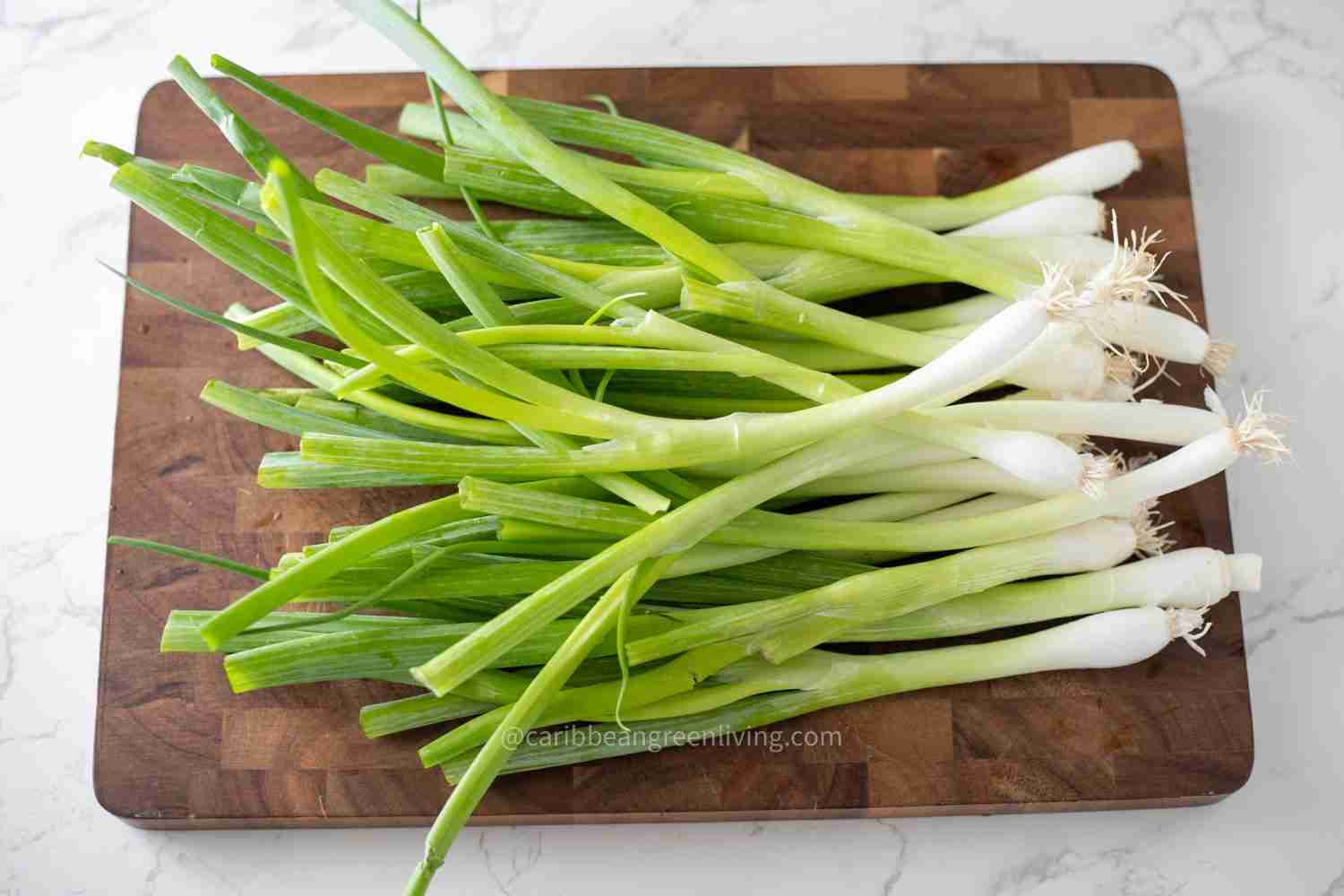
Scallions are members of the Allium family, making them close cousins to garlic, leeks, shallots, and traditional bulb onions. Botanically, they are typically harvested from the Allium fistulosum species (which never forms a true bulb) or young versions of the common onion (Allium cepa).
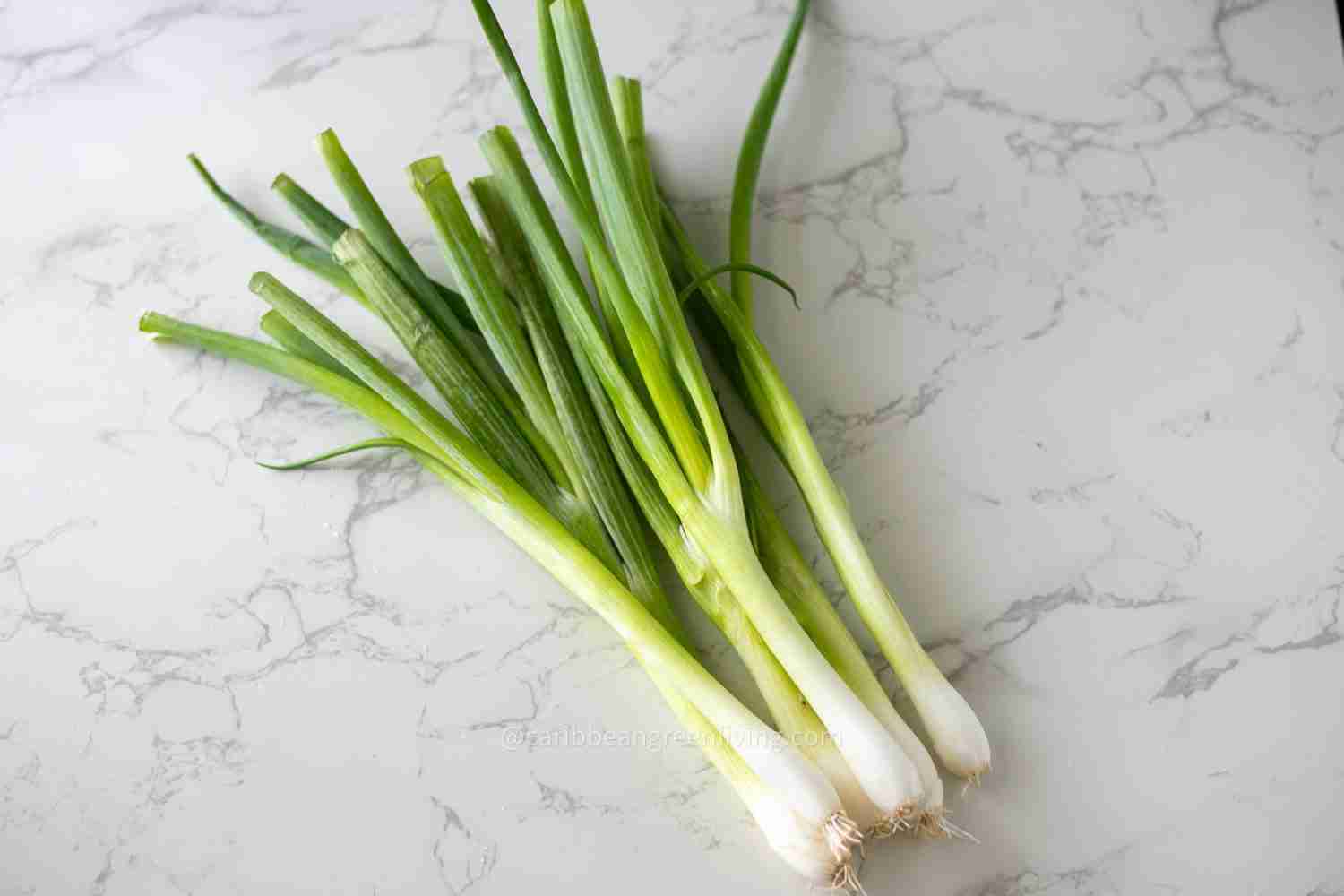
Unlike a standard yellow or red onion, scallions are harvested early, before the underground bulb has a chance to swell. This leaves you with a long, slender plant featuring a crisp white base, a pale green transition zone, and hollow, vibrant green tops. Every single bit of this plant (minus the tiny root threads at the absolute bottom) is completely edible.
Are Scallions and Green Onions the Same?
Yes. In 99% of grocery stores, scallions and green onions are identical. The terms are used interchangeably.
However, you might occasionally run into spring onions, which look remarkably similar but are actually different. Spring onions are left in the ground a bit longer, allowing a small, distinct, round onion bulb to form at the base. They taste slightly stronger than scallions but sweeter than a mature onion.
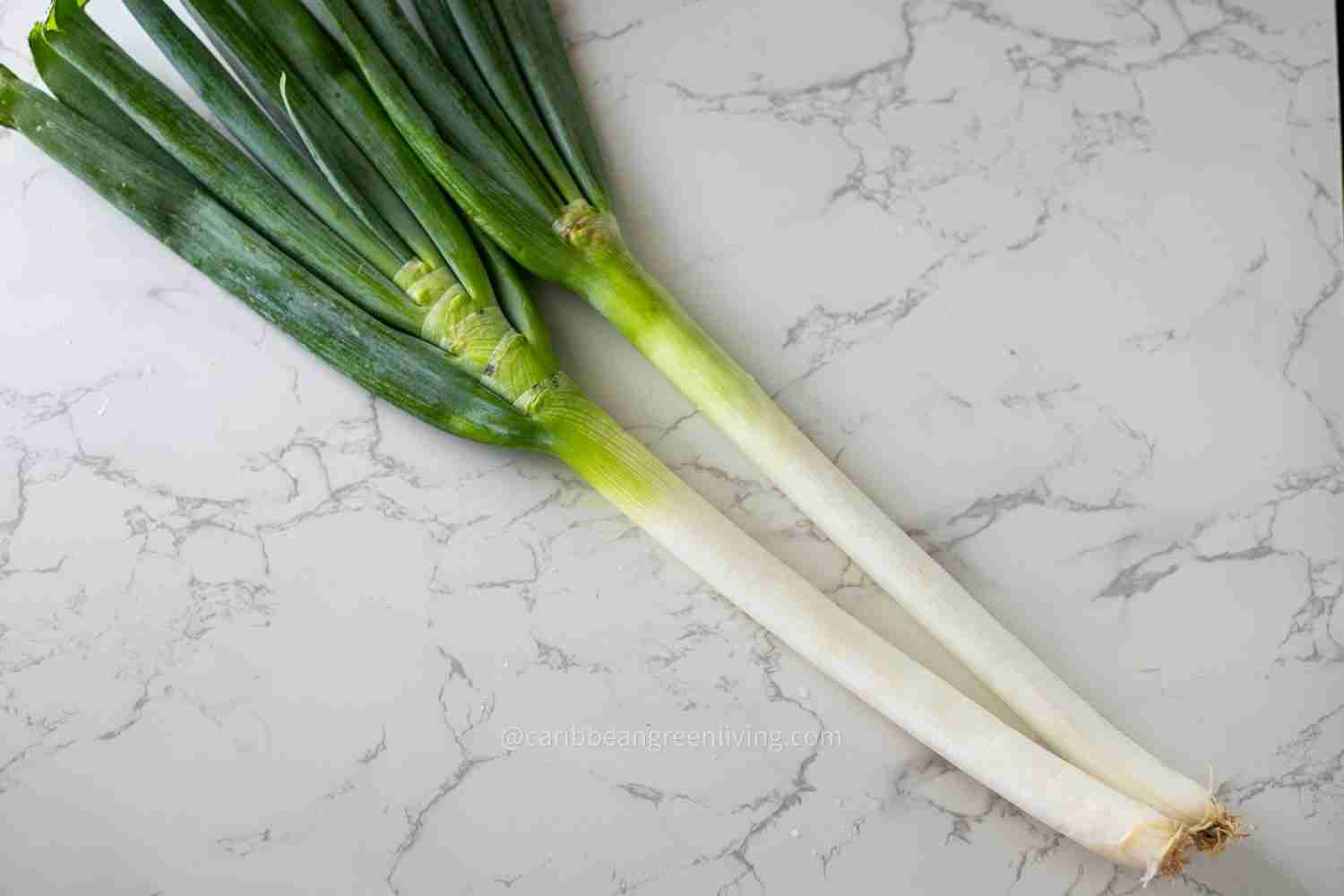
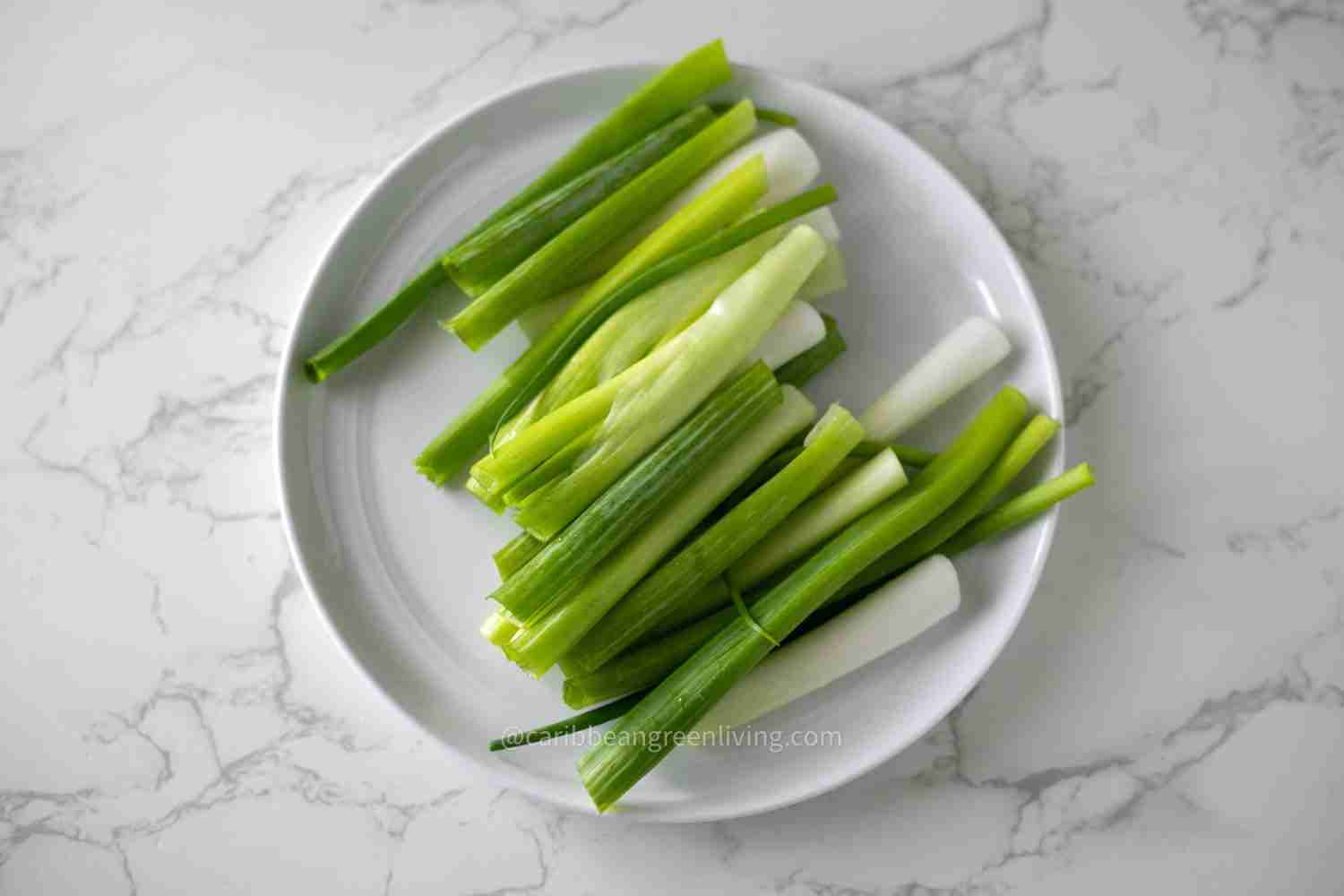
You may also encounter exceptionally long green onions, which are significantly larger than standard scallions. Typically available at Asian grocery stores, the variety pictured here was sourced from a Korean supermarket.
Flavor Profile: One Veggie, Two Personalities
The flavor of a scallion changes dramatically depending on whether you eat it raw or cooked, and which part of the plant you use.
- The White and Pale Green Part: This is the powerhouse. It mimics the pungent, sulfurous bite of a traditional onion, though it’s much more delicate.
- The Dark Green Part: This area is fresh, herbaceous, and mild, with a flavor profile closer to a crisp chive.
[Raw Scallion] ---> Sharp, pungent, crisp, peppery bite
[Cooked Scallion] -> Sweet, mellow, savory, aromatic base
When you drop scallions into a hot pan with oil, those sharp raw flavors undergo a chemical transformation, caramelizing into a sweet, savory foundation that forms the backbone of countless global dishes.
How to Choose the Perfect Bunch
When browsing the produce section, don’t just grab the first bunch you see. Look for these specific visual and tactile cues:
- The Tops: Should be bright, rich green, and stiff enough to stand upright. Avoid bunches with yellowing, withered, or slimy tips.
- The Bases: The white sections should be firm, clean, and uniform. Pass on any that feel soft, spongy, or show bruising.
- The Size: Medium-sized stalks (about the thickness of a pencil) are usually the sweetest and least fibrous. Massive scallions can sometimes be tough and overly woody.
How to Clean and Prep
Scallions grow in sandy soil, so it’s common for dirt and grit to become trapped between the layers near the white base.
I always wash my fruits, vegetables, and fresh herbs before using or storing them. My preferred method is to spray them with white vinegar, let them sit for a few minutes, rinse thoroughly under cool running water, and finish with a light sprinkle of baking soda if needed for extra cleaning. I keep a spray bottle of vinegar and a container of baking soda next to my kitchen sink, making it easy to clean produce as soon as I bring it home.
Peel away the outer layer. If the outermost layer feels slimy, wilted, or papery, gently remove and discard it.
Rinse thoroughly. Separate the green leaves slightly with your fingers and rinse under cool running water, paying special attention to the white base where dirt often hides.
Dry completely. Shake off excess water, then pat the scallions dry with a clean kitchen towel or use a salad spinner if washing several bunches. Dry scallions stay fresh longer and are easier to chop.
Trim before using. Remove the root end and trim any damaged or yellowing green tops before slicing or storing.
Anatomy of a Scallion: White Part vs. Green Part
To elevate your cooking, treat the white and green sections as two entirely separate ingredients.
| Section | Flavor Intensity | Best Culinary Use | Cooking Style |
|---|---|---|---|
| White / Pale Green Base | Strong, pungent, onion-forward | Sautéed bases, stir-fries, marinades, braises | Cooked early in the recipe |
| Dark Green Tops | Mild, fresh, grassy, herb-like | Garnishes, salads, dressings, quick tosses | Added raw or at the absolute end |
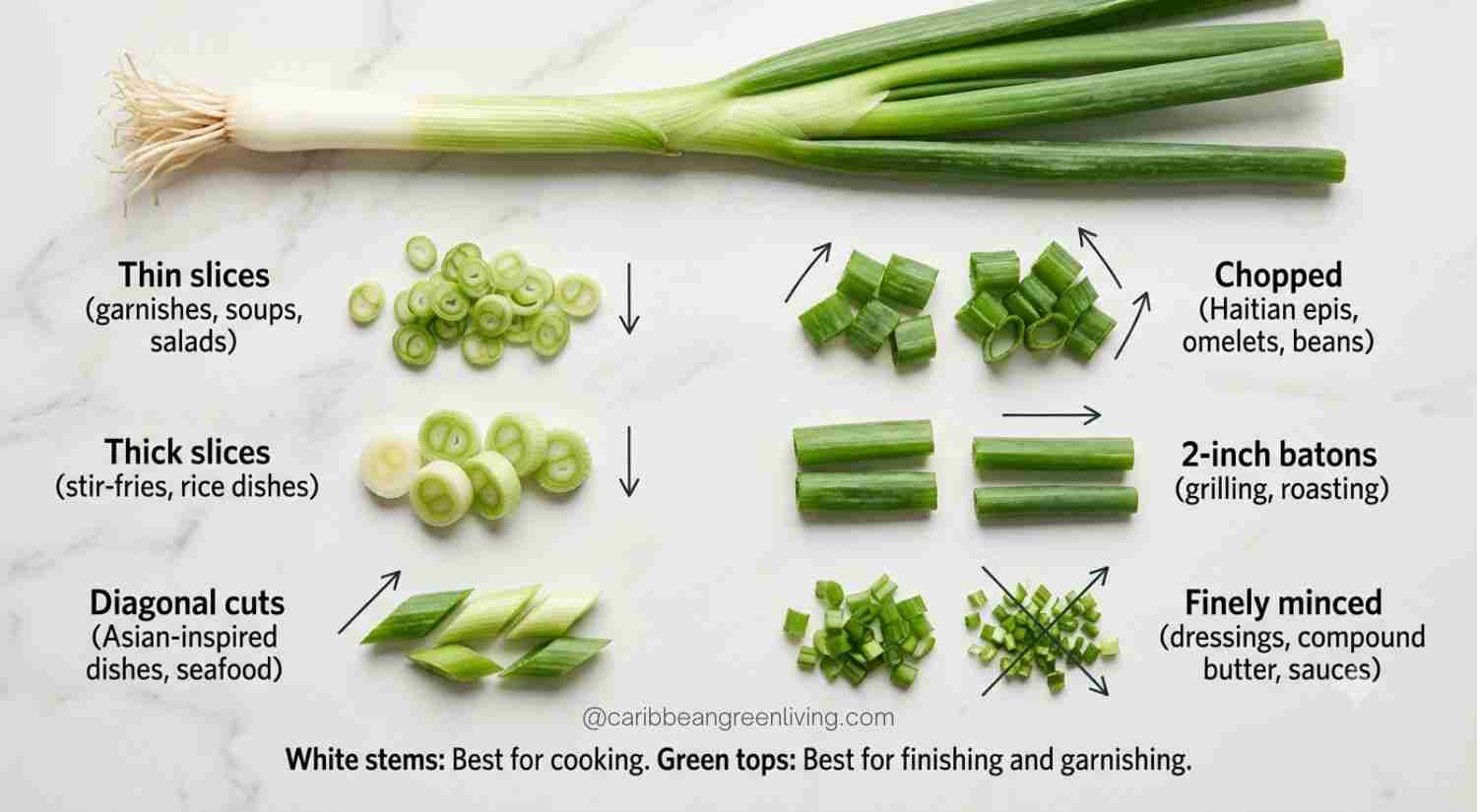
Master Your Knife Skills: How to Cut Scallions
How you slice your scallions alters how they behave in a dish. Always use a sharp chef’s knife; a dull blade will crush the hollow green tubes rather than cleanly slice them, causing them to bruise and leak moisture.
1. The Standard Coin Cut
Slice straight across the stalk to create thin, circular rings.
- Best for: General cooking bases, mixing into batters (like cornbread or pancakes), or classic chili garnishes.
2. The Bias Cut (The Angle Slice)
Hold your knife at a sharp 45-degree angle to the stalk and slice. This yields elegant, elongated oval shapes that offer more surface area.
- Best for: Stir-fries, noodle dishes, and professional-looking garnishes.
3. The Shred (Julienne)
Cut a length of the green top into 2-inch segments. Slice each segment open lengthwise, flatten it out, and cut it into incredibly thin, matchstick-like threads.
- Best for: Traditional ginger-scallion fish steaming or soaking in ice water for 10 minutes to curl them into beautiful restaurant-style toppings.
How to Store Scallions to Keep Them Crisp
If you leave scallions wrapped in a plastic grocery bag, they will turn to mush within three days. Use one of these tested methods to keep them fresh for weeks.
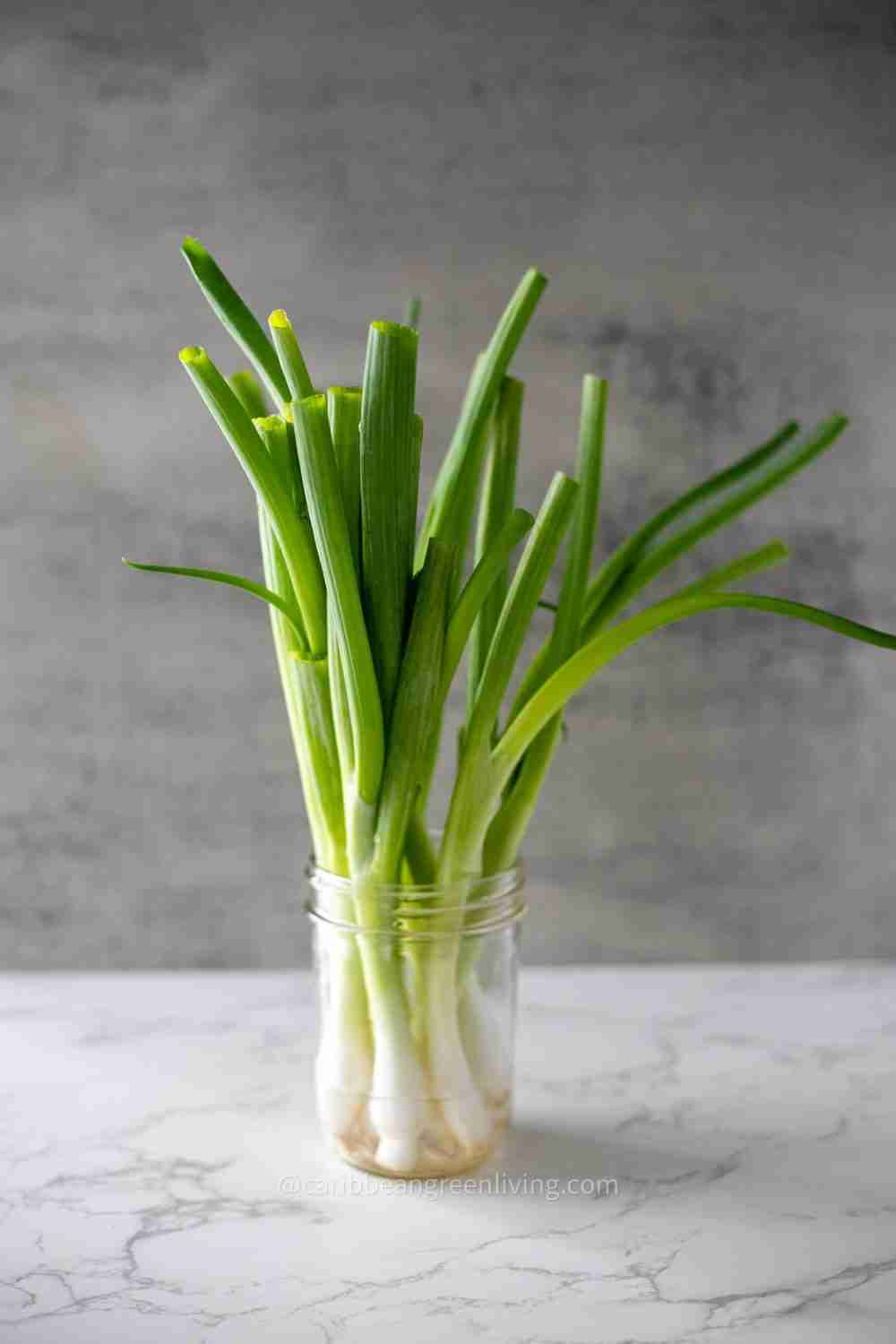
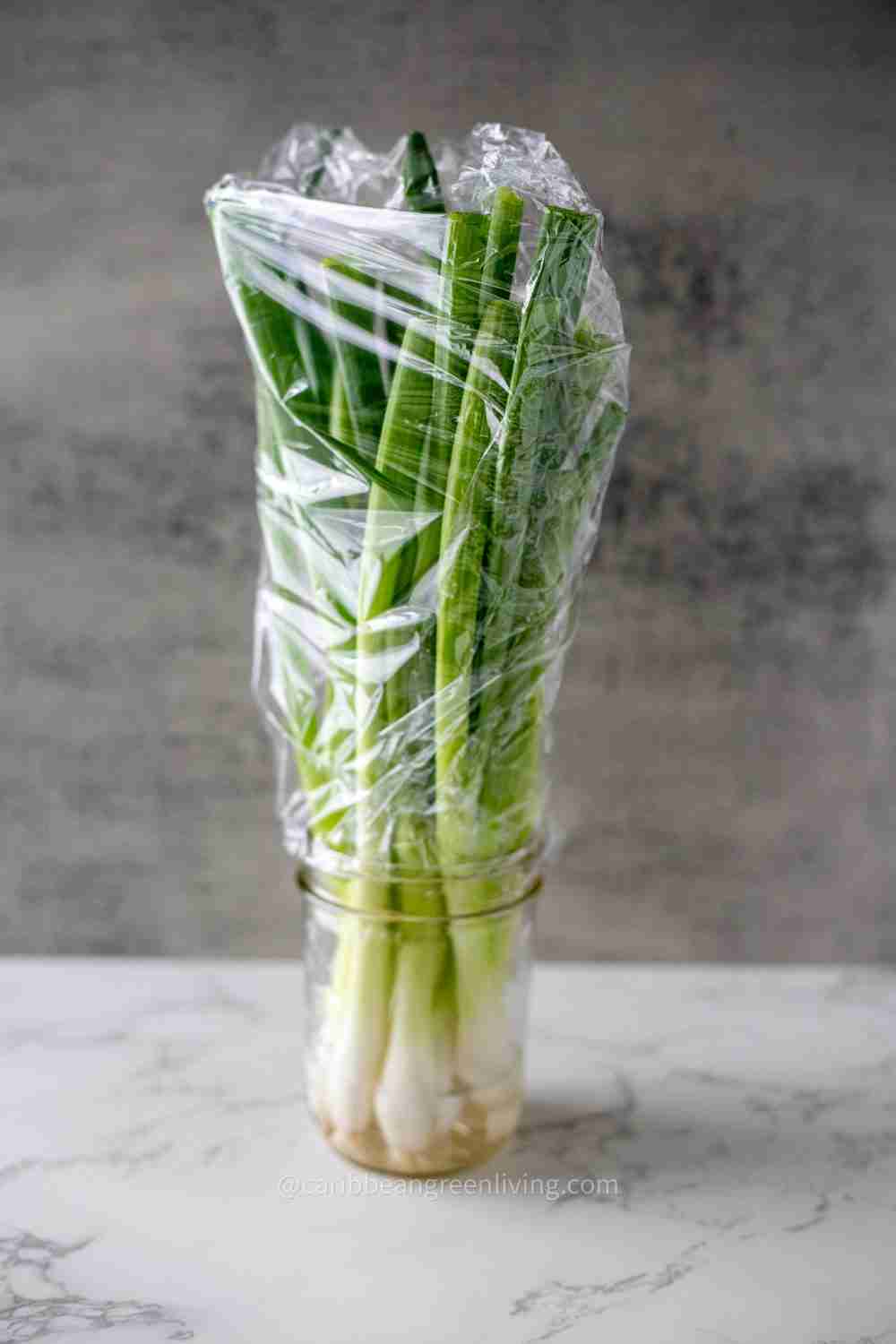
Method 1: The Glass Jar (Best for Longevity)
Think of scallions like a bouquet of cut flowers.
- Place the scallions root-down into a clean jar or glass filled with an inch of cold water.
- Cover the tops loosely with a plastic bag to trap a little humidity.
- Store the jar on your counter or inside your fridge, changing the water every couple of days. They can last up to two to three weeks this way!
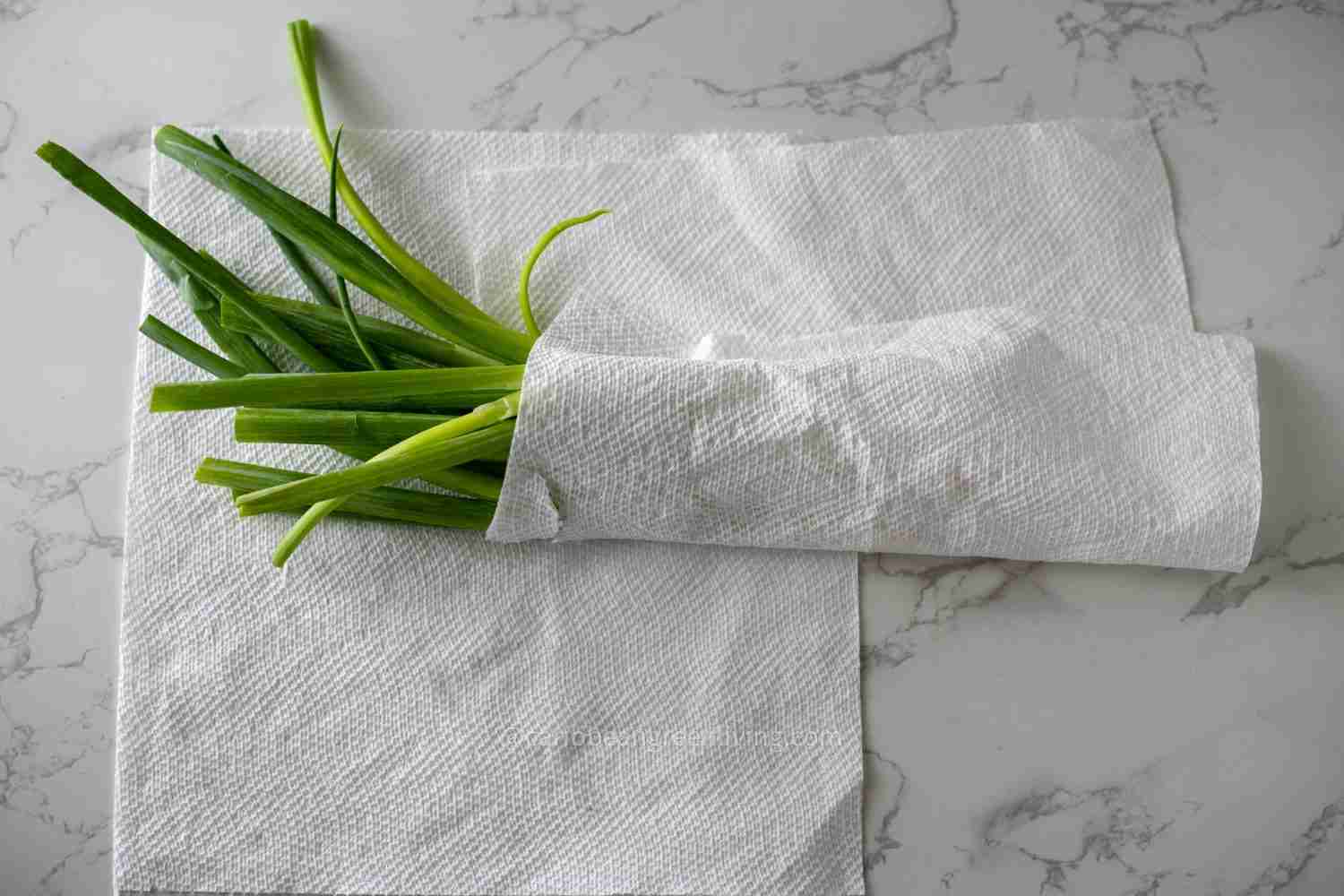
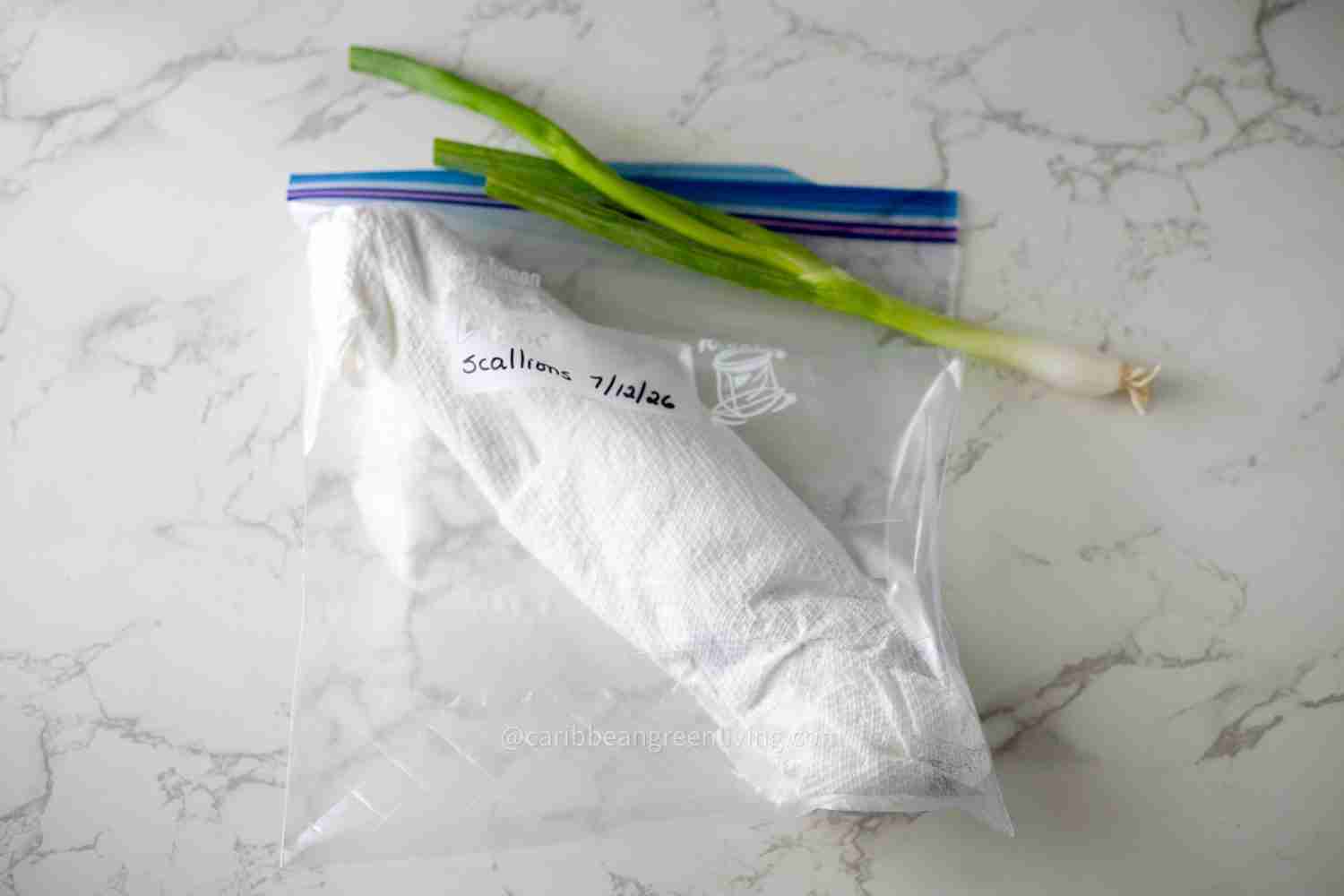
Method 2: The Paper Towel Wrap (Best for Convenience)
- Wrap the dry, cleaned scallions loosely in a damp paper towel.
- Slide the bundle into a plastic zip-top bag, leaving the bag slightly unzipped so air can circulate.
- Place it in your refrigerator’s crisper drawer. This keeps them crisp for 10 to 14 days.
Can You Freeze Scallions? (How to Freeze Safely)
Yes! Scallions freeze surprisingly well and are one of my favorite ingredients to keep on hand. While they won’t stay crisp enough for fresh salads or garnishes, they’re perfect for cooked dishes like soups, rice, stews, stir-fries, omelets, and Haitian epis.
I usually freeze chopped scallions whenever I have more than I can use while they’re fresh. It’s an easy way to reduce food waste and save time during meal prep.
1. Wash and Dry Thoroughly
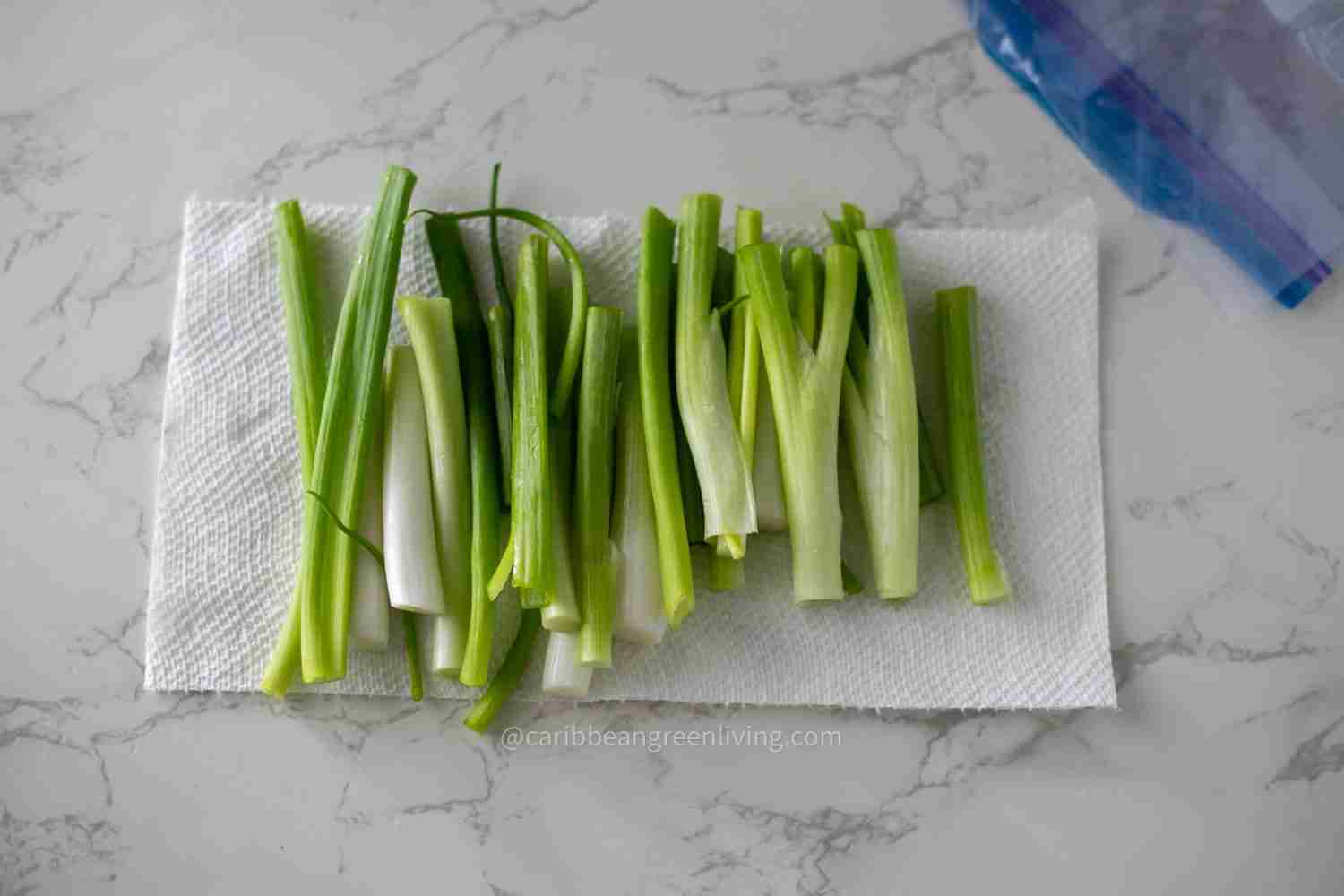
Wash the scallions using your preferred cleaning method, then rinse well under cool water. Dry them completely with a clean kitchen towel or salad spinner. Any remaining moisture can form ice crystals, causing the scallions to clump together in the freezer.
2. Chop into Large Pieces
I prefer cutting my scallions into slightly larger pieces instead of slicing them very thin. They hold their shape better during freezing and are easier to scoop out when cooking. You can always chop them smaller after they’ve thawed or while they’re cooking.
3. Flash Freeze (Optional but Recommended)
Spread the chopped scallions in a single layer on a parchment-lined baking sheet and freeze for about 20 to 30 minutes. This prevents the pieces from freezing into one large clump, making it easy to remove only what you need.
4. Store for Later
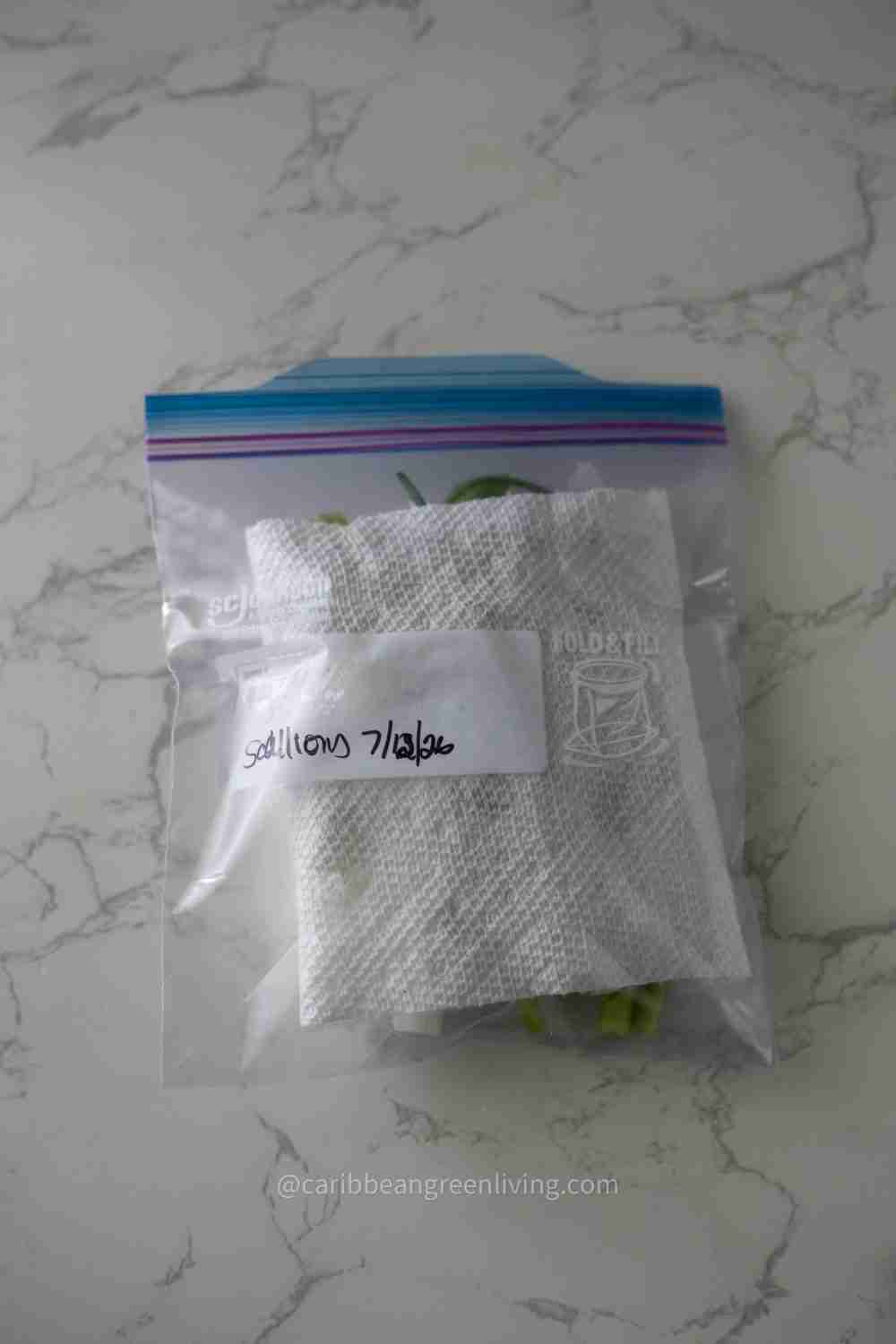
Transfer the frozen scallions to a freezer-safe bag or airtight container. Remove as much air as possible, label the bag with the date, and store flat in the freezer for up to 3 months for the best flavor.
No need to thaw. Simply add the frozen scallions directly to soups, stews, rice dishes, sauces, stir-fries, or any recipe where they’ll be cooked.
My Tip: I almost always keep a bag of frozen scallions in my freezer. They’re perfect for quick weeknight meals, and I love having them ready whenever I’m making Haitian epis, soups, or a simple vegetable stir-fry. Freezing extra scallions is one of the easiest ways to reduce food waste while keeping fresh flavor close at hand.
Nutrition and Health Benefits
Don’t let their delicate appearance fool you—scallions are packed with nutrients and flavor. They add freshness to meals while providing vitamins, minerals, and beneficial plant compounds that support overall health.
One cup of chopped raw scallions contains approximately:
- Calories: 32
- Fiber: 2.6 grams
- Vitamin K: More than 250% of the Daily Value, supporting healthy bones and normal blood clotting.
- Vitamin C: About 20% of the Daily Value, helping support a healthy immune system and collagen production.
- Folate: Important for healthy cell growth and function.
- Vitamin A: Contributes to healthy vision, skin, and immune function.
Health Benefits of Scallions
Rich in antioxidants
Scallions contain antioxidants, including quercetin and other flavonoids, which help protect cells from oxidative stress.
Supports heart health
As members of the allium family, scallions contain sulfur compounds such as allicin that may help support healthy blood pressure and cholesterol levels as part of a balanced diet.
Good source of vitamin K
Vitamin K plays an important role in maintaining healthy bones and supporting normal blood clotting.
Adds flavor with very few calories
Scallions are an easy way to boost the flavor of soups, rice dishes, eggs, salads, and marinades without adding significant calories.
How I Use Scallions in My Kitchen
Scallions are one of the ingredients I always keep on hand. While they’re an essential ingredient in Haitian epis, I use them in many other dishes throughout the week.
I often sauté the white parts with garlic to build flavor at the beginning of a recipe, then sprinkle the green tops over the finished dish just before serving.
Some of my favorite ways to use scallions include:
- Making fresh Haitian epis
- Seasoning rice and beans
- Adding flavor to soups and stews
- Mixing into scrambled eggs and omelets
- Stirring into freshly cooked white rice
- Sprinkling over grilled chicken, fish, and vegetables
- Adding to marinades and salad dressings
- Garnishing asian noodles, pasta dishes, and stir-fries
I especially love adding chopped scallions to eggs and hot white rice. They’re simple additions, but they add freshness, color, and just the right amount of mild onion flavor without overpowering the dish.


Scallions Across the Caribbean
Scallions are one of the essential aromatic vegetables found throughout Caribbean cooking. Depending on where you are, they’re known as scallions, green onions, escallions, cebollines, or cebollitas, but their purpose is the same: adding fresh, mild onion flavor to everyday cooking.
Unlike mature onions, scallions have a delicate flavor that blends beautifully with fresh herbs, garlic, peppers, and spices without overpowering a dish. Both the white stems and green tops are used, making them one of the most versatile ingredients in Caribbean kitchens.
Although every island has its own traditions, scallions are commonly used to build the flavorful seasoning bases that give Caribbean food its distinctive taste.
Haiti
In Haiti, scallions are an essential ingredient in epis, the fresh green seasoning that forms the foundation of countless recipes. Blended with garlic, parsley, thyme, bell peppers, Scotch bonnet peppers, cloves, citrus juice, and other seasonings, epis is used to marinate meats, poultry, fish, and seafood, and to add flavor to rice, beans, soups, stews, and sauces.
Beyond epis, scallions are a staple in everyday Haitian cooking. They’re added to eggs, vegetable dishes, bean purées (sos pwa), rice dishes, and soups. I also love stirring chopped scallions into hot white rice or using them as a finishing touch just before serving.
Jamaica
Known as escallions in Jamaica, scallions are one of the country’s signature cooking ingredients. They’re commonly combined with fresh thyme, Scotch bonnet peppers, garlic, and allspice to create authentic jerk seasoning and are widely used in soups, curries, brown stews, rice dishes, and seafood recipes.
Trinidad & Tobago
In Trinidad and Tobago, scallions are blended into green seasoning with chadon beni, garlic, thyme, parsley, celery, and hot peppers. This versatile herb mixture is used to marinate chicken, fish, seafood, pork, and vegetables before cooking, creating layers of fresh flavor.
Dominican Republic
Dominican cooks use cebollines in sofrito, rice dishes, beans, soups, braised meats, and seafood recipes. Their mild onion flavor pairs beautifully with garlic, oregano, sweet peppers, tomatoes, and cilantro, adding depth without overpowering other ingredients.
Puerto Rico
In Puerto Rico, scallions are another key ingredient in sofrito, the aromatic base used to flavor everything from arroz con gandules and beans to soups, stews, and braised meats. They work alongside culantro, garlic, peppers, cilantro, and oregano to create the rich flavors Puerto Rican cuisine is known for.
Cuba
Cuban cooks frequently add scallions to beans, rice dishes, soups, picadillo, seafood, and slow-cooked meats. They’re often used with onions, garlic, and fresh herbs to build balanced layers of flavor throughout the cooking process.
Caribbean Names for Scallions
| Country/Region | Common Name |
|---|---|
| Haiti | Scallions / Green Onions |
| Jamaica | Escallions |
| Trinidad & Tobago | Scallions |
| Dominican Republic | Cebollines |
| Puerto Rico | Cebollines |
| Cuba | Cebollitas or Cebollines |
Why Caribbean Cooks Love Scallions
Scallions have earned a permanent place in Caribbean kitchens because they’re incredibly versatile. They:
- Add fresh onion flavor without overpowering other ingredients.
- Blend easily into seasoning pastes, marinades, and cooking bases.
- Can be used raw, sautéed, grilled, or blended.
- Pair naturally with thyme, parsley, celery, garlic, ginger, tomatoes, Scotch bonnet peppers, coconut milk, citrus, and other Caribbean staples.
- Allows you to use both the white stems and green tops, reducing food waste.
Whether you’re making Haitian epis, Jamaican jerk seasoning, Trinidadian green seasoning, or Puerto Rican sofrito, scallions help create the aromatic foundation that makes Caribbean cooking so flavorful.
How Caribbean Cooks Use Scallions
Scallions are one of the hardest-working ingredients in Caribbean cooking. Both the white stems and green tops can be used, whether you are building flavor at the beginning of a recipe or adding freshness just before serving.
Common ways to use scallions include:
- Blending them into Haitian epis, green seasoning, and sofrito.
- Sautéing them with garlic, peppers, and herbs as the base for rice, beans, soups, and stews.
- Adding them to black beans, red beans, pigeon peas, and bean purées.
- Using them to season fish, shrimp, lobster, salted cod, smoked herring, chicken, pork, beef, and goat.
- Mixing them into omelets, scrambled eggs, fritters, and savory batters.
- Tossing them into stir-fries, sautéed greens, salads, grain bowls, and roasted vegetables.
- Stirring them into sauces, dressings, marinades, and flavored butters.
- Sprinkling the green tops over finished dishes for color and fresh flavor.
I use scallions for much more than Haitian epis. I love adding them to eggs and hot white rice, and I often use them as a topping or finishing ingredient.
Caribbean Flavor Pairings
Scallions pair especially well with:
Fresh herbs: thyme, parsley, cilantro, chives, and celery leaves.
Aromatics and vegetables: garlic, ginger, leeks, onions, shallots, bell peppers, celery, tomatoes, and Scotch bonnet peppers.
Spices and seasonings: allspice, cloves, black pepper, paprika, and nutmeg.
Pantry ingredients: coconut milk, citrus juice, tomato paste, butter, olive oil, and vegetable oil.
Seafood and proteins: salted cod, smoked herring, dried shrimp, fresh fish, shrimp, lobster, conch, chicken, beef, goat, pork, eggs, and tofu.
Can You Eat the Whole Scallion?
Yes. Nearly every part of a scallion is edible, although each section is best suited to different uses.
Roots
The small root hairs are usually removed because they can trap dirt. However, the root end can be placed in water or planted in soil to grow again.
White Stem
The white base has the strongest onion flavor. Use it in sautés, soups, stir-fries, marinades, sauces, and seasoning blends such as Haitian epis.
Light Green Section
The middle section has a balanced flavor that pairs well with rice, beans, vegetables, sauces, soups, and other cooked dishes.
Dark Green Tops
The green tops are milder and fresher tasting. Use them as a garnish for eggs, rice, soups, seafood, noodles, salads, roasted vegetables, and grain bowls.
Zero-Waste Tips for Scallions
Scallions are easy to use from top to bottom, making them a useful ingredient for reducing kitchen waste.
- Regrow the roots: Place the root ends in a small glass of water or plant them in soil.
- Freeze extra scallions: Chop and freeze them for soups, stews, rice, eggs, stir-fries, and sauces.
- Save scraps for broth: Add scallion ends and green tops to a freezer bag with celery leaves, carrot peels, parsley stems, and other vegetable trimmings.
- Make flavored butter: Mix finely chopped scallion greens into softened butter for bread, vegetables, seafood, or grilled meat.
- Compost unusable pieces: Compost any wilted or damaged parts that cannot be used.
Growing Scallions at Home
Scallions are one of the easiest vegetables to grow in small spaces. They can be planted in containers, raised beds, gardens, or pots on a sunny balcony, patio, or windowsill.
Plant them in well-draining soil, keep the soil lightly moist, and harvest the green tops as needed. Grocery-store scallion roots can also be placed in water temporarily and then transferred to soil for stronger, longer-lasting growth.
Recipes and Ways to Use Scallions
Scallions can be used across nearly every part of a Caribbean meal.
Caribbean Foundations
- Haitian epis
- Green seasoning
- Sofrito
- Rice and beans
- Black bean sauce or sos pwa
- Marinades for chicken, meat, fish, and seafood
Soups and Stews
- Vegetable soup
- Soup joumou
- Fish soup
- Chicken stew
- Seafood stew
Rice, Grains, and Vegetables
- White rice with scallions
- Rice pilaf
- Fried rice
- Bulgur wheat
- Stir-fried vegetables
- Sautéed greens
- Root vegetable purées
Seafood and Meat
- Grilled or baked fish
- Salted cod
- Smoked herring
- Shrimp dishes
- Chicken, beef, pork, and goat recipes
Eggs and Fresh Dishes
- Scrambled eggs
- Omelets
- Savory fritters
- Cucumber salad
- Chayote salad
- Bean salads
- Vegetable slaws
- Grain bowls
Scallions are one of those ingredients worth keeping on hand. Use the white stems to build flavor while cooking, then save the green tops for garnishing and finishing your meals.
Frequently Asked Questions About Scallions
Can you eat scallion roots?
Yes, scallion roots are technically edible, but they are usually trimmed away because they trap soil, sand, and grit. If you plan to use them, separate the root strands and wash them extremely well.
In some cuisines, thoroughly cleaned scallion roots are battered or fried until crisp. You can also save the root ends for regrowing or add clean trimmings to a freezer bag for homemade stock.
Are scallions and green onions the same thing?
In most grocery stores and recipes, the terms scallions and green onions are used interchangeably. They usually refer to young onions with long green tops and a slender white base that has not yet formed a large bulb.
Regional naming can vary, so you may also see them called spring onions. However, true spring onions are generally more mature and have a small, rounded bulb with a slightly stronger onion flavor.
Are chives and scallions the same thing?
No. Chives and scallions belong to the allium family, but they are different plants.
Chives are much thinner, hollow, and entirely green. They have a delicate onion flavor and are best added near the end of cooking or used as a garnish.
Scallions have a firm white base and broader green leaves. They have a stronger flavor and can be sautéed, grilled, roasted, blended into seasonings, or used raw.
You can sometimes substitute one for the other, but the flavor and texture will not be exactly the same.
What is the difference between scallions, green onions, and spring onions?
Scallions and green onions are generally the same ingredient. They have straight white stems and very little bulb development.
Spring onions are usually harvested later. They have a small, rounded bulb and a stronger, more mature onion flavor. The green tops are still edible, but the bulb may be used more like a regular onion.
Can I use the white and green parts of scallions?
Yes. Both parts are edible.
The white and pale green sections have the strongest onion flavor and are ideal for sautéing, marinades, soups, stews, rice dishes, stir-fries, and seasoning blends.
The dark green tops have a milder, fresher flavor and work well as a garnish or finishing ingredient for eggs, rice, soups, salads, seafood, noodles, and roasted vegetables.
Why do chopped scallions become slimy?
Scallions may become slimy when they are stored while still wet, kept in an airtight container with too much moisture, chopped too far in advance, or left in the refrigerator for too long.
A dull knife can also crush the scallions instead of slicing them cleanly, releasing more moisture from the plant.
To prevent sliminess:
Dry scallions completely after washing.
Use a sharp knife.
Store chopped scallions with a dry paper towel.
Avoid packing them too tightly.
Replace the paper towel if it becomes damp.
Use chopped scallions within a few days.
Discard scallions that smell unpleasant, feel excessively slimy, or show signs of mold.
Why are my scallion tops turning yellow?
Yellowing usually means the scallions are beginning to age, dry out, or lose freshness. Too much moisture can also cause deterioration.
Trim away slightly yellowed tips if the rest of the scallion is firm and smells fresh. Discard the bunch if the stalks are limp, slimy, moldy, or have an unpleasant odor.
How long do scallions last in the refrigerator?
Whole scallions generally stay fresh for about 1 to 2 weeks when stored properly. Their exact shelf life depends on how fresh they were when purchased and how much moisture is present.
Chopped scallions do not last as long and are best used within a few days.
Can scallions be frozen?
Yes. Frozen scallions lose their crisp texture, but they are excellent for cooked dishes such as soups, stews, rice, eggs, sauces, and stir-fries.
Wash and dry them thoroughly, cut them into pieces, freeze them in a single layer, and then transfer them to a freezer-safe bag or container. Add them directly to cooked dishes without thawing.
Can I regrow grocery-store scallions?
Yes. Place the white root ends in a small glass with enough water to cover the roots, but not the entire white stem. Change the water regularly and place the glass near a bright window.
The green tops will begin growing again, although scallions kept only in water may eventually weaken. For longer-term growth, transfer them to a pot with well-draining soil.
Can scallions replace regular onions?
Sometimes. Scallions work well when you want a milder, fresher onion flavor. They are especially useful in eggs, rice, salads, sauces, marinades, soups, and quick-cooking dishes.
However, they may not provide the same sweetness, volume, or depth as mature onions in long-cooked dishes. When substituting, you may need several scallions to replace one small onion.
Quick Scallion Recipe Inspiration
Scallions can be much more than a garnish. Their white stems build flavor while cooking, and their green tops add freshness and color at the end.
Ginger-Scallion Sauce
Finely chop fresh ginger and scallions and place them in a heatproof bowl with a pinch of salt. Heat a neutral cooking oil until hot, then carefully pour it over the mixture.
Use the sauce with chicken, fish, rice, noodles, roasted vegetables, or steamed provisions.
Scallion Scrambled Eggs
Sauté sliced scallion whites in a little oil or butter until fragrant. Pour in beaten eggs and cook gently, folding until just set. Finish with the sliced green tops.
I especially love scallions with eggs because they add flavor without overpowering the dish.
White Rice with Scallions
Fold chopped scallions into freshly cooked white rice while it is still hot. Add a small amount of butter or olive oil and season to taste.
This is one of my favorite simple ways to enjoy scallions. The heat softens them slightly while preserving their fresh flavor.
Scallion Herb Butter
Mix finely chopped scallion greens with softened butter, black pepper, herbs, and a little citrus zest.
Use it on fish, chicken, vegetables, bread, rice, or steamed root vegetables.
Scallion Pancakes
Scallion pancakes are made by layering chopped scallions into a simple dough, then rolling and pan-frying them until crisp and flaky.
They make a flavorful snack, appetizer, or side dish.
Add Scallions to Haitian Epis
Blend scallions with parsley, garlic, bell peppers, thyme, citrus juice, Scotch bonnet pepper, and your preferred seasonings to make Haitian epis.
Use it to marinate meat, poultry, seafood, or vegetables, or add it to rice, beans, soups, stews, and sauces.
With a fresh bunch of scallions in your refrigerator, you have an inexpensive ingredient that can build flavor at the beginning of a recipe, season the dish as it cooks, and add freshness just before serving.