How to Steam Caribbean Root Vegetables (The Right Way)
Steaming is one of the healthiest and easiest ways to prepare Caribbean root vegetables, also known as provisions. Unlike boiling, steaming allows the vegetables to cook gently while preserving more of their natural flavor and texture. Because the vegetables are not submerged in water, they are less likely to become waterlogged, making them perfect for serving alongside stews, seafood, grilled meats, or as part of a wholesome meal-prep routine.
Although steaming is not traditionally the first cooking method used throughout the Caribbean, it’s one that deserves a place in every kitchen. Once you experience how well it preserves the natural taste of each provision, it’s difficult to go back to boiling everything.
I grew up boiling or roasting most Caribbean provisions, just as many families do. Steaming them completely changed the way I prepare these vegetables. I immediately noticed the difference in both taste and texture. The vegetables stayed firmer, tasted cleaner, and didn’t absorb excess water.
When I first started steaming Caribbean provisions, I assumed any steamer would work. After preparing countless batches of green plantains, yuca, malanga, eddoes, and even dumplings, I quickly realized that the type of steamer and a few simple techniques can make a big difference. Along the way, I discovered several small tricks that consistently produce better results, and I’ll share them throughout this guide.
Why Steam Caribbean Root Vegetables
Steaming may seem like a simple cooking method, but it offers several advantages that make it ideal for preparing Caribbean provisions.
Retains More Natural Flavor
Since the vegetables are not boiling in water, much of their natural taste remains intact. Each vegetable keeps its own unique flavor instead of becoming diluted.
Keeps Vegetables Firm
Steamed provisions hold their shape better, making them ideal for serving with sauces, stews, fish, or grilled meats.
Uses Little to No Oil
Steaming requires no added fat, making it one of the healthiest cooking methods.
Great for Meal Prep
Steamed provisions store well in the refrigerator and can easily be reheated throughout the week.
Supports Zero-Waste Cooking
Once you’ve peeled your vegetables, the scraps can be added to your compost bin instead of being thrown away. It’s an easy way to reduce kitchen waste while making use of every part possible.
A Great Alternative to Rice
Caribbean provisions can be served alongside rice dishes or used as a satisfying substitute for grains. They pair beautifully with beans, seafood, poultry, and hearty vegetable dishes, making them a versatile addition to any meal.
During Lent, Caribbean Provisions Take Center Stage
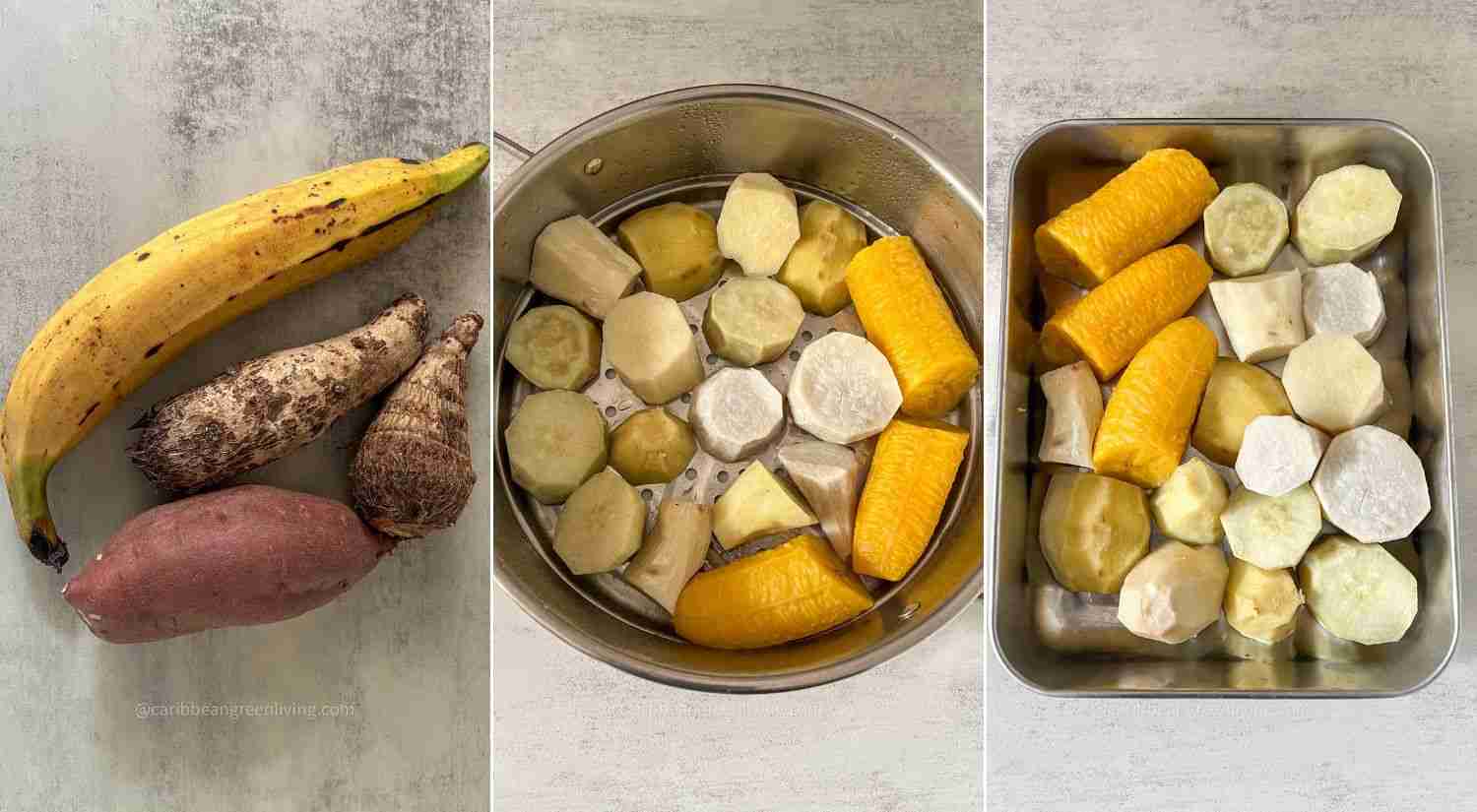
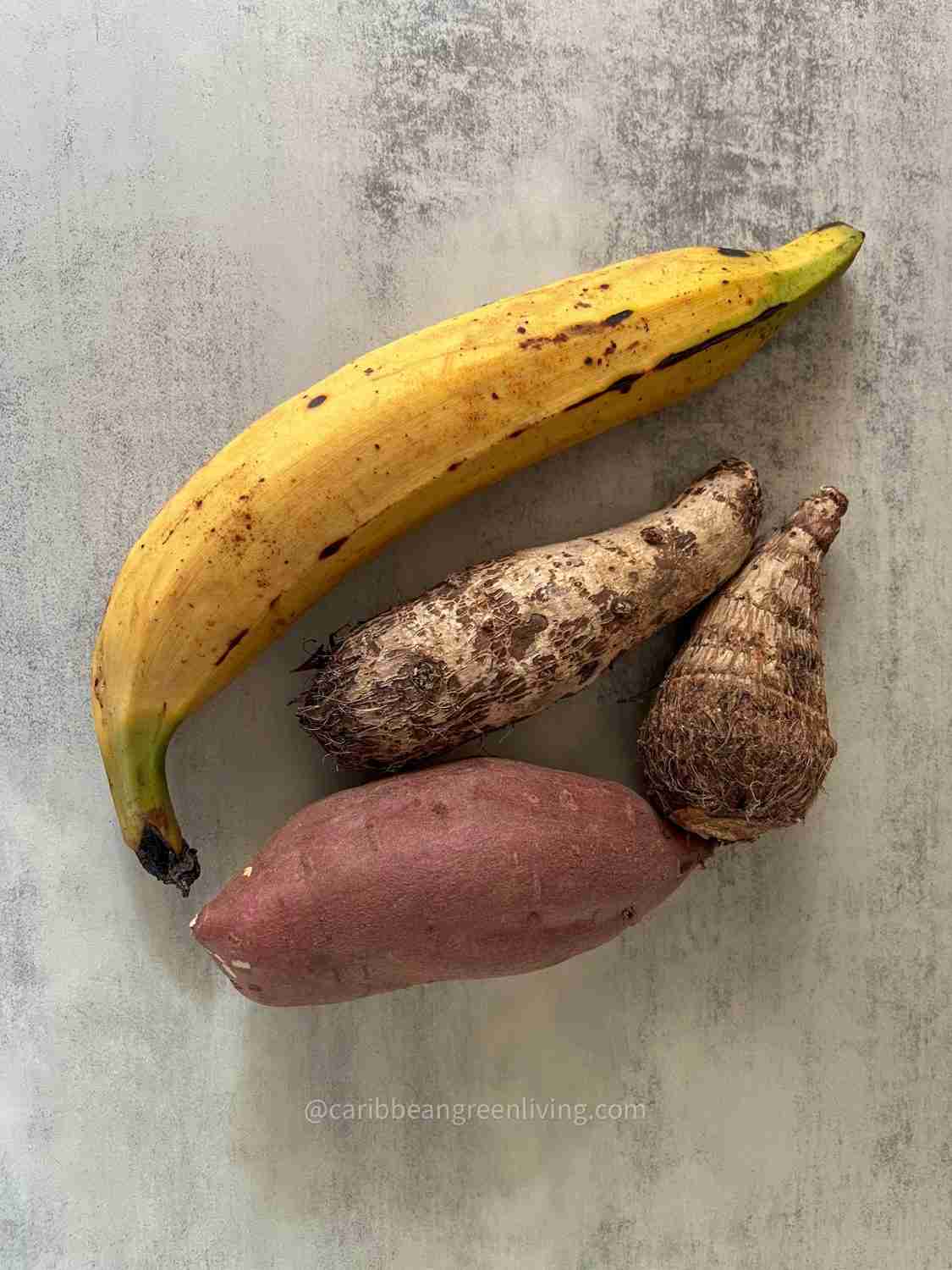
For many Haitian families, Caribbean root vegetables, often called provisions, become an important part of the menu during Lent. As people observe the season by eating less meat or avoiding it altogether on certain days, hearty provisions like green plantains, yuca (cassava), malanga, eddoes, Caribbean yam, and sweet potatoes are served alongside fish, seafood, legumes, and vegetable dishes. Their naturally filling texture and rich flavor make them an excellent substitute for rice or other grains. Steaming these Caribbean provisions is a simple, healthy way to prepare them while preserving their natural taste and creating satisfying meals that honor both tradition and modern healthy cooking.
Best Caribbean Root Vegetables to Steam
Plantains
Plantains are among the easiest Caribbean staples to steam.
Green Plantains
- Steam 20–30 minutes
- Medium to medium-high heat
- Firm texture
- Excellent with fish, stews, legumes, and meats
Yellow Plantains
Riper plantains contain more natural sugar and soften more quickly.
- Steam about 20 minutes
- Sweeter flavor
- Softer texture
Yuca (Cassava)
Yuca cooks surprisingly quickly when cut into evenly sized pieces.
After steaming, inspect each piece and remove the tough woody core if it’s still present before serving. Some varieties naturally separate during cooking, making the center easy to remove.
Cooking Time
15–20 minutes
Malanga
Malanga becomes wonderfully creamy after steaming while maintaining its shape.
Cooking Time
25–30 minutes
Eddoes
Eddoes have a slightly firmer texture than malanga but steam beautifully.
Cooking Time
25–30 minutes
Caribbean yam is very different from the orange sweet potatoes commonly called “yams” in North American grocery stores.
True Caribbean yam has a drier, starchier texture and is a completely different vegetable.
Cooking Time
25–35 minutes
Sweet Potatoes
Sweet potatoes steam beautifully and develop an even sweeter flavor.
Purple sweet potatoes cook similarly to orange varieties but release natural pigments during cooking.
Batata/Patate: Depending on where you live, you may also find Japanese or Korean sweet potatoes sold as batata. They have purple skin, pale yellow flesh, and a drier, starchier texture than orange sweet potatoes. They steam beautifully and make an excellent substitute for Caribbean provisions.
For the best presentation, steam purple sweet potatoes separately whenever possible since they can stain lighter-colored vegetables.
Cooking Time
20–30 minutes
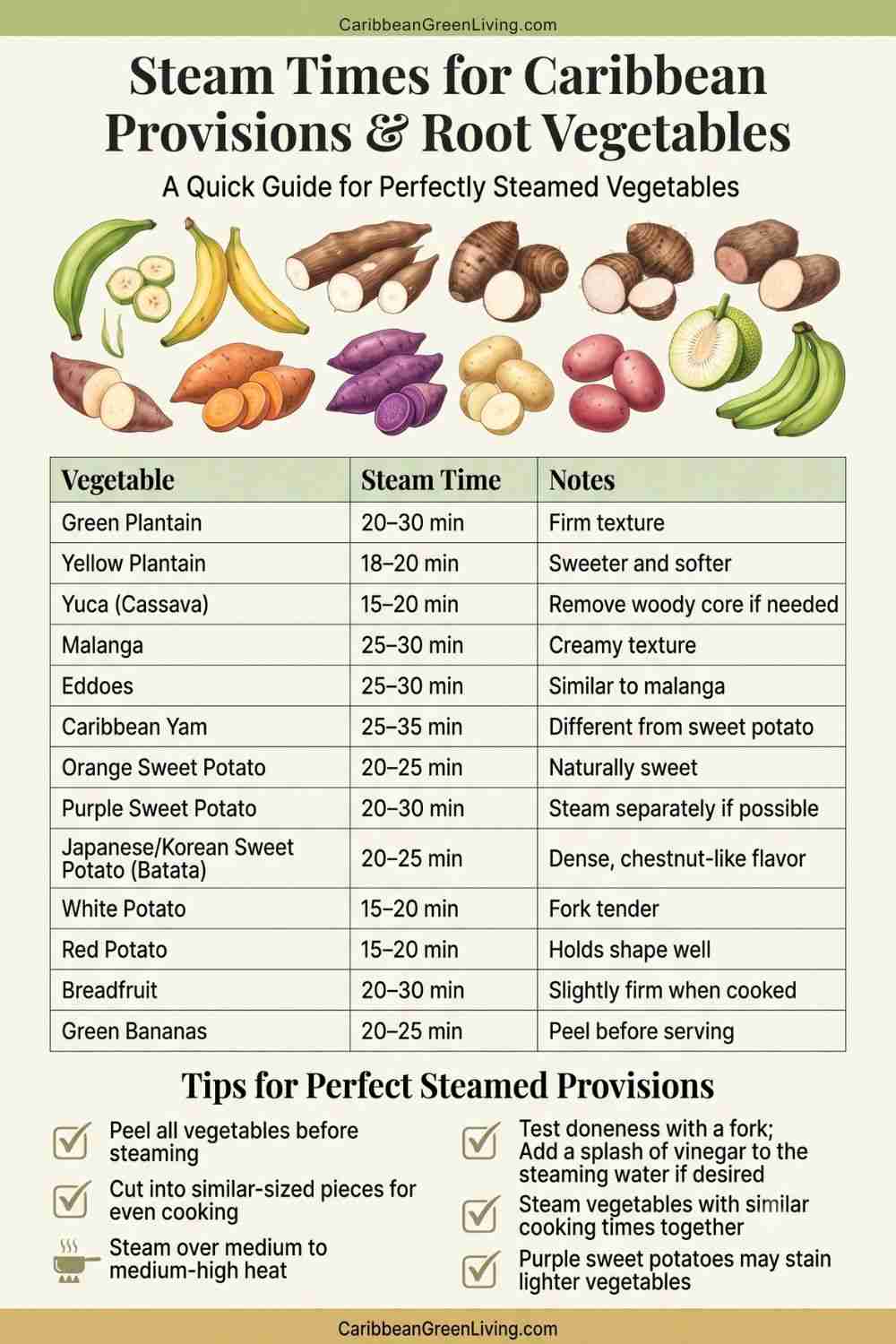
Note: Cooking times are based on vegetables cut into approximately 2-inch (5 cm) pieces. Larger pieces will require additional steaming time, while smaller pieces will cook more quickly. Always test doneness by inserting a fork into the thickest piece.
Other Caribbean Foods You Can Steam Together
Many Caribbean households serve a variety of provisions on one plate. While these aren’t all root vegetables, they often appear together at family meals.
You can also steam:
- Breadfruit pieces
- Green bananas
- Plantains
- Caribbean root vegetables
Dumplings are another popular addition to a provisions meal. However, I usually steam them separately because their cooking time often differs from the vegetables. Keeping them separate helps ensure everything finishes cooking at the right time without overcooking one ingredient.
My Tip: Add a Splash of Vinegar to the Water
One thing I noticed while testing different steaming methods was how quickly peeled root vegetables begin to oxidize. Within minutes, vegetables like yuca, malanga, and potatoes can start turning brown.
Instead of steaming them over plain water, I began adding a small splash of vinegar to the steaming water. The vegetables stayed lighter in color, and I personally preferred the finished flavor. It’s a simple step that has become part of my routine whenever I prepare Caribbean provisions.
My Tip: Spray the Steamer Basket
Another lesson I learned came while steaming homemade dumplings.
They repeatedly stuck to the steamer basket, making them difficult to remove without tearing. A very light coating of cooking spray solved the problem immediately.
I now lightly spray the basket whenever I’m steaming:
- dumplings
- softer vegetables
- anything that might stick
The vegetables release much more easily, and cleanup is quicker too.
Tips for Perfect Steamed Root Vegetables
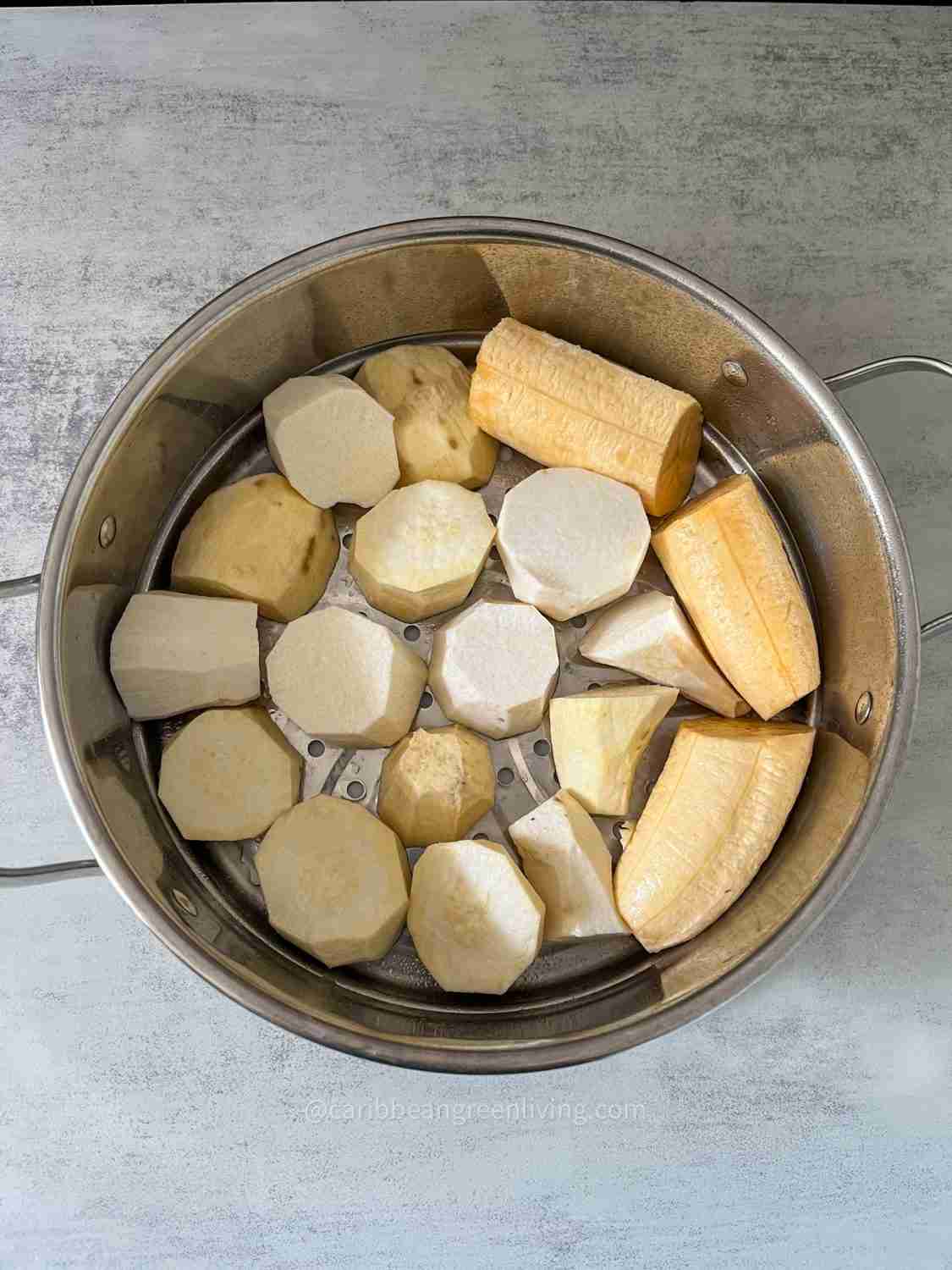
- Peel all vegetables before steaming.
- Cut everything into similar-sized pieces for even cooking.
- Don’t overcrowd the steamer basket.
- Check doneness with a fork.
- Add vinegar to the steaming water if you enjoy the results.
- Steam vegetables with similar cooking times together.
- Allow steam to circulate freely around the vegetables.
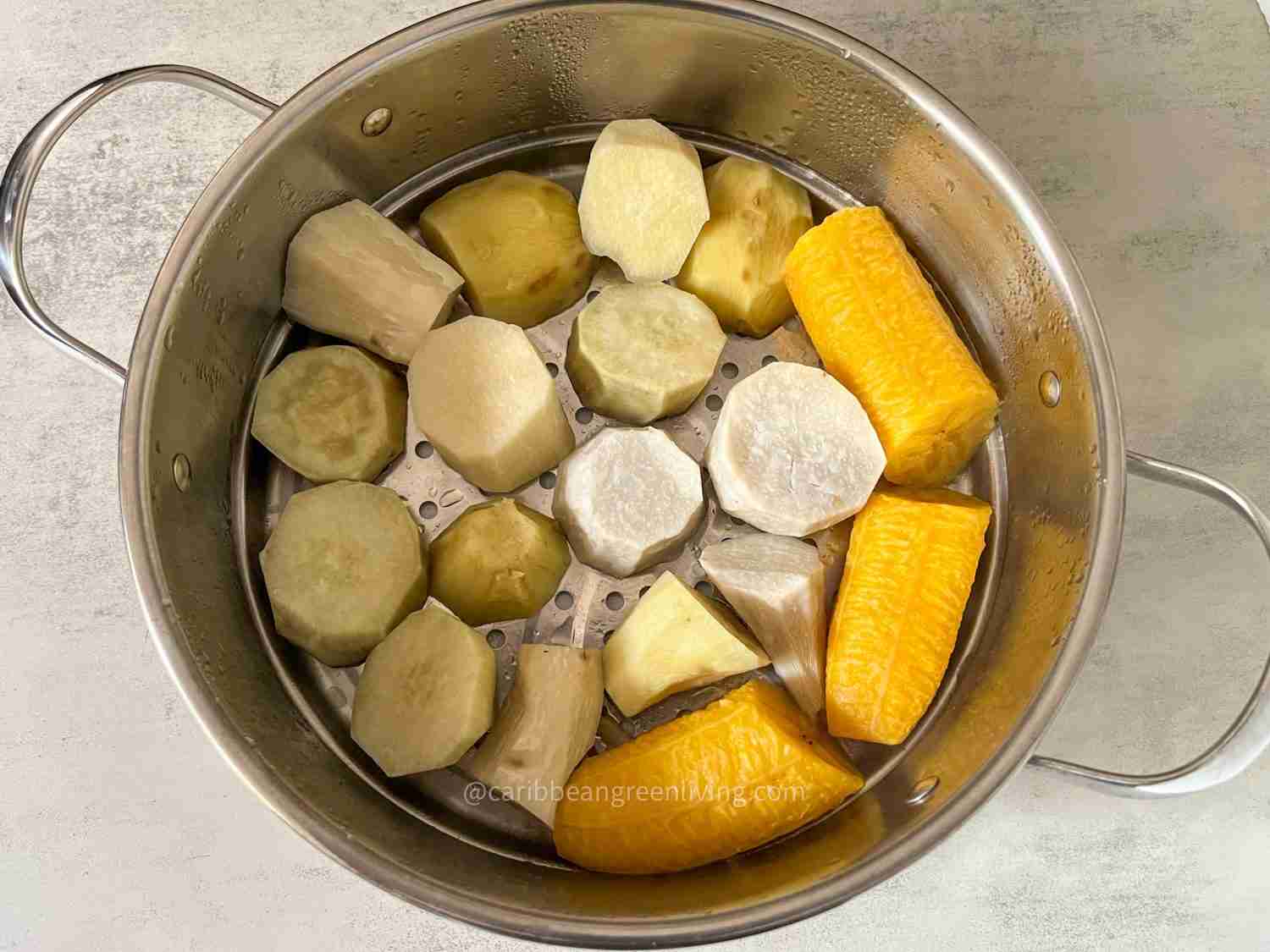
How to Steam Caribbean Root Vegetables
- Peel all vegetables.
- Cut them into evenly sized pieces.
- Fill the bottom of your steamer with water.
- Add a splash of vinegar to the water if desired.
- Arrange the vegetables in the steamer basket.
- Cover with a tight-fitting lid.
- Steam over medium to medium-high heat.
- Check tenderness with a fork.
- Remove from the steamer and serve immediately.
Serving Suggestions
Serve steamed Caribbean provisions with:
- Haitian Legume
- Fried or Stewed Fish
- Poultry
- Grilled meats
- Saltfish
- Bean dishes
- Caribbean vegetable stews
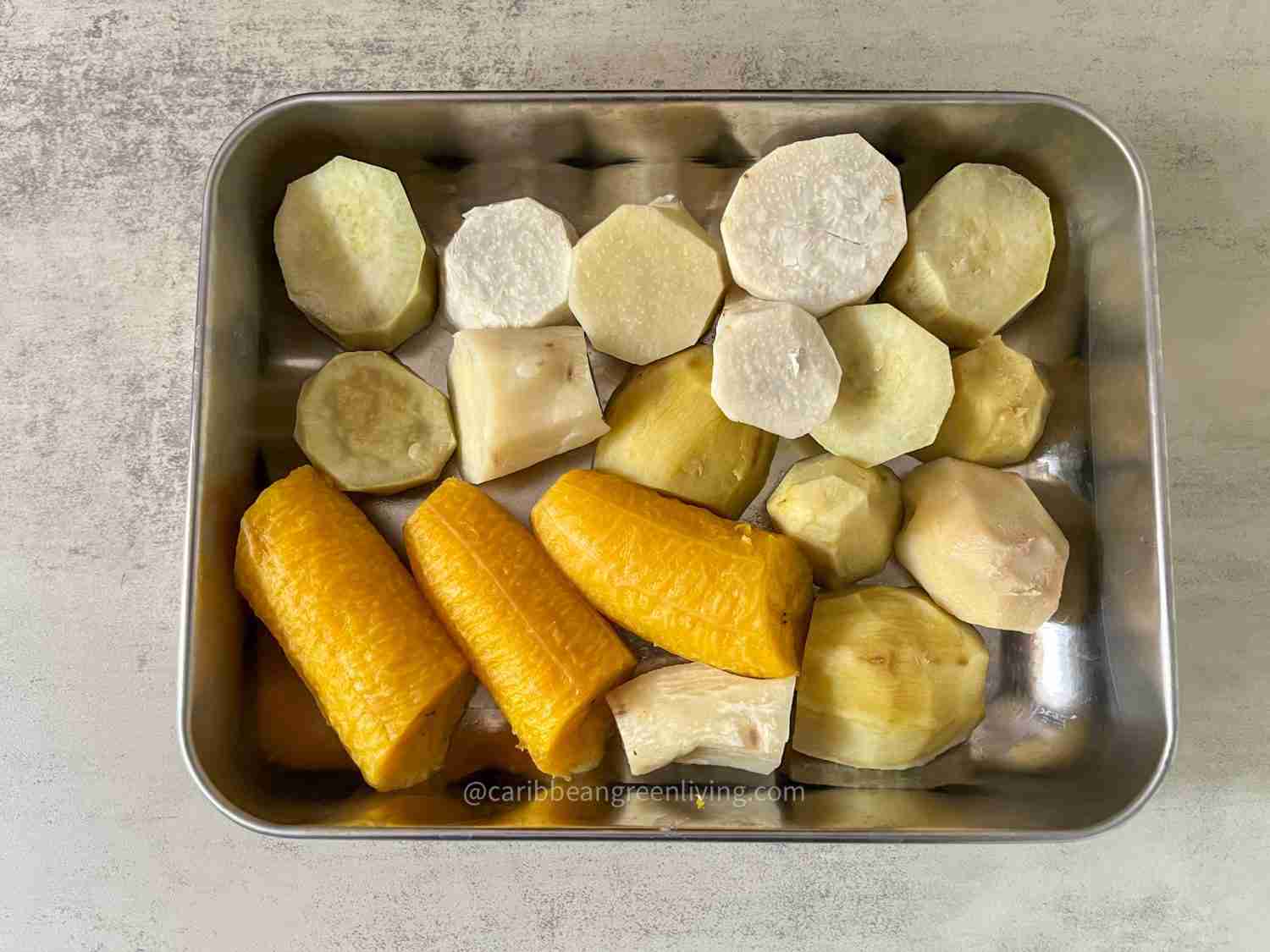
They also make an excellent base for meal prep throughout the week.
Frequently Asked Questions
Can I steam frozen root vegetables?
Yes. Frozen root vegetables steam well, although they typically require a few extra minutes of cooking time.
Can I steam different vegetables together?
Yes, as long as they are cut into similar-sized pieces and have similar cooking times. This makes steaming perfect for meal planning and preparing a variety of provisions at once.
Should I peel root vegetables before steaming?
Yes. Caribbean root vegetables should be peeled before steaming to remove their thick, fibrous, or rough outer skin.
Why are my vegetables turning brown?
Peeled root vegetables begin to oxidize quickly when exposed to air. Steam them soon after peeling or keep them in water while preparing the rest of your vegetables.
How long should I steam plantains?
Green plantains generally take 25 to 35 minutes, while ripe yellow plantains cook a little faster, usually around 20 minutes.
Can I steam dumplings with root vegetables?
It’s possible, but I don’t usually recommend it. Dumplings often require a different cooking time than most root vegetables, so steaming them separately produces more consistent results.
Conclusion
Steaming Caribbean root vegetables is one of the simplest ways to enjoy their natural flavor while creating healthy, satisfying meals. Whether you’re preparing green plantains, yuca, malanga, eddoes, Caribbean yam, or sweet potatoes, steaming helps preserve their texture without adding extra oil or excess water.
With a few practical techniques—like cutting vegetables into uniform pieces, adding a splash of vinegar to the steaming water if you enjoy the results, and lightly spraying the steamer basket when needed—you can consistently prepare tender, flavorful provisions that are perfect for everyday meals and weekly meal prep.
Once you try steaming Caribbean provisions, you may find, as I did, that it becomes your preferred way to prepare them.