How to Make Uni Butter: A Rich, Savory Compound Butter with Caribbean Flavor
Creamy, savory, and full of flavor, this uni butter combines fresh sea urchin with good-quality butter, shallot, garlic, fresh herbs, Scotch bonnet pepper, and a touch of fresh lemon juice. The result is a rich compound butter that brings together the delicate briny flavor of uni with familiar Caribbean aromatics.
Use it to finish pasta, seafood, vegetables, rice, or warm bread, or melt a small amount into a sauce for an extra layer of richness and umami.
If you have never cooked with sea urchin before, don’t let the ingredient intimidate you. Uni butter is actually one of the easiest ways to experiment with its distinctive flavor.
What Is Uni?
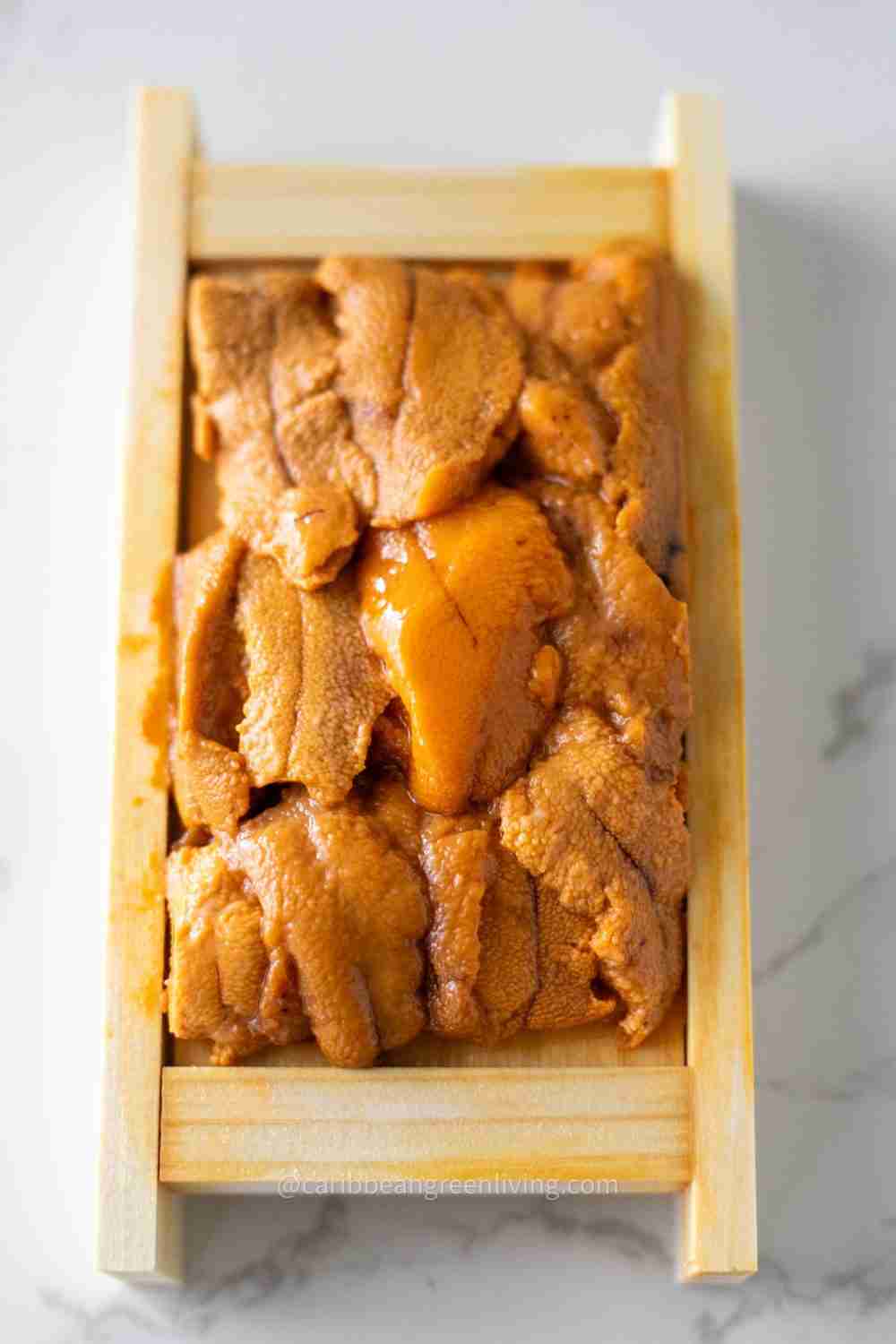
Uni is the edible portion of the sea urchin. It has a soft, creamy texture and a distinctive flavor that can be described as briny, savory, slightly sweet, and rich.
Freshness and quality make a considerable difference, particularly in a simple preparation like compound butter. Because uni is highly perishable, purchase it from a trusted source, keep it properly chilled, and follow safe seafood-handling practices. FoodSafety.gov recommends refrigerating seafood at 40°F or below and generally using it within 2 days of purchase or freezing it.
If you’re new to sea urchin, read my Sea Urchin (Uni) Guide for more information about choosing, handling, storing, and cooking with this unique seafood.
What Is Uni Butter?
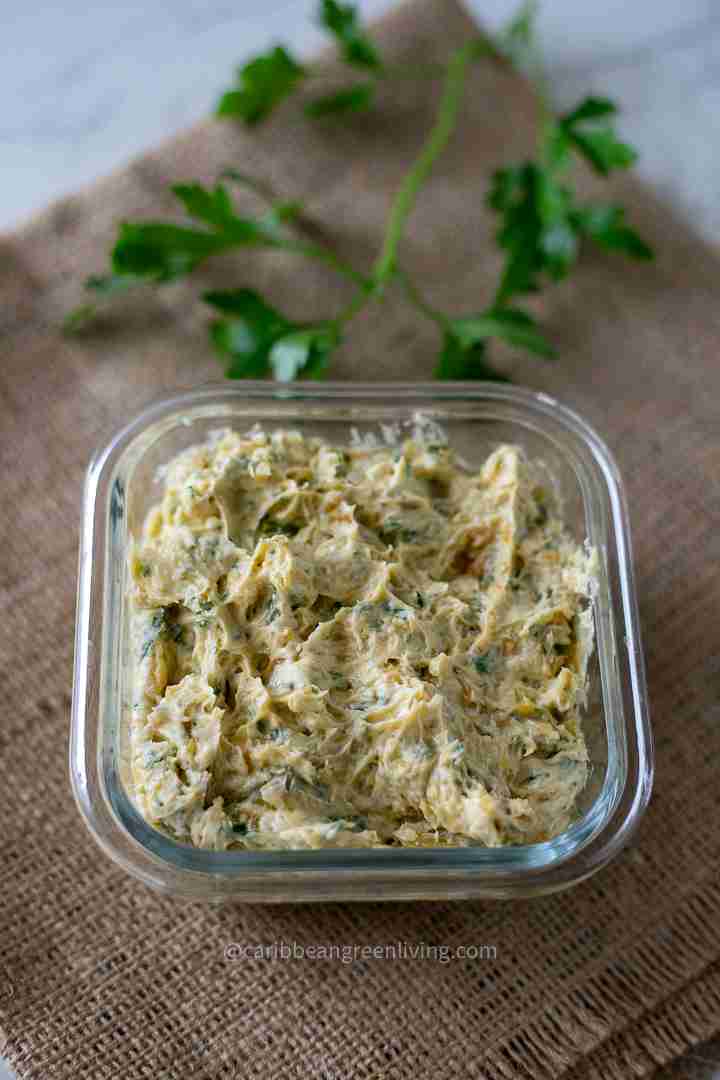
Uni butter is a compound butter made by blending or mixing sea urchin with softened butter. Depending on the recipe, additional herbs, aromatics, citrus, or seasonings may be added.
My version takes the idea in a Caribbean-inspired direction.
Fresh parsley and thyme add herbal freshness, while shallot and garlic provide an aromatic base. A small amount of Scotch bonnet adds its unmistakable fruity aroma and gentle heat. Fresh lemon juice helps cut through the richness of the butter and uni.
The goal isn’t to cover up the sea urchin. Every additional ingredient should support the uni rather than compete with it.
What Does Uni Butter Taste Like?
Expect a combination of creamy, savory, briny, buttery, and slightly sweet flavors.
The herbs and aromatics make this version more complex, while the lemon provides brightness. Scotch bonnet contributes both aroma and heat, but it should remain in the background.
Uni can be delicate. If the garlic, pepper, onion, or herbs become the first things you taste, you’ve probably used too much.
Why Make Uni Butter?
There are several reasons, but the main reason is that I like turning fresh uni into compound butter. It is a versatile ingredient I like to use in my kitchen.
1) It makes uni surprisingly versatile
Instead of limiting fresh uni to sushi or serving it on its own, you can use the butter as a finishing ingredient for several dishes.
2) A little can go a long way
Uni butter is rich. You don’t necessarily need a large amount to transform pasta, seafood, vegetables, or bread.
3) You control the seasoning
Making it yourself allows you to control the butter, herbs, aromatics, acidity, heat, and sodium.
4) You can make it ahead
Compound butter is convenient to portion and store, giving you a flavorful finishing ingredient when you need it.
Ingredients and What They Contribute
1) Fresh sea urchin (uni)
The star of the recipe. Look for fresh uni with a pleasant ocean aroma and good color and texture. Avoid uni with an unpleasant or strongly fishy smell.
For this recipe, I used one small tray of fresh uni, which measured roughly 4 tablespoons. Uni may be packaged in different tray sizes depending on where you buy it, so I recommend measuring the amount rather than assuming every tray contains the same quantity.
I purchased the fresh uni used for this recipe at my local H Mart. Availability can vary by store and season, so check the seafood department at Asian or specialty seafood markets in your area.
2) Unsalted butter
I prefer unsalted butter because it gives me better control over the sodium level.
Uni already contributes a natural briny flavor, so salted butter can make it easier to oversalt the finished compound butter.
Choose a good-quality butter you enjoy eating. There aren’t many places for mediocre butter to hide in a recipe where butter is one of the main ingredients.
You can use salted butter if that’s what you have, but taste the mixture before adding any additional salt.
3) Shallot
Shallot adds a mild onion flavor without overwhelming the uni. No shallot? Finely minced red or white onion can be substituted.
4) Garlic
Garlic provides another savory layer, but restraint is important. Too much raw garlic can easily overpower sea urchin.
5) Fresh parsley
Parsley provides freshness and helps balance the richness of the butter.
6) Fresh thyme
Thyme gives the butter an earthy, aromatic quality that works especially well with the Caribbean-inspired flavor profile.
7) Scotch bonnet pepper
Scotch bonnet brings much more than heat. Its fruity aroma is one of the flavors that gives this uni butter its Caribbean character. Use it sparingly. This isn’t meant to be a hot pepper butter.
8) Fresh lemon juice
A small amount of fresh lemon juice brightens the butter and helps balance its richness. You don’t need much. Too much liquid or acidity can interfere with both the flavor and texture of the butter.
9) Optional scallions
Finely sliced scallions can add another layer of fresh onion flavor. If you use them, slice them very finely. Large pieces can make the compound butter feel coarse and distract from its creamy texture.
Why the Quality of Your Butter Matters
This is one of those recipes where the quality of the ingredients is immediately noticeable.
Butter isn’t merely being used to grease a pan or sauté an ingredient; it forms the foundation of the finished recipe. Choose a good butter with a clean, creamy flavor. Unsalted butter is my preference because it gives you much more control over seasoning, particularly when working with naturally briny seafood.
Let the butter soften at room temperature before mixing. It should be soft enough to combine easily without being melted.
Choosing and Handling Fresh Uni
Because uni is eaten fresh and is highly perishable, buy it from a seafood market or retailer you trust and keep it properly chilled.
The uni should smell pleasantly like the sea rather than strongly fishy. Handle it gently. The individual pieces are extremely soft and can break apart easily.
For more detailed information about purchasing, handling, storing, and using sea urchin, see my Sea Urchin (Uni) Guide.
How to Make Uni Butter
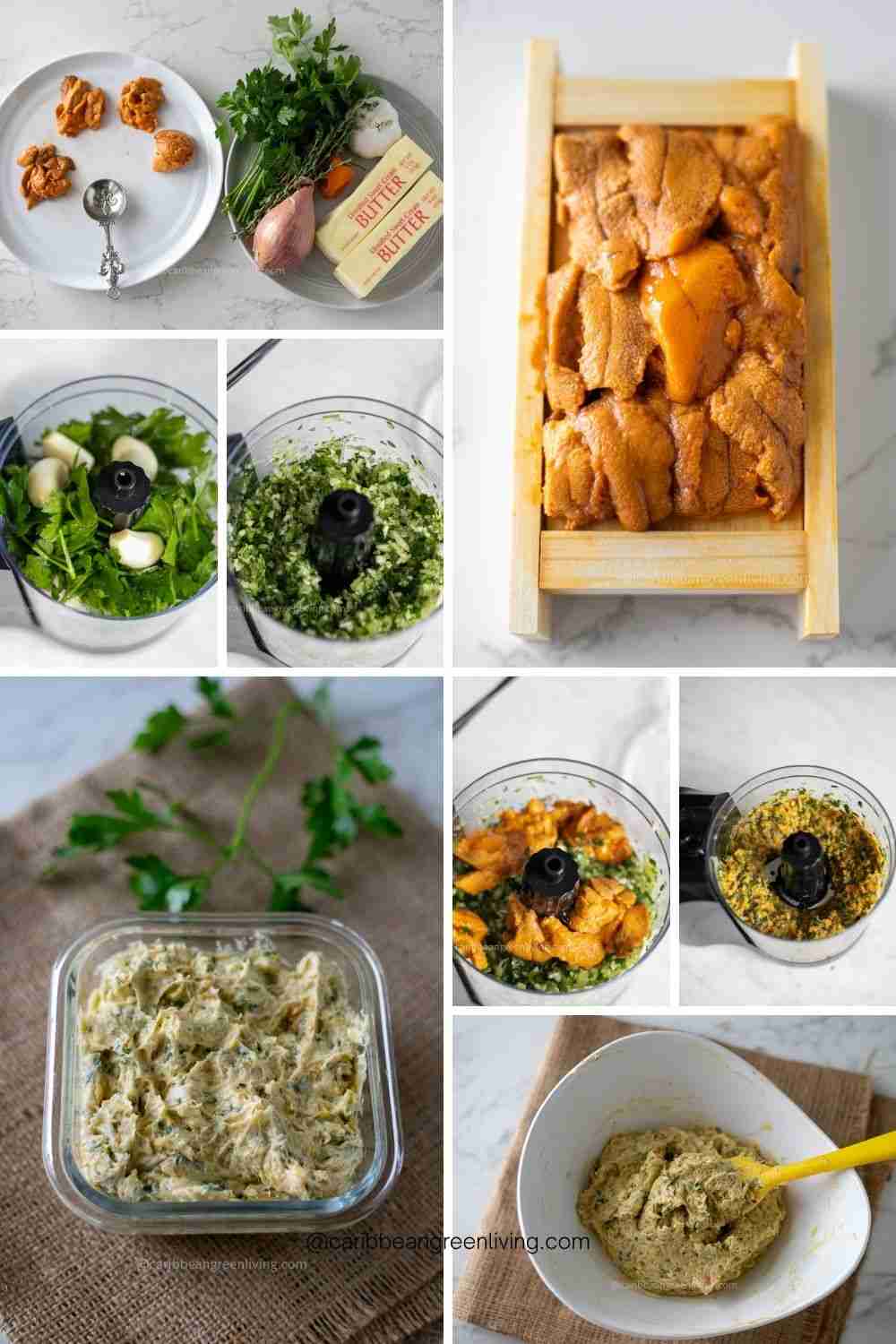
1. Soften the butter
Allow the unsalted butter to soften at room temperature. You want it pliable enough to mix easily, but don’t melt it.
2. Prepare the aromatics
- Finely mince the shallot and garlic.
- Finely chop the parsley and thyme. If using scallions, slice them very thinly.
- Finely mince a small amount of Scotch bonnet pepper.
3. Prepare the uni
Gently inspect the uni and drain away any excess liquid.
4. Combine the ingredients
- Add the softened butter and uni to a bowl. Mix gently until the uni is incorporated into the butter.
- Add the shallot, garlic, parsley, thyme, Scotch bonnet, and a small amount of fresh lemon juice.
- Mix until evenly distributed.
5. Taste before seasoning
Taste the butter before adding salt. Remember that the uni itself contributes a natural briny quality. If you’re using salted butter, you may not need additional salt at all.
6. Chill
Transfer the uni butter to a clean airtight container and refrigerate until firm. You can also shape compound butter into a log using parchment paper if you want to slice individual portions later.
How Much Uni Should You Use?
There isn’t one universal ratio because uni varies in flavor intensity, size, quality, and moisture. More uni doesn’t automatically produce better butter.
You want enough sea urchin so its flavor remains recognizable after it is combined with the butter and aromatics, but the finished mixture should still behave like compound butter.
Start with the recipe proportions and taste before making adjustments. If you want stronger uni flavor, add a little more rather than increasing several seasonings at once.
How to Adjust the Flavor
One advantage of homemade compound butter is that you can adjust it before chilling.
- For more uni flavor: add more uni.
- For more brightness: Add another small amount of lemon juice.
- For additional heat: Add a little more finely minced Scotch bonnet.
- For more onion flavor: Add finely sliced scallions or slightly increase the shallot.
- For more herbal flavor: Increase the parsley or thyme gradually.
Make small adjustments. Uni has a delicate flavor that can be overpowered by aggressive seasonings.
Can You Make Uni Butter with Haitian Epis?
Yes, you can use Haitian epis to make uni butter, but a little goes a long way. Uni has a delicate, savory flavor, while Haitian epis is a concentrated blend of herbs, aromatics, peppers, and acidity that can easily overpower it.
If your epis contains lemon juice, lime juice, vinegar, or another liquid used to help blend the herbs, strain or gently squeeze out some of the excess liquid before adding it to softened butter. Too much liquid can affect the texture of the compound butter and introduce more acidity than the uni needs.
Start with a very small amount of epis, mix, and taste before adding more. You can always increase the epis, but once its flavor dominates the uni, it’s difficult to reverse.
If the mixture becomes too acidic or the epis flavor is too concentrated, add more softened unsalted butter to bring everything back into balance.
How to Use Haitian Epis Uni Butter
This variation opens up some especially interesting possibilities in the Haitian and Caribbean kitchen.
Spread it on warm Haitian bread, or use it to make savory croutons from Haitian bread. It’s also delicious with cassava bread, where the crisp texture provides a nice contrast to the creamy butter.
For entertaining, add a small portion to a Caribbean-inspired charcuterie board alongside bread, cassava crackers or cassava bread, fruit, cheese, and other appropriate accompaniments.
And don’t stop at bread. Try a small amount of epis uni butter:
- Tossed with Haitian spaghetti
- Melted into white rice
- Folded into diri djon djon
- Added as a finishing touch to sos pwa
- Melted over shrimp or fish
- Tossed with roasted or steamed root vegetables
With dishes such as diri djon djon and sos pwa, start small. Uni butter should add richness and savory depth without changing the identity of the original dish.
Tip: If you plan to use Haitian epis from the beginning, you don’t necessarily need to add all the shallot, garlic, parsley, thyme, Scotch bonnet, and other aromatics from the original uni butter recipe. Many of those flavors are already present in epis. Taste your epis first and let it determine what, if anything, the butter still needs.
How to Use Uni Butter
This is where making a batch becomes especially worthwhile.
Try uni butter:
- Tossed with hot pasta
- Melted over grilled or roasted shrimp
- With lobster or crab
- Melted over fish
- Swirled into warm rice
- Melted over roasted vegetables
- With potatoes
- Spread lightly on warm crusty bread
- Stirred into a simple seafood sauce
- Used as a finishing butter for sautéed seafood
When using it with hot food, you often don’t need to cook the butter aggressively. Let the food’s residual heat melt it. This helps preserve its delicate flavor.
What Pairs Well with Uni Butter?
Uni butter works particularly well with ingredients that provide contrast without overpowering it.
- Seafood is an obvious match, especially shrimp, lobster, crab, scallops, and mild fish.
- Pasta provides a neutral base that allows the butter to become the sauce.
- Simple vegetables, potatoes, rice, and good bread also work well.
For additional flavor, consider ingredients such as lemon, parsley, thyme, scallions, garlic, shallots, and mild tomato preparations.
Common Mistakes When Making Uni Butter
1) Using too many strong ingredients
Uni isn’t a flavor that needs to be attacked from every direction. Too much garlic, onion, Scotch bonnet, citrus, or herbs can overwhelm it.
2) Using melted butter
Start with softened butter, not melted butter. Melted butter changes the texture and makes it more difficult to create a traditional compound butter.
3) Adding salt before tasting
Taste first. Between the natural brininess of the uni and the possibility of using salted butter, additional salt may not be necessary.
4) Adding too much lemon juice
Acidity is useful, but this is still compound butter. A little lemon should brighten the flavor rather than turn the butter into a citrus sauce.
5) Overprocessing the mixture
You don’t need to pulverize everything. Mixing just until the ingredients are incorporated helps maintain a pleasant texture.
6) Using poor-quality butter
When butter is one of the main ingredients, its flavor matters. This isn’t the recipe for using a butter you don’t particularly enjoy.
Storage and Freezing
Because this compound butter contains fresh seafood, treat it differently from a basic herb butter. Store the finished uni butter in a clean airtight container in the refrigerator and keep it properly chilled.
For longer storage, portioning and freezing can be particularly convenient. Small portions let you remove only what you need, rather than repeatedly thawing the entire batch.
Always use clean utensils when removing butter from the container.
Frequently Asked Questions
Is uni butter fishy?
Good-quality fresh uni shouldn’t simply taste “fishy.” It has a distinctive ocean-like, briny, savory, slightly sweet flavor. If your uni smells strongly unpleasant or fishy before you make the butter, don’t try to disguise it with other ingredients.
Can I use salted butter?
Yes, but I prefer unsalted butter because it provides better control over sodium and seasoning. If using salted butter, taste the finished mixture before adding any additional salt.
Can I substitute onion for shallot?
Yes. Finely minced red or white onion can replace the shallot. Use a modest amount so the onion doesn’t overpower the sea urchin.
Can I add scallions?
Absolutely. Slice them very finely before adding them to the butter.
Does uni butter need Scotch bonnet?
No. You can leave it out. However, a small amount contributes fruity aroma and gentle heat that complements the Caribbean-inspired flavor of this version.
Can I make uni butter spicy?
You can increase the Scotch bonnet, but I recommend keeping the heat moderate. Too much pepper can overwhelm the delicate flavor of the uni.
Can I melt uni butter?
Yes. Uni butter is excellent melted over hot food. Gentle heat is preferable to prolonged high-temperature cooking.
What pasta works with uni butter
Spaghetti, linguine, and fettuccine are all good choices. The butter melts into the hot pasta, forming the foundation of a simple, rich sauce.
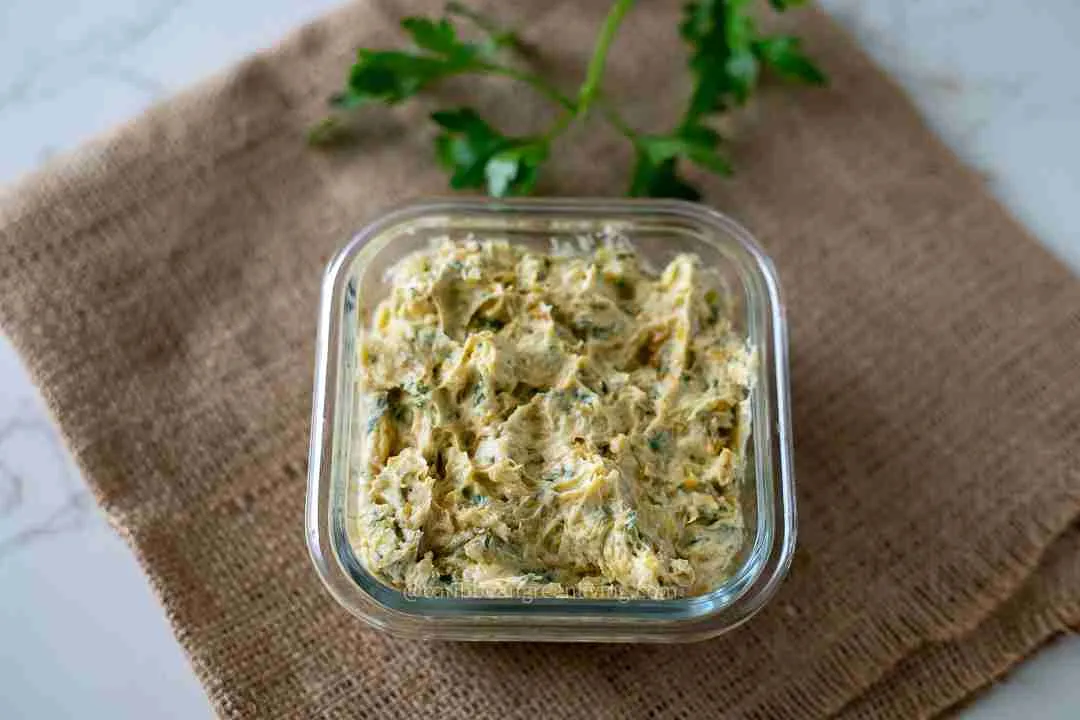
Try It Next: Spaghetti with Uni Butter and Shrimp
Once you’ve made the butter, put it to work.
My Spaghetti with Uni Butter and Shrimp combines the rich compound butter with shrimp and pasta for a savory seafood variation that takes the idea in an entirely different direction.
It’s also a good example of why making uni butter first is worthwhile: the compound butter becomes a prepared flavor base that can turn a relatively simple meal into something much more interesting.
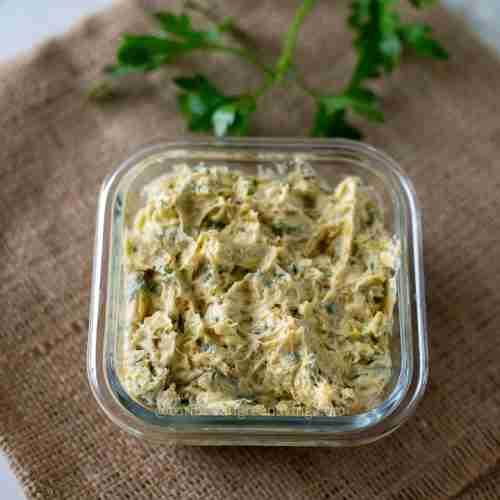
Caribbean-Inspired Uni Butter
Equipment
- Small food chopper or mini food processor
- Small mixing bowl
- Silicone Spatula or Wooden Spoon
- Small knife
- Airtight container
- Parchment paper, optional
Ingredients
- 1 cup 2 sticks / 226 g good-quality unsalted butter, softened
- About 4 tablespoons fresh sea urchin uni, drained of excess liquid
- 1 medium shallot very finely minced
- 4 garlic cloves very finely minced
- 2 tablespoons finely chopped fresh parsley
- Leaves from 2–3 fresh thyme sprigs finely chopped
- ½ Scotch bonnet pepper seeds removed and very finely minced, or up to 1 pepper for a spicier butter
- A few drops fresh lemon juice to taste
- Salt optional and to taste
Instructions
- Soften the butter. Let the unsalted butter soften at room temperature until easily mixable but not melted.
- Prepare the aromatics. Peel the shallot and garlic. Remove the seeds from the Scotch bonnet pepper. Add the shallot, garlic, parsley, thyme leaves, and Scotch bonnet to a small food chopper. Pulse until everything is very finely chopped. Avoid processing it into a watery paste.
- Add the uni. Add the drained fresh uni to the chopped aromatics and pulse briefly to combine. You want the uni incorporated into the aromatic mixture without unnecessarily overprocessing it.
- Combine with the butter. Transfer the uni and herb mixture to a bowl with the softened butter. Mix thoroughly until evenly distributed.
- Add the lemon. Add a few drops of fresh lemon juice and mix again. Taste before adding more—the lemon should brighten the butter, not make it noticeably acidic.
- Taste and season. Taste the finished uni butter. Add salt only if necessary.
- Chill. Transfer to a clean airtight container and refrigerate until firm.
Notes
You don’t have to finely chop every herb and aromatic by hand. I used a small food chopper for the shallot, garlic, parsley, thyme, and Scotch bonnet, which made preparation much quicker and produced small, evenly distributed pieces. Pulse rather than continuously blending—you want finely chopped aromatics, not a liquid herb purée. Don’t turn the aromatics into a watery purée. A small food chopper makes preparation easier, but use short pulses. Excessively processing the herbs, shallot, and pepper can release too much moisture. Once the aromatics are finely chopped, add the uni and pulse only briefly before combining everything with the softened butter.
Please keep in mind that nutritional information is a rough estimate and can vary greatly based on the products used.
Nutrition info is automatically generated and provided as a courtesy and as an estimate only.
Corn Allergy:
Always choose ingredients without corn or corn derivatives.
Source
https://www.foodsafety.gov/blog/safe-selection-and-handling-fish-and-shellfish