Christophine (Chayote): How to Choose, Prepare, and Cook It
Christophine, also called chayote or mirliton, is a mild-flavored member of the squash family used in Caribbean cooking. It is crisp when raw and tender when cooked, making it useful in salads, vegetable stews, skillet dishes, and creamy gratins.
Its gentle flavor works well with garlic, scallions, thyme, and other seasonings. Whether you are cooking a simple side or adding vegetables to a family meal, there are plenty of ways to put it to use.
Already have chayote ready to cook? Browse these eight chayote recipes, or start with chayote au gratin.

Christophine, chayote, and mirliton: are they the same?
Yes. These names refer to the same ingredient, although the name you hear depends on the place and household. You may also see chocho, choko, or vegetable pear on a label.
Chayote is botanically a fruit, but we usually prepare and serve it as a vegetable. The familiar pale-green variety is common in grocery stores; shape, skin texture, and color can vary.
What does chayote taste like?
Raw chayote has a mild, fresh taste and a crisp bite. Cooking softens it without giving it an overpowering flavor. That makes it a useful partner for a savory sauce or a well-seasoned stew.
The texture depends on how you prepare it. Thin slices suit a salad, evenly cut pieces cook well in a skillet, and tender, well-drained cubes work beautifully in a gratin.
How to prepare chayote
- Rinse the chayote under running water before cutting.
- Wear food-safe gloves when peeling if its sticky sap bothers your skin.
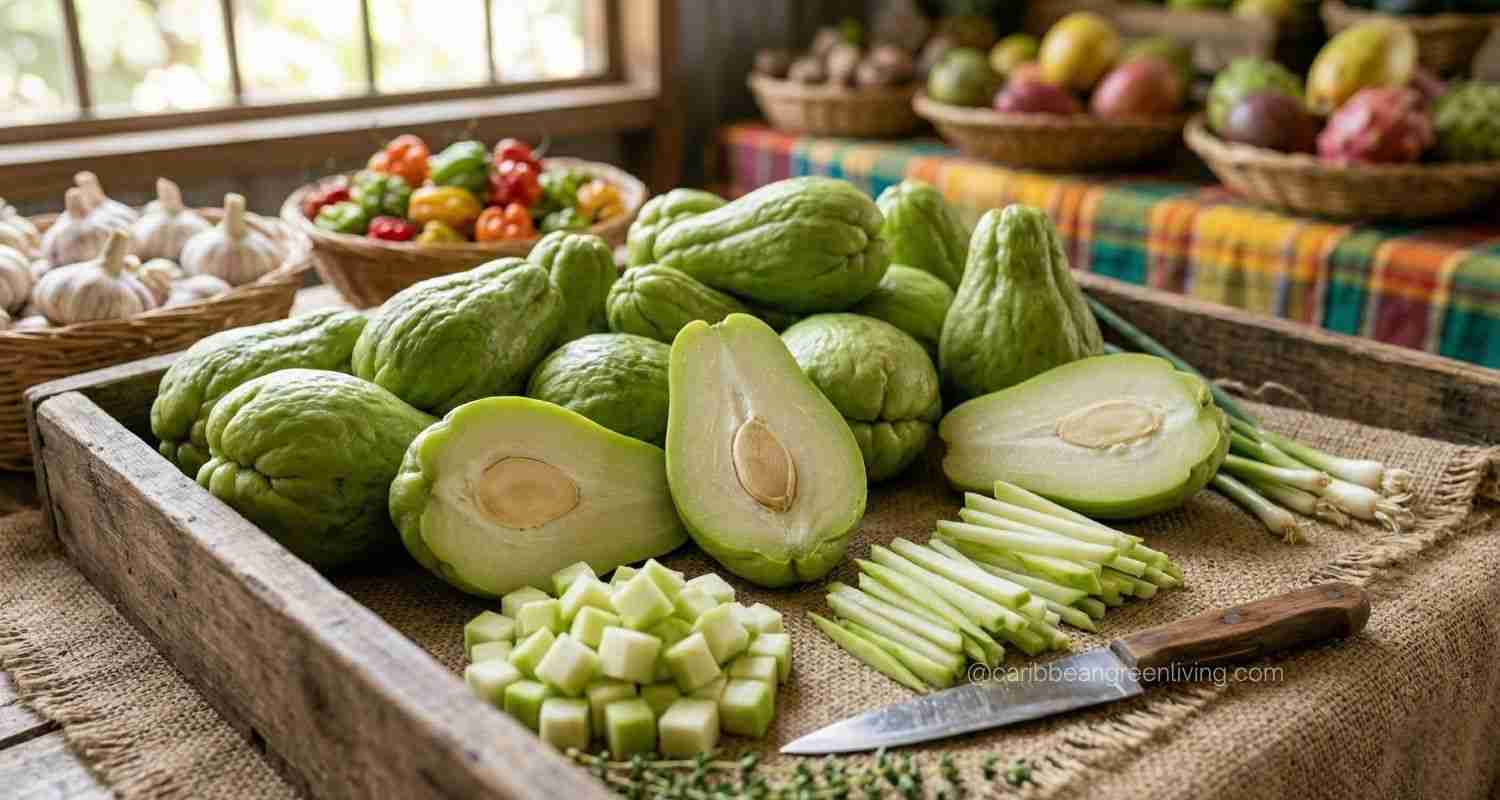
- Peel when the recipe calls for it, especially for a smooth-textured gratin. Young, tender skin is edible; tougher or prickly skin is best removed.
- Cut in half lengthwise. The tender seed is edible, so remove it or keep it according to the recipe and your texture preference.
- Slice, cube, or shred as directed. Keep pieces similar in size for more even cooking.
For the sautéed chayote recipe, the soft seed is chopped and cooked with the vegetable. The gratin recipe uses peeled, cored cubes.

Ways to cook Christophine
Sauté it for an everyday side. Garlic and scallions give mild chayote a savory base. Follow the sautéed chayote recipe for its quantities and cooking time.
Bake it in a gratin. Cook the chayote until tender and drain it well before combining it with sauce. Excess cooking water can thin a gratin. Try chayote au gratin with ham and cheese.
Pair it with another vegetable. Pan-roasted chayote with sweet potatoes is another way to bring it to the table.
Use it in a main dish. Try ground turkey meatballs with chayote and kale.
Explore salads. Chayote can be eaten raw, but individual salad recipes may call for cooking it first. Follow the preparation in this shrimp, avocado, and chayote salad rather than assuming every chayote salad uses it raw.
Cooking times vary with the size of the pieces and the method. Check the texture as you cook instead of relying on one cooking time for every dish.
The Best Flavor Pairings
Christophine’s mild taste shines when paired with herbs, spices, and simple sauces that add brightness, warmth, or richness. These seasonings help build layers of flavor without overpowering the vegetable.
Herbs
- Thyme: Adds an earthy, woodsy aroma that brings depth to sautéed or stewed Christophine.
- Parsley: Fresh, clean, and slightly peppery — perfect for balancing the vegetable’s natural sweetness.
- Scallions: Mild onion flavor with a hint of sharpness that wakes up simple steamed or boiled dishes.
- Chives: Delicate and lightly garlicky, ideal for finishing salads or roasted Christophine.
Spices
- Black pepper: Adds gentle heat and warmth, enhancing Christophine’s natural mildness.
- Paprika: Smoky or sweet, depending on the type, giving roasted or sautéed dishes a subtle depth and color.
- Cayenne: A bold kick that transforms mild Christophine into a lively, spicy side dish.
- Garlic powder: Savory and aromatic, perfect for quick seasoning when you’re sautéing or roasting.
Sauces & Boosters
- Haitian Epis: Infuses bold Caribbean flavors — garlic, peppers, herbs — instantly elevating the dish.
- Lemon butter: Bright and silky, adding richness with just the right amount of acidity.
- Olive oil with fresh herbs: Clean, aromatic, and simple — allows Christophine’s texture to shine.
- Light béchamel: Creamy and luxurious, ideal for gratins and baked dishes where you want a comforting finish.


How to choose chayote
Look for firm chayote without soft spots, mold, or extensive bruising. Avoid pieces that are badly shriveled. Some varieties have prickly skin, so smoothness alone is not a reliable sign of quality.
Check Caribbean and Latin American markets, international grocery stores, and supermarkets that carry a varied produce selection. Availability and price depend on your market.
How to store chayote
Whole chayote: Keep it in a bag in the refrigerator to limit moisture loss. University of Minnesota Extension notes that it can last up to a month, depending on condition. Check it regularly and use it sooner if it begins losing firmness.
Cut chayote: Put it in a covered container in the refrigerator and use it promptly. The storage guidance for a whole fruit does not apply once it has been peeled and cut.
Cooked dishes: Refrigerate promptly in shallow containers, within two hours of cooking—or one hour when temperatures are above 90°F. Use refrigerated leftovers within three to four days and reheat them to 165°F.
For preserving a large batch, use a specific, reliable preservation method. Avoid treating unverified freezing instructions as suitable for every chayote dish.
What can you use instead of chayote?
Zucchini or yellow summer squash may work in some sautéed dishes and stews, but they soften differently. Adjust the cooking time and watch the moisture.
For a recipe built around chayote’s texture, such as a gratin, using the intended ingredient gives you the closest result. A substitution is a variation, not a guarantee of the same finished dish.
Raw, sliced thin or shredded, it is used in green and chopped salads to add a delicate, crunchy texture. It is also cooked, roasted with herbs and spices as the main ingredient, added to soups, stews, and curries, used in legumes, or eaten grilled.
Frequently asked questions
Do you have to remove the seed?
No. The tender seed is edible. Keep or remove it according to the recipe and the texture you prefer.
Can you eat chayote raw?
Yes. Wash it before preparing it, peel if needed, and slice or shred it for a crisp texture.
Do you have to boil chayote before cooking it?
It depends on the dish. The gratin recipe calls for boiling and draining; the sautéed recipe cooks the chayote directly in the skillet.
Why does my gratin turn watery?
Poorly drained chayote can add water to the sauce. Drain cooked pieces thoroughly and use the sauce quantities in your recipe.
Bring christophine into your everyday cooking
Start with the dish that fits your meal: sautéed chayote for a skillet side, gratin for a creamy baked option, or one of the other recipes in the chayote recipe collection. Good preparation and thoughtful seasoning make this mild ingredient easy to enjoy.
Sources for preparation and storage: University of Minnesota Extension, National Center for Home Food Preservation, USDA leftover handling, and USDA reheating guidance.
Originally published on March 7, 2016. Revised and updated.