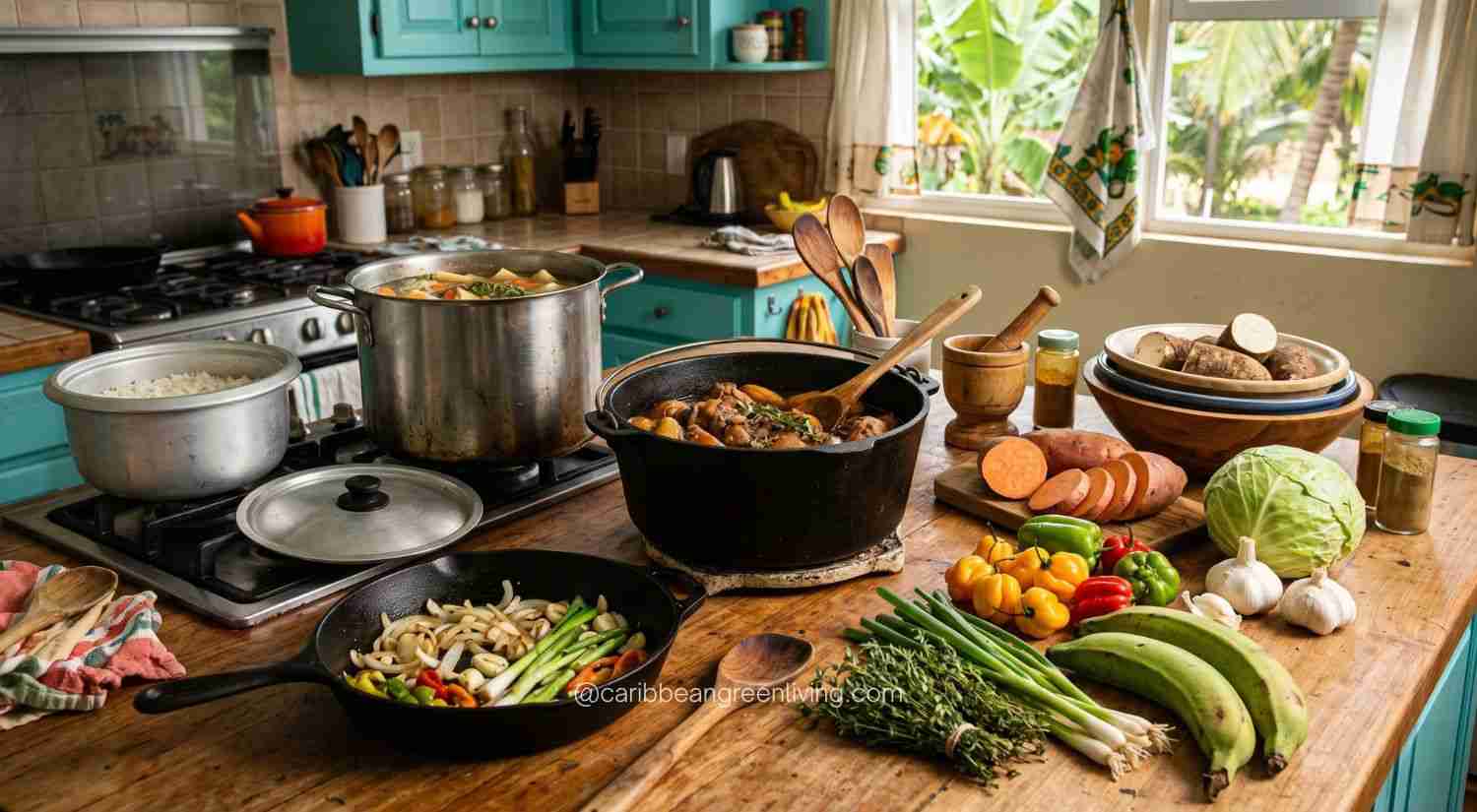
Haitian Cuisine: The Ingredients, Traditions, and Cooking Methods That Shape Every Meal
Haitian cuisine didn’t develop overnight. It evolved over generations through the island’s tropical climate, locally available ingredients, African culinary traditions, Indigenous influences, European influences, and the creativity of families who learned to cook with what they had.
If you’ve ever wondered why Haitian cuisine is filled with hearty vegetables, flavorful herbs, slow-simmered stews, and meals built around provisions, the answer lies deep in the country’s history.
Long before Haiti became the world’s first Black republic in 1804, enslaved Africans brought to the French colony of Saint-Domingue relied on knowledge passed down through generations to grow food, identify edible plants, prepare nourishing meals, and transform simple ingredients into satisfying dishes. What began as a matter of survival gradually evolved into one of the Caribbean’s richest culinary traditions.
Many of Haiti’s most recognizable foods, including legim, bouyon, mayi moulen, diri kole, and Soup Joumou—reflect centuries of adaptation, creativity, and resilience. Families learned to cook with what the land provided, making the most of tropical vegetables, leafy greens, herbs, root crops, and seasonal fruits while wasting very little.
This story is not simply about recipes. It is about the people who preserved their culinary traditions, adapted them to a new land, and created a cuisine that continues to nourish families today.
A Land Rich in Food
Long before modern supermarkets and imported ingredients, Haiti’s tropical climate offered an incredible variety of foods throughout the year.
The island’s fertile soil supported crops that were both nutritious and dependable. Many of these ingredients remain staples in Haitian kitchens today.
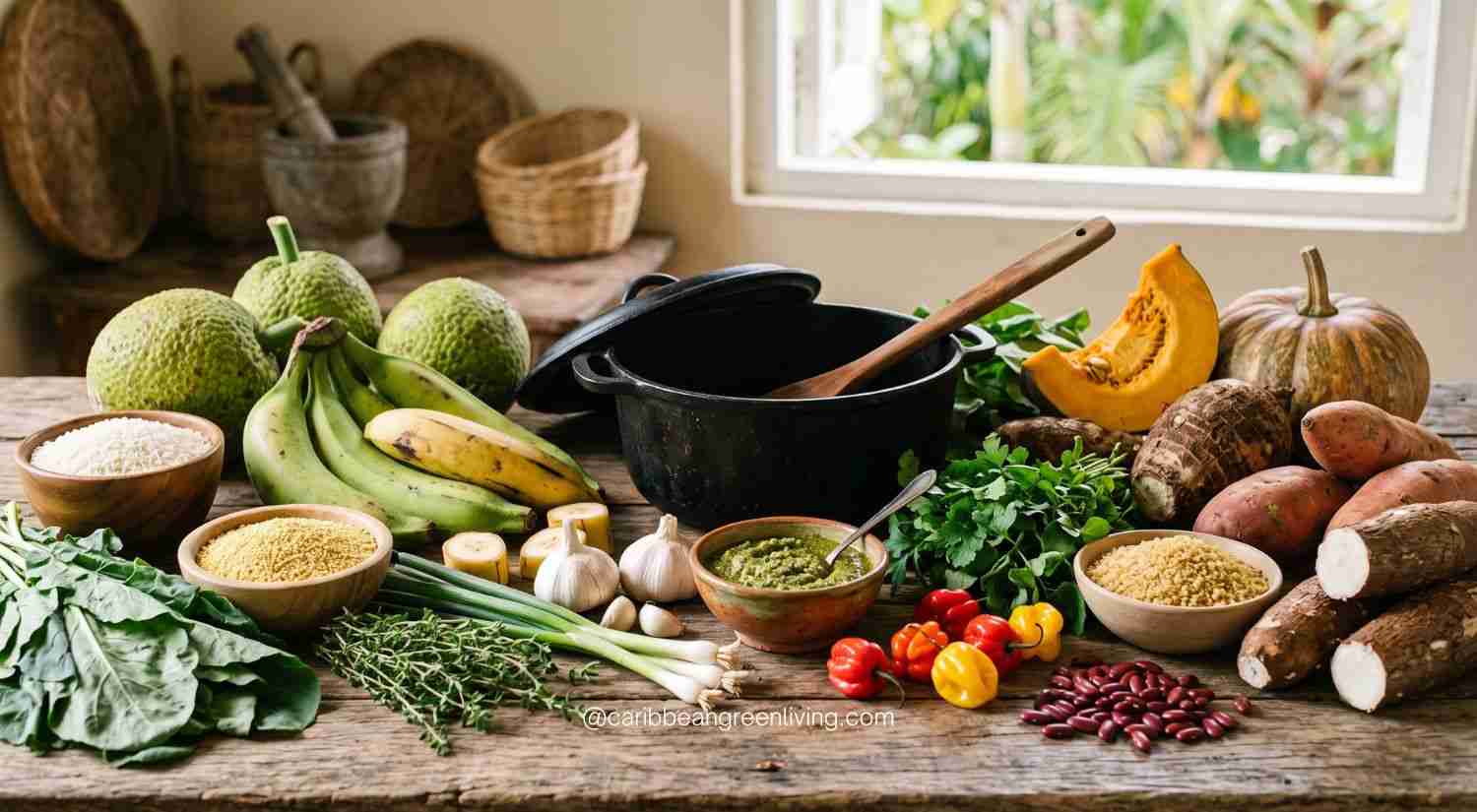
Common foods included:
- cassava
- yams
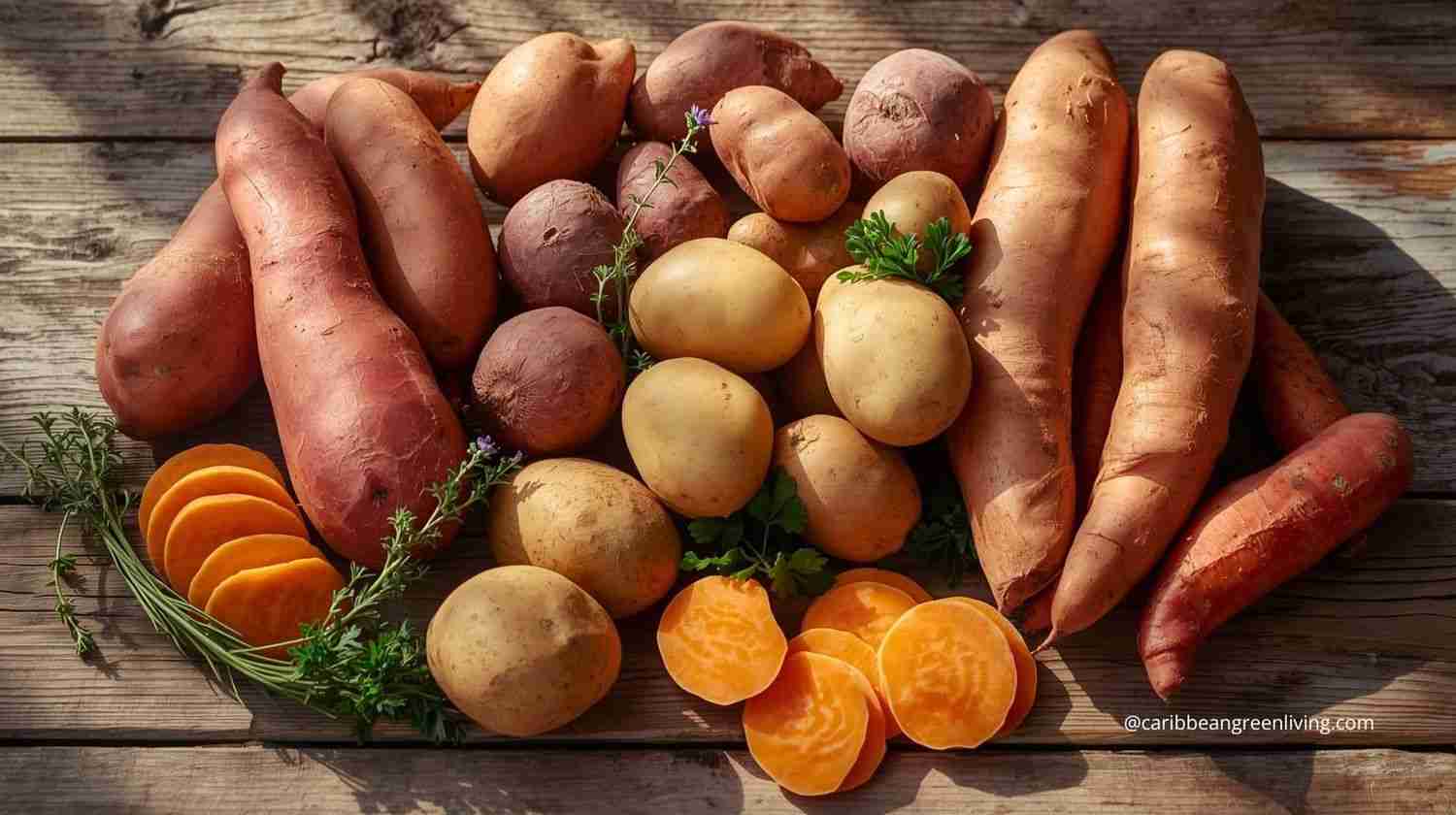
- sweet potatoes
- malanga
- yautia
- eddoes
- breadfruit
- plantains
- beans
- pigeon peas
- corn
- (calabaza and other tropical squash varieties)
- leafy greens
- herbs
- tropical fruits
Many of these crops could be harvested at different times of the year, making them reliable food sources for families living through uncertain conditions.

African Knowledge Became the Foundation of Haitian Cooking
Enslaved Africans did not arrive without knowledge.
They brought generations of agricultural experience from West and Central Africa, including an understanding of tropical farming, edible plants, preservation techniques, seasoning, and communal cooking.
Although many familiar crops already grew in the Caribbean, or were introduced through the Columbian Exchange, the agricultural skills, cooking methods, and flavor traditions brought from Africa profoundly shaped how those ingredients were cultivated and prepared. Over time, these practices blended with Indigenous Taíno knowledge, European influences, and locally available foods to create what we now recognize as Haitian cuisine.
Rather than attempting to recreate the exact meals of their homeland, cooks adapted to the ingredients available, developing new recipes while preserving familiar techniques and values.
Learning From the Land
One of the greatest strengths of Haitian cooking is its relationship with nature.
Generations learned which plants were:
- edible
- seasonal
- nourishing
- medicinal
- flavorful
This knowledge wasn’t written in cookbooks. It was shared by parents, grandparents, neighbors, and community elders.
Over time, families developed a deep understanding of the landscape, recognizing when certain fruits ripened, where herbs grew best, and which leafy greens could be safely harvested and prepared.
This tradition of learning from the land continues in many rural communities today.
The Importance of Leafy Greens
One of the most remarkable examples of Haitian ingenuity is legim.
While many people think of legim as a single vegetable dish, it represents something much broader: the practice of transforming available vegetables and leafy greens into nourishing meals.
Depending on the season and region, cooks have traditionally prepared legim using vegetables and edible leaves that were abundant and locally available. These could include squash, cabbage, spinach, chayote (mirliton), eggplant, carrots, and other greens. Across the Caribbean, other edible leaves, such as amaranth, jute leaves (lalo), squash leaves, and beet greens, have also played important roles in regional cooking.
Families learned through generations which plants were safe to eat, how to prepare them properly, and how to combine them into flavorful dishes. This practical knowledge helped communities make the most of the land while creating meals that were both satisfying and nourishing.
One of my favorite childhood memories takes me back to Jacmel, where my father was from. I remember sitting down to a meal of legim and being amazed that it contained little or no meat. Until then, I had always associated a flavorful meal with meat, but that dish completely changed my perspective. The vegetables were incredibly rich and satisfying on their own. Every bite tasted fresh, vibrant, and deeply seasoned, allowing the natural flavors of the vegetables and herbs to shine. It was a reminder that great cooking isn’t defined by expensive ingredients but by fresh produce, thoughtful seasoning, and the care that goes into preparing a meal.
Legim demonstrates one of the defining characteristics of Haitian cuisine: simple ingredients transformed through skill, patience, and seasoning.

Provisions: The Foods That Sustained Generations
In Haiti, root vegetables and starchy crops are often referred to as provisions because they provide lasting nourishment.
These include:
- cassava
- yam
- malanga
- yautia
- sweet potatoes
- breadfruit
- plantains
Rich in carbohydrates, fiber, vitamins, and minerals, provisions supplied the energy needed for long days of demanding physical work.
Many also stored well after harvest and could be prepared in countless ways: boiled, roasted, mashed, fried, baked, or added to soups and stews. Their versatility made them a cornerstone of Haitian cooking, and they remain essential ingredients in family meals today.

Grains: Turning Everyday Staples into Memorable Meals
In many Haitian households, a simple pot of rice is never just plain rice. It’s an opportunity to build layers of flavor using fresh herbs, spices, aromatics, and deeply savory ingredients.
Growing up, I often heard Haitians proudly say that no one makes rice quite like we do. While every culture has its own beloved rice dishes, Haitian cooks have a remarkable way of transforming everyday grains into meals that are rich, aromatic, and incredibly satisfying.
Rather than relying on butter or heavy sauces, many Haitian recipes build flavor from the very beginning. Garlic, onions, scallions, thyme, parsley, cloves, peppers, epis, tomato paste, and endui, Haiti’s seasoned pork belly, create a savory foundation before the grains are even added. Even a small amount of endui can infuse an entire pot of rice with smoky, savory depth.
This approach is reflected in some of Haiti’s best-loved grain dishes:
- Diri kole ak pwa (rice and beans)
- Diri djondjon (black mushroom rice)
- Mayi moulen (cornmeal)
- Boulgou or Ble (bulgur wheat)
- Pitimi (millet)
The same philosophy extends beyond rice. Cornmeal, bulgur wheat, and millet are rarely cooked plain. Instead, they’re simmered with herbs, spices, aromatics, and flavorful broths, proving that even the humblest grains deserve careful seasoning.
Beans are equally important. Sometimes they’re cooked directly with the rice, while other times they’re transformed into sos pwa, a rich bean sauce served over white rice. Pair that with a generous serving of legim, and you have one of Haiti’s most comforting everyday meals, simple ingredients elevated through patience, fresh herbs, and thoughtful seasoning.
To me, this is one of the defining characteristics of Haitian cuisine. Flavor isn’t an afterthought; it’s built one layer at a time. Every ingredient, from fresh thyme to epis to endui, has a purpose in creating meals that are both nourishing and memorable.

From Simple Ingredients to Extraordinary Flavor
One of the defining characteristics of Haitian cuisine is its ability to transform humble ingredients into deeply satisfying meals.
Vegetables that might seem ordinary become rich and aromatic when simmered with fresh herbs, garlic, onions, peppers, and citrus. This philosophy is perhaps best embodied by epis, Haiti’s signature seasoning base, which brings depth and complexity to soups, stews, rice dishes, meats, and vegetables.
Cooking slowly over gentle heat allows these flavors to develop, proving that delicious food does not require expensive ingredients, only time, care, and an understanding of balance.
The same principle continues to shape Haitian cooking today.

Cooking Over Fire
Before modern kitchens, most meals were prepared over wood fires using simple cooking vessels.
Cooking methods included:
- boiling
- simmering
- roasting
- grilling
- smoking
- baking in embers
- slow cooking in heavy pots
Cooking over wood imparted subtle smoky flavors and encouraged slower preparation, allowing tough vegetables and cuts of meat to become tender while herbs and spices infused every bite.
These traditional methods influenced many recipes that are still prepared today, even as modern kitchens rely on gas or electric stoves.

Resourcefulness in Every Kitchen: Fresh Foods From the Garden
Not every meal required cooking.
Haiti’s tropical climate provided a wide variety of fresh fruits and vegetables that could be enjoyed with little preparation.
Seasonal favorites included:
- papaya
- mango
- guava
- avocado
- coconut
- sugar cane
- bananas
- plantains
- chayote (mirliton), especially when young and tender
These fresh foods added vitamins, hydration, healthy fats, and variety to daily meals while celebrating the abundance of the island.
One of the lasting lessons of Haitian cooking is that very little goes to waste.
Bones become rich broth.
Vegetable scraps add flavor to soups.
Overripe fruit becomes juice, jam, or desserts.
Bread becomes pudding.
Leftovers are transformed into entirely new meals.
This resourcefulness reflects generations of cooks who understood the value of every ingredient. It is also a reminder that many modern ideas about reducing food waste have long been part of Caribbean kitchens.

The Legacy Lives On
Every bowl of legim, every pot of bouyon, every serving of diri kole, and every family recipe passed from one generation to the next tells a story that extends far beyond the kitchen.
Haitian cuisine is the result of centuries of knowledge, adaptation, and perseverance. It reflects the wisdom of African ancestors, the richness of the Caribbean landscape, and the determination of people who transformed necessity into tradition.
Today, these recipes continue to bring families together while preserving a culinary heritage that remains one of Haiti’s greatest treasures.
Conclusion
Understanding how Haitian cuisine evolved helps us appreciate more than the flavors on our plates. It reveals a history of resilience, innovation, and deep respect for the land.
Haitian cuisine developed around ingredients that were abundant, nourishing, and well-suited to the island’s climate. Generations of cooks transformed these everyday foods into meals full of flavor, texture, and tradition.
The vegetables, herbs, provisions, fruits, and cooking techniques that define Haitian cooking today were shaped by generations who learned to work with nature, preserve traditions, and create nourishing meals from simple ingredients.
Whether you’re preparing a pot of legim, steaming provisions, blending fresh epis, or sharing Soup Joumou with family, you’re participating in a culinary story that has been unfolding for centuries.
As Caribbean Green Living continues to explore the ingredients and traditions of Haiti and the wider Caribbean, these stories remind us that every meal carries a history worth preserving.
Sources:
- Columbian Exchange: https://en.wikipedia.org/wiki/Columbian_exchange
- Haiti’s history and culture: https://www.britannica.com/place/Haiti
- Haiti: https://www.unesco.org/en/countries/ht