
Haitian Spaghetti (Espageti) Recipe – Easy Haitian Breakfast
Haitian spaghetti, or espageti, is a beloved Haitian pasta dish commonly enjoyed for breakfast, although it can also be served for lunch or supper. Unlike Italian-style spaghetti with tomato sauce, Haitian spaghetti is typically coated in a flavorful mixture of cooked tomato paste, aromatics, herbs, and seasonings rather than covered in a heavy sauce.
Traditionally, Haitian spaghetti is often prepared with sliced hot dogs, but every household has its own version. Sausage, smoked herring, ham, chicken, seafood, and other proteins can all find their way into the pot. Haitian epis can also be used to build even more flavor.
This recipe uses chicken sausage, tomato paste, garlic, onion, and thyme for a simple version you can easily make at home. Below, I’ll also show you how to adapt it using traditional ingredients and other Haitian spaghetti variations.
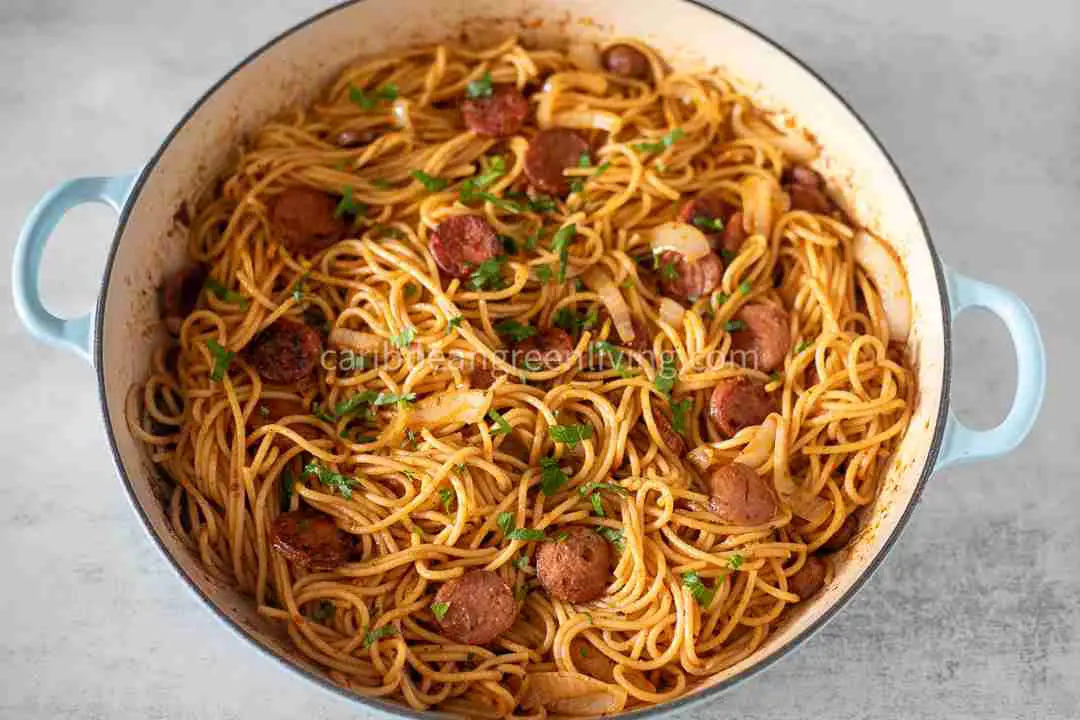
What Is Haitian Spaghetti?
Haitian Spaghetti is a beloved breakfast dish that transforms a simple box of pasta into a flavorful and satisfying meal. While spaghetti is often associated with lunch or dinner in many cultures, in Haiti, it is commonly enjoyed in the morning alongside a cup of coffee, fresh juice, or tea.
The traditional recipe combines spaghetti with hot dogs, tomato paste (or sometimes ketchup), and a blend of seasonings. One of the key steps is cooking the tomato paste in oil before adding the pasta. This simple technique deepens the flavor, removes the raw taste of the tomato paste, and gives the spaghetti its signature rich red-orange color.
Like many classic Haitian dishes, there are countless family variations. While hot dogs remain the traditional choice, many home cooks customize the recipe with ingredients they have on hand. Depending on the day, I may use seafood, Italian sausage, chicken sausage, turkey sausage, diced ham, or even skip the meat altogether. The beauty of Haitian spaghetti is its versatility; it is affordable, quick to prepare, and easy to adapt to your family’s tastes.
Whether served as a hearty breakfast, a simple lunch, or a comforting weeknight meal, Haitian spaghetti remains a staple that generations continue to enjoy.
What Type of Pasta Works Best?
Regular spaghetti works well, but the brand and thickness of the pasta matter. Choose a good-quality pasta that stays firm after boiling because the noodles will continue cooking briefly when they are tossed with the seasoned tomato mixture.
I don’t recommend very thin spaghetti for this dish. It doesn’t hold the seasoning mixture as well, and the delicate noodles can become too soft or almost pasty once everything is combined. Regular spaghetti is a much better choice.
You aren’t limited to spaghetti, either. Linguine and fettuccine are two of my favorite alternatives because their wider shape holds onto the seasonings beautifully and gives the finished dish a satisfying texture.
Haitian Spaghetti Ingredients
Spaghetti Noodles
Choose a quality pasta that holds up well during cooking. I often use Barilla spaghetti, but any good-quality brand will work.
Olive Oil
Adds richness and helps develop the tomato paste’s flavor. You can also use canola oil or another neutral cooking oil.
Tomato Paste
Tomato paste gives Haitian spaghetti its signature color and savory flavor. I prefer using a no-salt-added tomato paste since sausages and other meats can already be high in sodium.
Garlic
Fresh garlic adds the best flavor, but garlic powder is a convenient substitute when needed.
White Onion
Provides sweetness and depth. Red onions or shallots can also be used.
Fresh Thyme
Use the leaves only. If fresh thyme is unavailable, dried thyme works well too.
Chicken Sausage, Hot Dogs, or Other Meat
Traditional Haitian spaghetti is often made with hot dogs, but chicken sausage, turkey sausage, smoked sausage, ham, or your favorite protein can be substituted. When possible, choose high-quality or organic options.
Chicken Bouillon Powder
Adds extra savory flavor. A low-sodium version is recommended. Some cooks prefer using Maggi cubes instead.
Salt
Season to taste. Use sparingly, as the sausage and bouillon may already contribute enough salt.
Reserved Pasta Water
Do not skip this ingredient. Reserve at least 1 cup of the cooking water before draining the pasta. The starchy water helps create a silky sauce and keeps the spaghetti from drying out.
Ground Black Pepper
Adds a mild warmth and enhances the overall flavor.
Crushed Red Pepper or Habanero Pepper (Optional)
For a little heat, add crushed red pepper flakes or a small amount of habanero pepper. If you enjoy spicy food, a dash of hot sauce can also add another layer of flavor.

Can You Make Haitian Spaghetti with Haitian Epis?
Yes. You can add about 1–2 tablespoons of Haitian epis to Haitian spaghetti for an extra layer of flavor. The fresh herbs, garlic, peppers, and aromatics in epis work especially well with the tomato paste and other seasonings used in the dish.
However, epis is not required to make Haitian spaghetti. Haitian cooking varies from household to household, and many families season their spaghetti directly with garlic, onions, thyme, peppers, and other aromatics instead. Both methods can produce a flavorful dish.
If you’re new to this Haitian flavor base, learn how to make Haitian epis and use them in your everyday cooking.
How to Make Haitian Spaghetti
Cook the spaghetti according to the package directions until al dente. Before draining, reserve at least 1 cup of the pasta water.
While the pasta cooks, heat the oil in a large skillet or heavy-bottomed saucepan over medium heat. Add the tomato paste and cook for 3 to 4 minutes, stirring occasionally. This step is important because it develops the flavor and gives the spaghetti its signature color. If using ketchup instead of tomato paste, add an extra tablespoon and cook as before.
Add the garlic, onion, and thyme. Stir well and cook for about 4 minutes, or until the onions begin to soften and become fragrant. Add the chicken bouillon and stir to combine.
In a separate skillet, lightly pan-fry the sausage until heated through and lightly browned. Add the cooked sausage to the tomato mixture and stir to combine.
Add the drained spaghetti to the pot. Toss everything together, gradually adding some of the reserved pasta water as needed. The starchy water helps coat the noodles and creates a silky sauce.
Reduce the heat to low, cover, and cook for 4 to 5 minutes so the flavors can blend together.
If desired, add crushed red pepper for a little heat. Taste and adjust the seasoning with salt and black pepper.
Serve hot on its own or with a simple side salad for a complete meal.
Haitian Spaghetti Variations
- Hot dogs: one of the classic/traditional preparations.
- Smoked herring: traditional savory/smoky variation; desalinate first.
- Sausage: chicken, turkey, smoked, or other sausage.
- Ham: another practical breakfast variation.
- Seafood: shrimp works extremely well.
- Anchovies: your umami-rich version.
- Fresh tomatoes: another preparation method rather than a completely different dish.
- Meatless: peppers, mushrooms, spinach, or other vegetables.

Notes and Tips
- Try traditional Haitian variations. Many families add smoked herring to their spaghetti for a deeper, smoky flavor. Be sure to desalinate the herring before cooking. Anchovies are another option and provide a similar savory taste, although the flavor is not quite as intense as smoked herring.
- Add vegetables for extra nutrition. If you prefer a meatless version, spinach, kale, bell peppers, or other vegetables can be added to make the dish more filling and flavorful.
- Use your favorite protein. Haitian spaghetti is incredibly versatile. Besides hot dogs or sausage, you can make it with shredded chicken, ground beef, shrimp, ham, turkey sausage, or even a combination of proteins.
- Customize the seasoning. Every household has its own way of making Haitian spaghetti. Feel free to use your favorite herbs, spices, and seasoning blends. Many cooks add Haitian Epis for an extra layer of flavor.
- Choose a quality tomato paste. The tomato paste is what gives the spaghetti its signature color and rich flavor. I often use organic tomato paste, but any good-quality tomato paste will work.
- Don’t skip the pasta water. Reserved pasta water helps the sauce cling to the noodles and keeps the spaghetti moist instead of dry.
- Making it vegetarian? Absolutely. Simply leave out the meat and adjust the seasonings as needed. Adding vegetables, mushrooms, or plant-based proteins can create a delicious meat-free version while keeping the dish flavorful and satisfying.
Haitian spaghetti is one of those recipes that easily adapts to what you have in your kitchen. As long as you build flavor and achieve that beautiful reddish color, you are well on your way to a delicious plate of spaghetti.

How to Serve Haitian Spaghetti
In Haiti, spaghetti is most commonly enjoyed for breakfast, but it is just as satisfying for lunch or dinner. This hearty dish is a complete meal on its own and is often served with fresh avocado slices on the side.
Unlike traditional pasta dishes, Haitian spaghetti is not covered in a heavy sauce. Instead, the noodles are coated with a flavorful tomato-based seasoning mixture. The reserved pasta water helps create the perfect texture—moist and flavorful without being dry or overly saucy.
Want to Add Some Heat?
For a spicy kick, add crushed red pepper flakes, a finely chopped habanero pepper, or your favorite hot sauce when serving.
Side Dishes to Serve with Haitian Spaghetti
While Haitian spaghetti is filling enough to stand alone, it also pairs well with:
- Fresh avocado
- Haitian bread, with or without butter
- Simple lettuce, tomato and watercress salad
- Fresh juice — lemon, grapefruit or passion fruit
- Haitian soda or cola
Salads or vegetables also work if serving spaghetti for lunch or dinner. Whether you serve it for breakfast, lunch, or dinner, Haitian spaghetti is a comforting meal that comes together quickly and delivers plenty of flavor. Give this recipe a try and let me know how you make it your own.
Storing and Reheating Haitian Spaghetti
Refrigerate leftovers in an airtight container for up to 3 days. When reheating, add a small splash of water to loosen the noodles and prevent them from drying out.
Frequently Asked Questions
Is Haitian spaghetti traditionally eaten for breakfast?
Yes. In Haiti, spaghetti is a popular breakfast dish, often served with hot dogs, sausage, eggs, or avocado. However, it is also enjoyed for lunch and dinner.
What makes Haitian spaghetti different from Italian spaghetti?
Haitian spaghetti is made with a seasoned tomato paste base rather than a traditional pasta sauce. The tomato paste is cooked in oil to develop flavor and color before being mixed with the spaghetti. It is typically less saucy and more heavily seasoned than Italian-style spaghetti.
Can I make Haitian spaghetti without meat?
Absolutely. You can make a vegetarian version by omitting the meat and adding vegetables such as spinach, kale, bell peppers, mushrooms, or carrots. Be sure to adjust the seasonings to maintain a rich flavor.
What type of meat is traditionally used in Haitian spaghetti?
Hot dogs are the most traditional choice, but many families use chicken sausage, smoked sausage, turkey sausage, ham, ground beef, shrimp, or smoked herring.
Can I use Haitian Epis in this recipe?
Yes. Haitian Epis adds wonderful flavor and can be used in place of some of the garlic, onions, and herbs. It is a great way to give the dish an extra layer of authentic Haitian flavor.
Why should I reserve the pasta water?
The starchy pasta water helps the seasonings coat the noodles evenly and prevents the spaghetti from becoming dry. It also helps create the signature texture of Haitian spaghetti.
Can I make Haitian spaghetti ahead of time?
Yes. Haitian spaghetti reheats well and can be stored in an airtight container in the refrigerator for up to 3 days. Add a splash of water when reheating if needed.
What can I serve with Haitian spaghetti?
Fresh avocado slices are a classic accompaniment. You can also serve it with a simple salad, fresh fruit, or sautéed vegetables.
Can I use fresh tomatoes instead of tomato paste?
Yes. Fresh tomatoes give the dish a lighter, less concentrated tomato flavor. Chop or crush them and cook them down with the aromatics to reduce excess liquid before adding the spaghetti. Add reserved pasta water only as needed.
What pasta is best for Haitian spaghetti?
Regular spaghetti is my preferred choice because it holds up well when tossed with the seasoned tomato mixture. Linguine and fettuccine also work. Very thin spaghetti can soften too quickly during the final cooking.
Conclusion
Haitian spaghetti is a simple yet flavorful dish that has earned its place as a breakfast favorite in many Haitian households. Made with pantry staples, a handful of seasonings, and your choice of protein, it is an easy meal that comes together quickly while delivering plenty of comfort and flavor.
One of the best things about this recipe is its flexibility. Whether you prefer the traditional version with hot dogs, a seafood variation, or a meatless option packed with vegetables, Haitian spaghetti can easily be adapted to suit your tastes and what you have on hand.
If you are looking for a new way to enjoy spaghetti, give this Haitian breakfast classic a try. The rich tomato flavor, savory seasonings, and perfectly coated noodles make it easy to see why generations have loved it. Enjoy, and be sure to share your favorite variation in the comments below.

Haitian Spaghetti
Ingredients
- 1 pound spaghetti
- 3 tablespoons olive oil
- 3 tablespoons tomato paste
- 1 tablespoon minced garlic
- 1 cup diced white onion
- 1 teaspoon fresh thyme leaves chopped (or ½ teaspoon dried thyme)
- 5 chicken sausages hot dogs, or your preferred protein, sliced
- 1½ tablespoons low-sodium chicken bouillon powder
- 1½ cups reserved pasta water
- Salt to taste
- Ground black pepper to taste
- ½ teaspoon crushed red pepper flakes or minced habanero pepper optional
Instructions
- Cook the spaghetti according to the package directions until al dente. Before draining, reserve 1½ cups of the pasta water.
- Heat the olive oil in a large skillet or heavy-bottomed saucepan over medium heat. Add the tomato paste and cook for 3 to 4 minutes, stirring occasionally. This step develops the flavor and gives the spaghetti its characteristic color.
- Add the garlic, onion, and thyme. Cook for about 4 minutes, stirring frequently, until the onions soften and become fragrant.
- Stir in the chicken bouillon powder and mix well.
- In a separate skillet, lightly brown the sausage or other protein. Add it to the tomato mixture and stir to combine.
- Add the cooked spaghetti to the pot. Toss well to coat the noodles evenly with the tomato mixture.
- Gradually add the reserved pasta water, stirring as needed until the spaghetti is moist and evenly coated.
- Reduce the heat to low, cover, and cook for 4 to 5 minutes to allow the flavors to meld together.
- Add crushed red pepper, if using. Taste and adjust with salt and black pepper.
- Serve hot with fresh avocado slices or a simple salad.
Notes
- Traditional Haitian spaghetti is often made with hot dogs, but chicken sausage, turkey sausage, ham, smoked herring, shrimp, or leftover chicken are excellent alternatives.
- For a vegetarian version, omit the meat and add vegetables such as spinach, kale, mushrooms, or bell peppers.
- Do not skip the reserved pasta water. It helps create the perfect texture and prevents the spaghetti from becoming dry.
- For extra flavor, add 1 to 2 tablespoons of Haitian Epis along with the garlic and onions.
Nutrition
Please keep in mind that nutritional information is a rough estimate and can vary greatly based on the products used.
Nutrition info is automatically generated and provided as a courtesy and as an estimate only.
Originally published on April 28, 2013. Revised and updated.


I remember my mom making this dish when I was growing up and I loved it and I’m going to continue to feed it to my child
That’s a great idea! Traditions should always be preserved. Thank you for the visit, and be safe!
Easy and delicious. First time making this dish was a success! I loved the heat from the red pepper flakes. Wasn’t too greasy and bursting with flavor.
Glad you liked our recipe. Yes, red pepper flakes will give the dish a nice kick. Try the recipe with our Noubess hot sauces – you will love it even more. Thanks for sharing your opinion with us. :)
This was great. I used scallions because I was out of white onions. The family loved it!
Hi Uclid. I’m glad you liked it. You can also use shallots if you don’t have scallions or onions. Thanks for trying out the recipe. Don’t forget to try out any other recipe you would like.
Really quick and on point recipe!!!
Thanks so much! Glad you enjoyed it.