
How to Cook with Djon Djon Mushrooms: Soaking, Straining & Tips
Djon djon mushrooms bring a distinctive earthy flavor and dark color to Haitian cooking. If you’ve enjoyed a plate of diri djon djon, you already know how much flavor these dried mushrooms can add to a pot of rice.
The key to cooking with dried djon djon is preparing and saving the mushroom liquid. That dark, savory liquid becomes the foundation for rice, chicken, cornmeal, and other dishes. A little attention to soaking, straining, and measuring makes the process easier—and helps keep unwanted grit out of your food.
Here’s how to prepare djon djon mushrooms, what to look for when buying them, and how to use their flavorful liquid in your kitchen.
What Are Djon Djon Mushrooms?
Djon djon mushrooms are mushrooms used in Haitian cuisine, usually purchased dried and prepared to extract their flavor and color. They are especially well known for diri djon djon, or Haitian black mushroom rice.
In many preparations, you cook with the strained mushroom liquid rather than the whole mushroom pieces.
For more about the ingredient and its place in Haitian cooking, read What Are Djon Djon Mushrooms?.
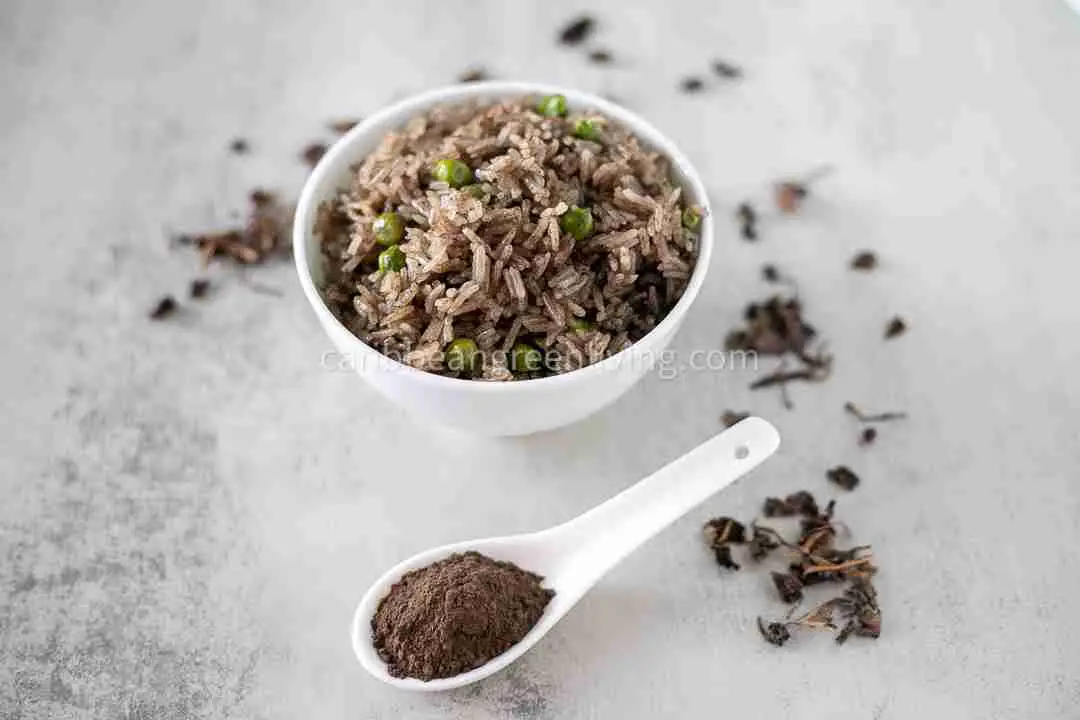
What Do Djon Djon Mushrooms Taste Like?
Djon djon has an earthy, woodsy, savory flavor that carries through the finished dish. It gives rice more than a dark appearance—the mushroom flavor is essential to what makes diri djon djon recognizable.
Garlic, onions, thyme, and Haitian epis work well alongside it. The goal is to build a flavorful dish while keeping the mushrooms noticeable.
Where to Buy Djon Djon Mushrooms
Look for dried djon djon at Haitian and Caribbean grocery stores or specialty online retailers. Availability varies, so check with your local store before making a special trip.
When shopping online, read the description carefully. Products labeled “djon djon” may be whole dried mushrooms, mushroom powder, or flavored bouillon.
Before buying, check:
- Product form: Does your recipe call for dried mushrooms, powder, or cubes?
- Ingredients: Is the product plain mushrooms or a blend with salt and other seasonings?
- Package size: Compare quantities as well as prices.
- Preparation directions: Check whether the product requires soaking, simmering, or direct addition to a dish.
A product photograph alone may not tell you everything you need to know.
Dried Mushrooms, Powder, and Bouillon: Which Should You Use?
| Product | How to approach it |
|---|---|
| Whole dried djon djon mushrooms | Use for recipes that call for extracting and straining the mushroom liquid. |
| Djon djon powder | Follow a recipe developed for the powder or the package directions. Check for added ingredients. |
| Djon djon-flavored bouillon | Treat it as a seasoning product and account for its salt when seasoning the dish. |
These products are not interchangeable in equal amounts. A tablespoon of dried mushrooms, a tablespoon of powder, and a bouillon cube can produce very different results.
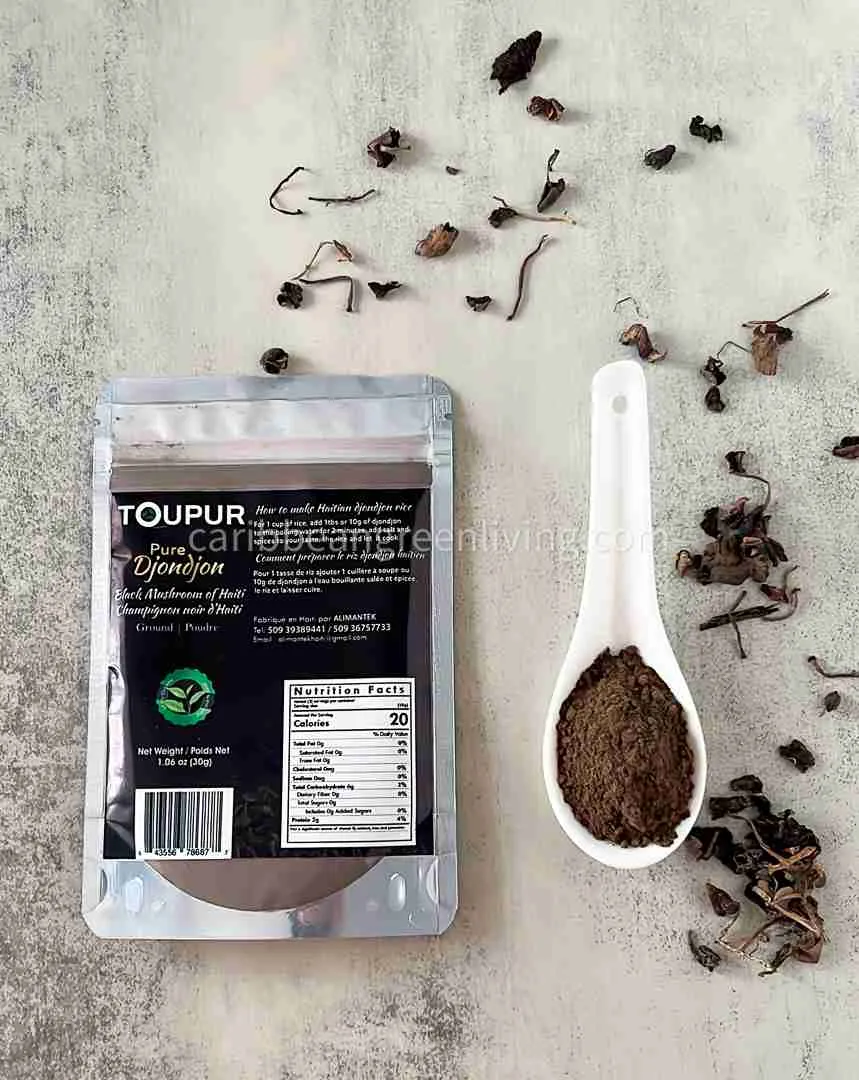
What You Need to Prepare Dried Djon Djon
- Dried djon djon mushrooms, measured according to your recipe
- Water, measured according to your recipe
- A heatproof bowl
- A fine-mesh strainer
- Cheesecloth to catch finer particles
- A clean bowl or measuring jug
Use the mushroom and water quantities in the dish you’re preparing. A measured starting point makes the flavor easier to reproduce the next time you cook.
How to Prepare Dried Djon Djon Mushrooms
1. Inspect and Quickly Rinse
Check the dried mushrooms for visible debris. Quickly rinse them under cool water, then place them in a heatproof bowl.
Keep the rinse brief. You’ll collect the flavorful liquid during the soaking step.
2. Soak in Hot Water
Pour the measured hot water over the mushrooms and let them soak for about 30 minutes. The liquid will darken as the mushrooms release their color and flavor.
Avoid adding extra water simply to fill the bowl. Too much water in relation to the mushrooms can leave you with a weaker infusion.
This is a soaking method. If your chosen recipe calls for simmering the mushrooms instead, follow that recipe’s complete instructions and measurements.
3. Strain and Save the Liquid
Place a fine-mesh strainer over a clean bowl or measuring jug. Line it with cheesecloth, then carefully pour the mushroom mixture through it.
Save the strained liquid—this is what you’ll use for cooking.
Check for sediment. If small particles remain, strain the liquid again through clean cheesecloth. Leave behind any grit that has settled at the bottom of the soaking bowl.
For this method, set the strained mushroom pieces aside for disposal; you do not need to add them to the dish.
4. Measure the Strained Liquid
Measure the liquid after straining and compare it with the amount your recipe requires.
For rice, mushroom liquid counts toward the total cooking liquid. If a recipe calls for a certain amount of liquid, don’t add that full amount of water and then pour in the mushroom liquid as an extra. Too much liquid can leave the rice overly soft.
Follow your recipe’s instructions for any additional water, broth, or coconut milk.
5. Cook and Season Your Dish
Use the strained liquid as directed in your recipe. Add your aromatics and other ingredients, then adjust seasoning as you cook.
My Haitian epis contains no added salt, bouillon, or all-purpose seasoning blends, which lets me season each dish separately. If you’re using salted broth, bouillon, or another seasoning blend, account for those ingredients before adding more salt.
Tips for Better Djon Djon Broth
Start with Measured Quantities
Record the amount of dried mushrooms and water you use. If you want a stronger or milder result next time, you’ll have a clear starting point for adjusting your recipe.
Take Your Time Straining
A dark liquid can make small particles difficult to see. Careful straining is worth the extra minute, especially when preparing rice, where grit can spoil the texture of an otherwise delicious dish.
Focus on Flavor as Well as Color
The darkest broth isn’t automatically the most flavorful. Focus on the finished dish’s balance rather than adding extra seasoning just to change its appearance.
Keep the Preparation Consistent
Follow one recipe’s method from start to finish. Combining the mushroom quantity from one recipe, the water quantity from another, and a different cooking time makes the results harder to predict.
Troubleshooting Common Problems
| Problem | What to check |
|---|---|
| The broth seems weak | Review the mushroom-to-water proportions and whether you followed the full extraction time. |
| There is grit in the liquid | Strain again through clean cheesecloth and leave settled sediment behind. |
| The rice is too soft | Check the total liquid used, including mushroom liquid, broth, water, and coconut milk. |
| The dish tastes too salty | Review any bouillon, salted broth, seasoning blends, and added salt used together. |
| The mushroom flavor is difficult to notice | Check the broth proportions and whether other strong seasonings are dominating the dish. |
How to Use Djon Djon Powder
Djon djon powder is a convenient option when you want to skip preparing an infusion from whole dried mushrooms.
Check the label first. Some products contain only mushrooms, while others include salt or additional seasonings. Follow the package directions or use a recipe developed for that particular powder.
Stir or whisk the powder into the cooking liquid to distribute it evenly and reduce clumping. Finely ground mushrooms may leave small particles rather than dissolving completely.
Don’t assume powder replaces whole dried mushrooms measure for measure. Use the amount specified in your recipe, and make adjustments based on the product you have.
Recipes to Make with Djon Djon
Haitian Djon Djon Rice
Haitian Djon Djon Rice is a good place to start. Follow the recipe’s quantities and cooking instructions to bring the mushroom flavor into every spoonful.
Cornmeal with Djon Djon
Polenta or Cornmeal with Djon Djon offers another way to enjoy this ingredient beyond rice.
You can also explore your favorite djon djon preparations with chicken or seafood. Use a complete recipe as your starting point so the mushroom liquid, other ingredients, and cooking time work together.

Frequently Asked Questions on How to Cook with Djon Djon Mushrooms
Do I use the mushrooms or the soaking liquid?
For this method, use the strained soaking liquid. You do not need to add the soaked mushroom pieces to your dish.
How long should I soak dried djon djon mushrooms?
For this method, soak them in hot water for about 30 minutes, then strain. If you’re following a recipe that specifies simmering or another preparation method, follow its instructions.
Should I throw away the dark water?
No. Save the dark liquid from the soaking step. It carries the mushroom flavor and color you want in your dish. The water from the initial quick rinse is discarded.
How much mushroom liquid should I use for rice?
Use the amount specified in your rice recipe. Count the mushroom liquid as part of the total cooking liquid rather than adding it as an extra.
Why is my djon djon broth lighter than expected?
Review the mushroom quantity, water quantity, and extraction time. A lighter appearance alone doesn’t tell you how the finished dish will taste, so avoid chasing color without considering flavor.
Can I soak the mushrooms a second time?
A second extraction may be weaker in flavor and color. For consistent recipe results, start with a fresh measured portion of dried mushrooms.
Can I replace dried djon djon with Maggi cubes?
Maggi Djon Djon is a flavored bouillon product, so it won’t necessarily produce the same result as dried mushrooms. Follow the current package directions or a recipe written for cubes, and account for their salt.
Can black rice replace djon djon mushrooms?
No. Naturally, black rice is a different ingredient. It does not provide the mushroom flavor that defines diri djon djon.
Bring Djon Djon into Your Kitchen
Cooking with djon djon starts with a few practical habits: measure your ingredients, save the mushroom liquid, strain it carefully, and count it toward your recipe’s total liquid.
Begin with a pot of Haitian Djon Djon Rice, then try the mushrooms in another dish. Once you’re comfortable preparing the liquid, you’ll have another flavorful foundation for your Haitian cooking.
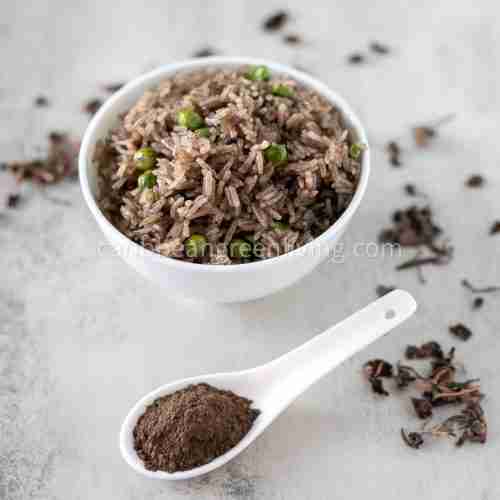
Easy Djon Djon Rice with Mushroom Powder
Ingredients
- 1 cup long-grain rice rinsed
- 1 teaspoon Toupur Djon Djon Powder
- 1 1/2 cups vegetable or chicken broth or water + ½ tsp low-sodium poultry seasoning
- 1 tablespoon Haitian Epis or substitute with minced onion, parsley, scallion, thyme, and garlic
- 1/2 tsp Hot & Spicy Sauce or to taste
- 1 tablespoon oil or butter
- ½ cup lima beans or sweet peas frozen or canned
- ⅛ teaspoon ground whole cloves
- Salt and black pepper to taste
- Optional garnish: sliced scallions or chopped parsley
Instructions
Sauté the aromatics:
- In a medium saucepan, heat the oil or butter over medium heat. Add Haitian epis (or your chopped aromatics) and sauté for 2–3 minutes until fragrant.
Add the broth and seasonings:
- Pour in the broth. Stir in the Djon Djon powder, ground cloves, salt, pepper, and NouBess Hot & Spicy Sauce.
Add the rice and beans:
- Stir in the rinsed rice and lima beans or peas. Bring to a gentle boil.
Simmer:
- Lower the heat, cover, and simmer for 18–20 minutes, or until the rice is fully cooked and the liquid is absorbed.
Fluff and finish:
- Remove from heat and let the rice sit for 5 minutes. Fluff with a fork. Taste and adjust seasoning, adding more hot sauce if desired.
Serve and enjoy:
- Pair with Poulet en Sauce à l’Haitienne, turkey, fish, or seafood — or your favorite main dish. This rice is rich, flavorful, and beautifully aromatic with that signature black hue.
Notes
- No Djon Djon mushrooms to soak? No problem — the powder delivers authentic flavor and color with zero prep.
- Don’t skip the NouBess Hot & Spicy Sauce — it adds heat, flavor, and depth in every bite.
- Make it vegan: use vegetable broth and skip animal proteins.
- Poulet en Sauce (Haitian Chicken in Creole Sauce)
- Turkey en Sauce (Perfect for Sunday dinners)
- Stewed Fish or Shrimp
- Or your favorite grilled protein
Nutrition
Please keep in mind that nutritional information is a rough estimate and can vary greatly based on the products used.
Nutrition info is automatically generated and provided as a courtesy and as an estimate only.


