How Migration Shaped Caribbean Cuisine: A Fusion of Flavors
The Caribbean, a vibrant tapestry of islands bathed in turquoise waters, is more than just a paradise for sun-seekers. It’s a culinary crossroads where history is told through the tantalizing flavors of its food. Caribbean cuisine is a story of migration, a delicious narrative woven from the traditions of Africa, India, China, and Europe. Each wave of migration brought new ingredients, techniques, and tastes, creating a unique and dynamic food culture that is both familiar and exotic.
The African Roots: The Foundation of Flavor
The first and most profound influence on Caribbean cuisine came with the arrival of enslaved Africans. They were not only forced to work the land, but they also brought with them a deep knowledge of agriculture and cooking. They introduced staple crops like yams, okra, taro, and plantains. These ingredients, which thrived in the tropical climate, became the building blocks of many Caribbean dishes.
African culinary techniques also became fundamental. Slow-cooking methods, often using one-pot stews, were a practical way to prepare meals for large groups. Think of dishes like callaloo, a leafy green soup or stew with roots in West Africa, or coo-coo (a cornmeal and okra porridge), which is similar to the West African dish, fufu. The use of fiery scotch bonnet peppers and other spices to create complex, layered flavors also has strong African origins.

The European Influence: A Blend of Old and New
Following the initial colonization, the European powers—primarily the Spanish, French, British, and Dutch—left an indelible mark on the culinary landscape. They introduced new livestock like pigs, cows, and goats, which became essential sources of protein. They also brought with them staples such as wheat, rice, and citrus fruits.
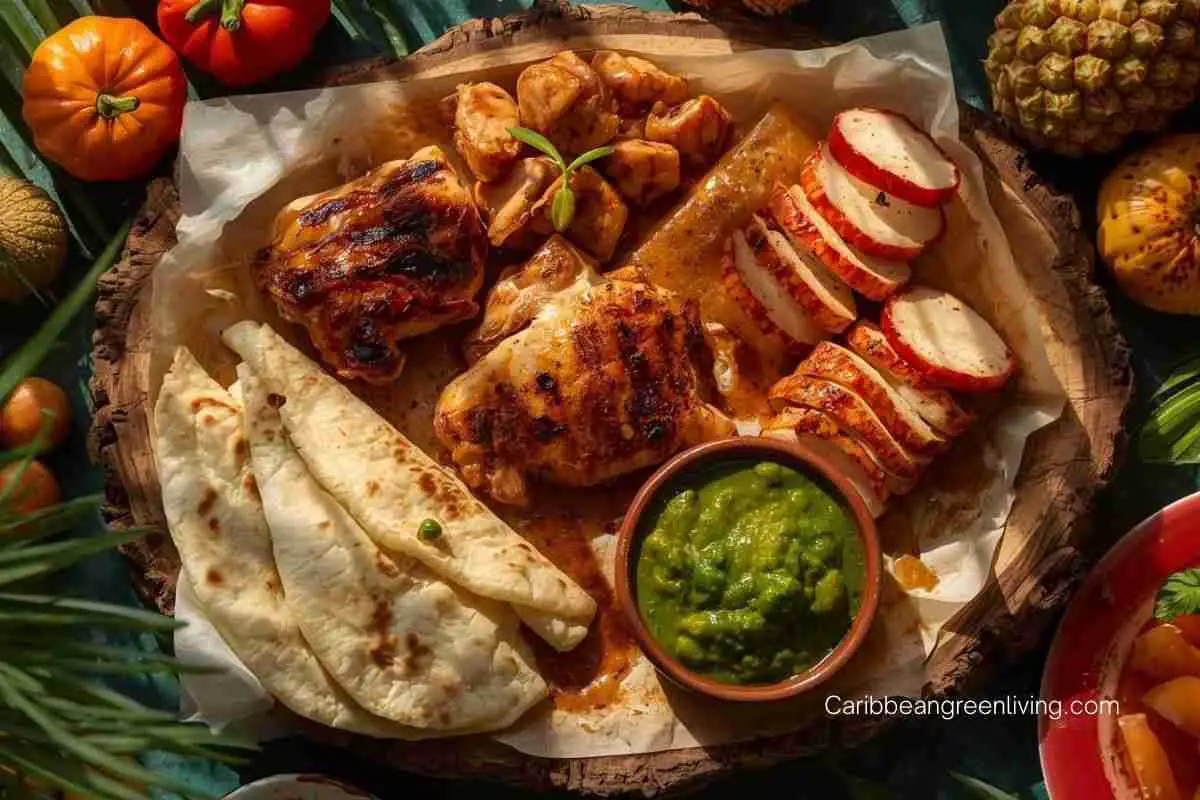
The European influence is most evident in the cooking methods and preparation styles. The Spanish brought their love for stews and empanadas, while the British introduced their love for puddings and pastries, as seen in the ubiquitous rum cake. The French, particularly in islands like Martinique and Guadeloupe, contributed classic techniques like sautéing and braising, which are now staples in those island’s cuisines. A quintessential example of this fusion is Jamaican Jerk, a cooking style that originated with the Maroons, who combined African preservation techniques with spices and ingredients found on the island, a result of European and indigenous influence.

The Indian & Chinese Contributions: A Spice and Stir-Fry Revolution
After the abolition of slavery, indentured laborers from India and China were brought to the Caribbean to work on plantations. They arrived with their own rich and distinct culinary traditions, which were quickly absorbed into the existing food culture.
The Indians brought with them a profound knowledge of spices. The introduction of curries, rotis, and dal transformed Caribbean food forever. The use of spices like turmeric, cumin, and coriander became widespread, adding a new dimension of flavor. Trinidadian Doubles, a popular street food, is a perfect example of this. It’s a sandwich made with two fried flatbreads called “bara,” filled with a curried chickpea dish. The Indian influence is so strong that in some islands, such as Trinidad and Guyana, a curry dish is a cornerstone of the national cuisine.
Similarly, the Chinese brought their own culinary heritage with them. The use of soy sauce, five-spice powder, and stir-frying techniques introduced a new style of cooking. They also introduced new ingredients, such as bok choy and bean sprouts. The Chinese influence is evident in dishes like Guyanese Chow Mein and Trinidadian Fried Rice, which are unique interpretations of classic Chinese dishes using local ingredients. The practice of using ginger and garlic as foundational aromatics in many Caribbean dishes can also be traced back to Chinese and Indian influences.

A Culinary Mosaic
The food of the Caribbean is a testament to its history of migration. It’s a bold and flavorful story told through the marriage of diverse culinary traditions. A plate of curried goat served with rice and peas, and a side of plantains, is not just a meal. It’s a symbol of resilience, adaptation, and the beautiful fusion of cultures.
The next time you savor a plate of jerk chicken or a bowl of callaloo, take a moment to appreciate the journey of the ingredients and techniques that came together to create that unforgettable taste. It’s more than just food; it’s a celebration of a rich and complex history.
References:
- The Food of the Caribbean” by Elisabeth Lambert Ortiz
- “Culinaria: The Caribbean: A Culinary Journey Through the Caribbean Islands” by Claudia H. Roden
- “The Caribbean: A History of the Region and Its Peoples” edited by Patrick E. Bryan and Karl Watson
- “Sweetness and Power: The Place of Sugar in Modern History” by Sidney W. Mintz
- “The Cooking of the Caribbean” (Time-Life Foods of the World Series)
- “Callaloo, Calypso & Carnival: The Cuisines of Trinidad & Tobago” by Sharifa Khan


