
What Is Cachiman? Haiti’s Custard Apple Explained
What Is Cachiman? A Guide to Haiti’s Custard Apple
If you grew up in Haiti, you may know cachiman as a sweet, creamy tropical fruit enjoyed fresh or blended into a cold, refreshing drink. Outside Haiti, however, the name can become confusing. Cachiman belongs to the Annona family of tropical fruits, which includes several closely related fruits that are sometimes sold or described under overlapping common names.
The cachiman discussed in this guide is Annona reticulata, a tropical fruit also known as custard apple or bullock’s heart. In Haiti, you may hear it called kachiman, cachiman, or coeur de boeuf.
With its fragrant aroma, creamy flesh, and naturally sweet flavor, cachiman is one of those tropical fruits that deserves to be better known outside the Caribbean.
Let’s take a closer look at what cachiman is, what it tastes like, how Haitians enjoy it, and how it differs from other Annona fruits.
What Is Cachiman?
Cachiman (Annona reticulata) is a tropical fruit belonging to the Annonaceae, or custard apple, family.
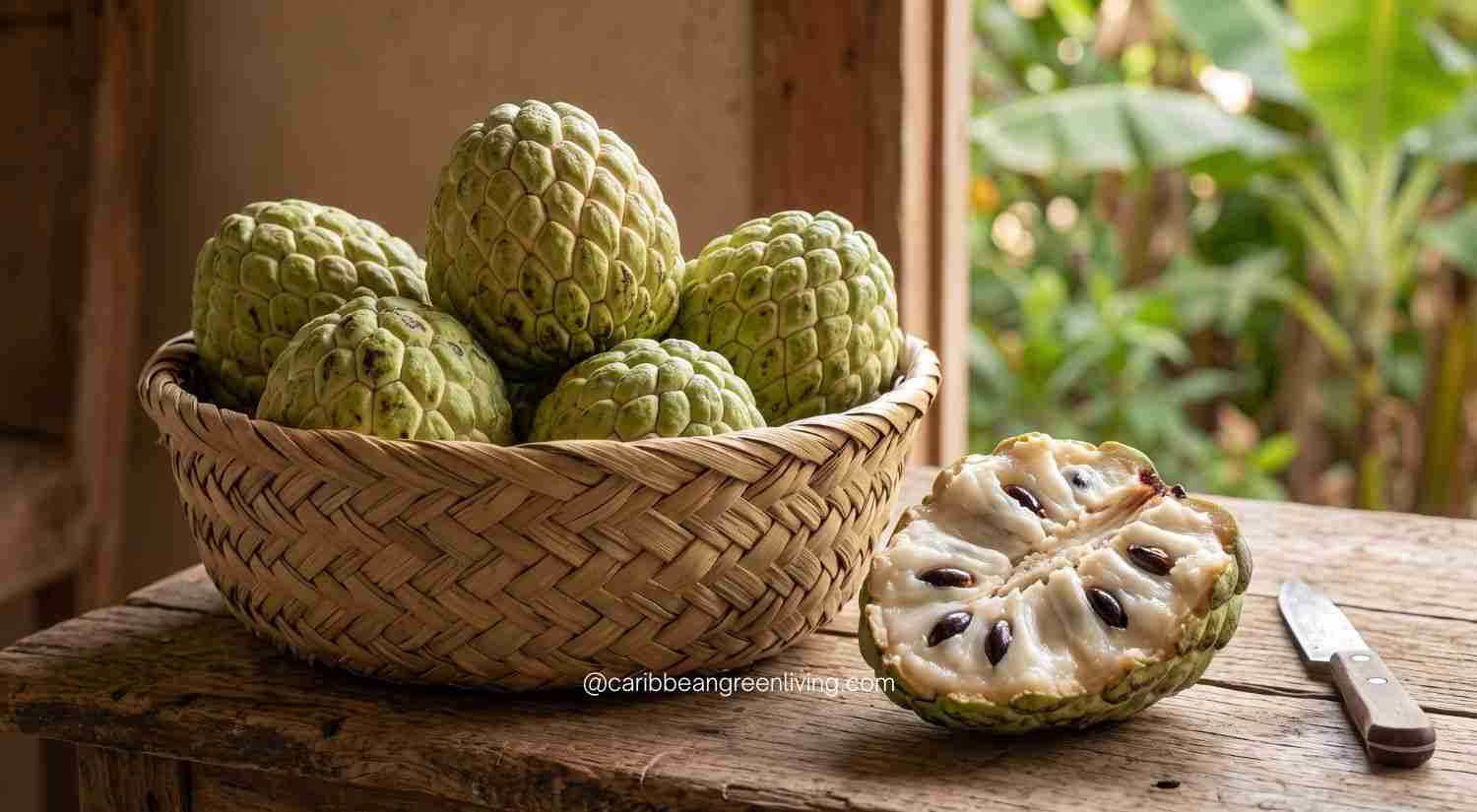
The fruit develops on a small tropical tree and can vary considerably in appearance. Depending on the cultivar and stage of ripeness, the skin may be greenish, yellowish, brownish, or reddish. The surface can appear smooth with a network of markings or somewhat uneven.
Inside, the ripe fruit contains soft, creamy flesh surrounding numerous dark seeds.
The texture is one of cachiman’s defining characteristics. When properly ripened, the flesh becomes tender and custard-like, which helps explain the English name custard apple.
A note from my Haitian kitchen: The cachiman I remember growing up with in Haiti had pale green, distinctly knobby skin and creamy white flesh filled with dark seeds. We even had a cachiman tree growing in our backyard. That is the variety and appearance I associate most strongly with cachiman, although the fruit’s appearance and common names can vary across Haiti and other Caribbean islands.
What Is Cachiman Called in Haiti?
In Haiti, kachiman or cachiman is commonly used for Annona reticulata. You may also encounter the French name coeur de boeuf, meaning “bullock’s heart” or literally “beef heart,” a reference to the shape that some fruits develop.
Common names for tropical fruits can vary considerably between Haiti, other Caribbean islands, Latin America, and English-speaking countries. This is one reason identifying cachiman by its botanical name—Annona reticulata—is useful.
Names such as custard apple can also be confusing because they are sometimes used broadly for several fruits in the Annona genus.
Why Cachiman Names Can Be Confusing
Depending on the country, island, market, or even family, names such as cachiman, custard apple, sugar apple, sweetsop, and bullock’s heart may be used differently. Several closely related Annona fruits also share similar creamy flesh and dark seeds, making common names alone an unreliable way to identify the species.
Where Does Cachiman Come From?
Cachiman has a long history in tropical regions.
Annona reticulata is native to tropical parts of the Americas, with its native range extending from Mexico through Central America to northern South America. Over time, the tree was introduced to many other tropical regions of the world.
Today, it can be found or cultivated throughout parts of the Caribbean, South America, Asia, Africa, and other warm tropical and subtropical regions.
The tree has also been introduced to Haiti and several other Caribbean islands, including Cuba, Jamaica, Puerto Rico, the Dominican Republic, the Bahamas, the Cayman Islands, and islands of the Lesser Antilles.
What Does a Cachiman Tree Look Like?
The cachiman tree is a relatively small tropical fruit tree. Mature trees can reach several meters in height and produce greenish-yellow flowers followed by rounded, oval, or somewhat heart-shaped fruits.
The fruit itself can reach roughly the size of a large apple or larger, although size and shape vary.
As cachiman ripens, its skin may change from green to yellowish, brownish, or reddish tones depending on the variety.
The inside contains aromatic, creamy flesh and numerous shiny dark seeds.

What Does Cachiman Taste Like?
Ripe cachiman has a sweet, fragrant, creamy flavor.
Its texture is soft and custard-like rather than crisp or juicy like an apple. The combination of sweetness, fragrance, and creamy flesh makes cachiman particularly enjoyable as a fresh fruit.
The flavor can vary from fruit to fruit. Some are intensely sweet and aromatic, while others can be milder.
For the best eating experience, allow the fruit to ripen properly before opening it.
Cachiman vs. Sugar Apple vs. Soursop: Are They the Same Fruit?
No. This is one of the most common sources of confusion surrounding cachiman.
Cachiman belongs to the genus Annona, which includes several related tropical fruits. Because they have similar creamy flesh and overlapping common names, they are sometimes incorrectly treated as the same fruit.
Cachiman (Annona reticulata)
Often called custard apple or bullock’s heart. The fruit may be rounded or heart-shaped and can develop reddish or brownish coloring as it ripens.
Sugar apple or sweetsop (Annona squamosa)
A different species characterized by a distinctly segmented or knobby exterior. Its flesh is also sweet and creamy.
Soursop or corossol (Annona muricata)
Usually much larger, with green skin covered in soft spines. Its flavor is tarter and more acidic than cachiman.
Cherimoya (Annona cherimola)
Another related fruit with creamy flesh, but it is a separate species.
This is why botanical names are especially helpful when shopping for or researching Annona fruits.
How Do You Know When Cachiman Is Ripe?
Cachiman should be allowed to ripen before eating.
Look for fruit that has begun to soften when gently pressed. The skin may also change color as the fruit matures.
An unripe cachiman will be firm and will not have the soft, custard-like texture that makes the fruit so enjoyable.
Avoid squeezing the fruit aggressively because ripe cachiman can bruise easily.
Once ripe, it is best eaten fairly quickly.

How to Eat Cachiman
One of the easiest, and best, ways to enjoy cachiman is simply to eat it fresh.
Wash the outside of the fruit before cutting it. Once ripe, cut or gently pull the fruit open and scoop out the creamy flesh with a spoon.
Do not eat the seeds. Remove and discard them as you eat the flesh.
The skin is generally not eaten.
Because of its naturally creamy consistency, cachiman can feel almost like eating a tropical custard straight from the fruit.

How Cachiman Is Enjoyed in Haiti
In Haiti, ripe cachiman can be enjoyed simply as fresh fruit, but it can also be turned into a delicious cold beverage.
The creamy flesh works particularly well with milk, creating a rich drink similar to a fruit shake or smoothie.
Depending on the household, the drink may be flavored with ingredients such as:
- cinnamon
- ginger
- nutmeg
- vanilla
Vanilla is especially familiar in Haitian milk-based drinks and desserts, and it complements cachiman’s sweet, fragrant flavor beautifully.
Cachiman can also be used in fruit drinks, shakes, frozen desserts, sorbets, and other sweet preparations.
Ways to Use Cachiman
If you find ripe cachiman, you don’t have to limit yourself to eating it with a spoon.
Try the pulp in:
- smoothies and shakes
- milk-based Haitian fruit drinks
- sorbet
- ice cream
- fruit desserts
- chilled puddings
- tropical fruit bowls
Because the flesh is already creamy, cachiman works particularly well in recipes where you want richness without needing a complicated preparation.
How to Store Cachiman
If your cachiman is still firm, allow it to ripen at room temperature.
Check it daily because tropical fruits can move from ripe to overripe surprisingly quickly.
Once the fruit is ripe and soft, refrigerate it and use it soon.
Cut cachiman should always be refrigerated in a covered container.
For longer storage, the seeds can be removed and the pulp frozen for later use in smoothies, shakes, sorbets, and other recipes.
Cachiman and Traditional Caribbean Uses
Cachiman has a history that extends beyond its use as food.
Different parts of Annona reticulata, including its leaves, bark, roots, unripe fruit, and seeds, have been documented in traditional medicine in Haiti and other tropical regions.
Traditional preparations have historically been associated with a variety of uses, including digestive complaints, fever, parasites, skin problems, and other ailments.
However, traditional use should not be confused with a medically proven treatment.
Research into Annona species has identified biologically active compounds in different parts of these plants, but researchers have also raised questions about toxicity and the need for additional human clinical research.
For that reason, this guide does not recommend preparing or consuming homemade remedies made from cachiman leaves, bark, roots, seeds, or unripe fruit.
Enjoying the ripe edible fruit as food is very different from using other parts of the plant medicinally.
Is Cachiman Healthy?
Like many fruits, cachiman can be part of a varied diet and provides naturally occurring carbohydrates and micronutrients.
Older descriptions of cachiman and related Annona fruits sometimes make sweeping claims that eating them can prevent anemia, regulate blood pressure, prevent osteoporosis, treat infections, or cure other medical problems.
Those claims go beyond what we can responsibly conclude from simply eating the fruit.
A better reason to enjoy cachiman is much simpler: it is a naturally sweet tropical fruit with a distinctive flavor, creamy texture, and a long place in Caribbean food traditions.
Frequently Asked Questions About Cachiman
Is cachiman the same as custard apple?
Annona reticulata is commonly called custard apple in English. However, “custard apple” is also sometimes used broadly for other fruits in the Annona family, so checking the botanical name is the easiest way to know which fruit is being discussed.
Is cachiman the same as sugar apple?
No. Cachiman (Annona reticulata) and sugar apple or sweetsop (Annona squamosa) are related but separate species.
Is cachiman the same as soursop?
No. Soursop (Annona muricata), commonly called corossol in Haiti and other French-speaking Caribbean communities, is a different fruit.
What does cachiman taste like?
Ripe cachiman is sweet, aromatic, and creamy with a soft, custard-like texture.
Can you eat cachiman raw?
Yes. Ripe cachiman can be eaten fresh. Open the fruit and scoop out the soft flesh, removing the seeds as you eat.
Can you eat cachiman seeds?
No. The seeds should not be eaten. Remove and discard them.
Can you make juice with cachiman?
Yes. Cachiman’s creamy pulp can be blended into drinks. In Haiti, it may be combined with milk and flavored with ingredients such as vanilla, cinnamon, ginger, or nutmeg.
How do you store cachiman?
Allow firm fruit to ripen at room temperature. Once ripe, refrigerate it and eat it soon. The pulp can also be separated from the seeds and frozen for later use.
A Tropical Fruit Worth Rediscovering
Cachiman may not receive as much international attention as mango, pineapple, or soursop, but it remains part of Haiti’s rich tropical fruit culture.
Its soft, fragrant flesh can be enjoyed straight from the fruit, blended with milk and warm spices, or transformed into frozen desserts and other sweet preparations.
More importantly, learning about cachiman illustrates something fascinating about Caribbean food: one fruit can travel across islands, countries, and languages, picking up many different names along the way.
For Haitian cooks, however, the name is wonderfully familiar: kachiman.
Sources:
- https://www.healthbenefitstimes.com/sugar-apple/
- https://www.healthline.com/nutrition/cherimoya
- https://azmartinique.com/en/all-to-know/fruits-vegetables/bullock-s-heart-cachiman
- Royal Botanic Gardens, Kew — Annona reticulata botanical classification and distribution
- TRAMIL — Annona reticulata Caribbean traditional uses and vernacular names
- Scientific review of Annona species — PubMed
Updated August 2026: This guide has been thoroughly revised and expanded to provide clearer information about cachiman, its place in Haitian food culture, how the fruit is eaten and stored, and the differences between cachiman and other closely related Annona fruits. Additional botanical and food-safety information has also been included for accuracy.


