Zero-Waste Cooking: How to Use Every Part of Your Ingredients (Yes, Even That Scrappy Bit!)
Let’s face it—food waste is a kitchen villain we’re all a little too familiar with. One minute you’re prepping dinner, the next you’ve got a pile of peels, stems, and leftovers destined for the trash (or if you’re fancy, the compost). But here’s the good news: you can totally flip the script.
Zero-waste cooking isn’t about being perfect. It’s about being clever. It’s a flavorful mix of tradition, resourcefulness, and that “waste-not-want-not” mindset that our Caribbean grandmothers have been mastering for generations.
So let’s dive in, stem-first.
Creative Use of Scraps: The Root-to-Stem Remix
If you’re tossing carrot tops, citrus peels, and herb stems, you’re throwing away flavor gold. Let’s fix that.
- Carrot tops – Make pesto or add to herb sauces like chimichurri.
- Broccoli stalks & kale stems – Peel, chop, and roast, sauté, or spiralize for slaws and stir-fries.
- Herb stems – Parsley, cilantro, and thyme stems are packed with flavor. Toss them in soups, stews, stocks, or marinades.
- Onion skins & veggie scraps – Save in a freezer bag for homemade broth. Add bones or shells for extra depth.
- Citrus peels – Zest before juicing. Use zest in baked goods or to brighten savory dishes. Infuse leftover peels into olive oil or vinegar—yes, your salad dressings will thank you.
- Squash and melon seeds – Roast with spices for a crunchy snack. Think pumpkin seeds, but leveled up.

Staple Ingredients for Zero-Waste Cooking
Building a zero-waste kitchen starts with smart shopping. Stock up on ingredients that multitask, stretch meals, and play well with scraps.
Grains: The Foundation of Creativity
Rice, quinoa, barley—grains are like the blank canvas of your zero-waste masterpiece. Add roasted vegetables, wilted greens, leftover proteins… and ta-da: you’ve got a whole new meal.
Try:
- Leftover veggie fried rice
- Quinoa with beans and herbs
- Barley salad with citrus zest and pickled stems
Canned Goods: Your Reliable Helpers
Canned beans, tomatoes, and coconut milk deserve MVP status. They bulk up soups, thicken sauces, and transform scraps into delicious food.
Try:
- Blend canned beans with garlic and herbs stems for a dip
- Add canned tomatoes to use-up-everything stews
- Use coconut milk to bring creaminess to veggie-forward curries
Spices: Global Flavor Enhancers
Spices turn scraps into stars. Do you have limp carrots and leftover rice? Add cumin and cinnamon, and boom—flavor explosion.
Try:
- Chili powder for that last bit of roasted sweet potato
- Cinnamon in fruit scrap compotes
- Curry powder with veggie stems and coconut milk
The Sweet Side of Staples
Don’t sleep on your sweeteners! Honey, maple syrup, and molasses can transform dressings, glazes, and sauces—and help mask slightly overripe or bitter produce.
Try:
- Maple-glazed roasted root scraps
- Molasses in squash seed brittle
- Honey in quick-pickled veggie ends
Preserve Like a Pro: Techniques to Save More Than Just Food
Zero-waste cooking is as much about preserving as it is about prepping. Here’s how to keep your ingredients (and your money) around a little longer.
Freezing
Perfect for herbs, fruits, and leftover sauces. Try:
- Freezing herbs in olive oil in ice cube trays
- Stashing overripe bananas and berries for smoothies
- Freezing stock in muffin tins for ready-to-go flavor bombs
Dehydrating
Great for fruit and veg that are starting to go soft. Try:
- Apple chips with cinnamon
- Dehydrated tomato slices for salads and snacks
- Herb salt blends made from drying tired herbs
Pickling
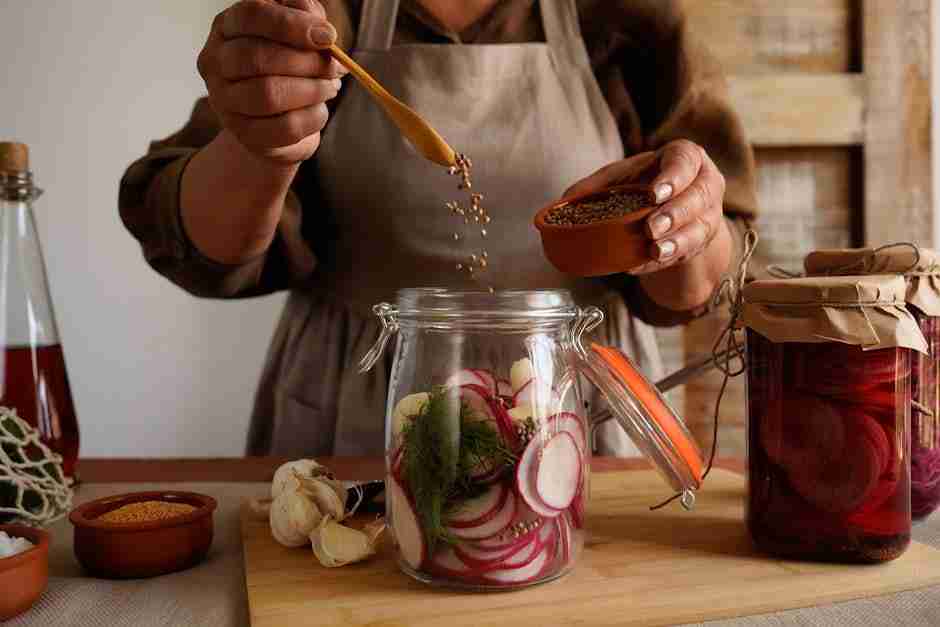
Tangy, crunchy, and addictive. Use scraps like radish tops, onion peels, or pepper cores. Quick brine: vinegar + water + salt + sugar = magic.
Try:
- Pickled carrot peels
- Spicy pickled cauliflower stems
- Zesty citrus rind pickles
Jamming
Fruits on their last legs? Jam them.
Use citrus in winter, stone fruits in summer. Pair with a little sugar, lemon, and love. Keep a jar on hand for topping toast, yogurt, or cheese boards.
Leftovers: The Remix Edition
Leftovers aren’t sad—they’re just waiting for a glow-up.
- Roast too many veggies? Blend into soup or mash into a savory patty.
- Cooked rice or pasta? Stir-fry with scraps and spices.
- Wilted herbs? Blitz with oil and freeze as herb cubes.
Tip: Make a weekly “Use It Up” meal. Go rogue and use everything that’s about to go bad. Get wild, get weird, and get delicious.
Zero-Waste, Caribbean-Style
Our Caribbean kitchens have always practiced sustainability—without the hashtags.
- Saltfish soaking water adds briny flavor to soups.
- Epis is a masterclass in using up tired herbs, onion ends, and stray peppers.
- Green plantain peels? Some boil and eat ’em. Others compost. Either way, nothing goes to waste.
- Even the potlicker (the broth left after boiling greens) is often sipped or reused!
Zero-waste cooking is ancestral knowledge in action. It’s cultural, resourceful, and packed with flavor.

Final Bite
Zero-waste cooking isn’t a trend—it’s a revolution. It’s a way to respect your food, your wallet, and the planet—all while eating like a flavor boss.
So the next time you’re holding a carrot top, a citrus peel, or a pile of yesterday’s rice, ask yourself:
“What can I make out of this?”
Then get in the kitchen and make magic.
Got questions, zero-waste hacks, or favorite recipes? Drop a comment below or tag me on social @noubess or @caribbeangreenliving—let’s cook smart, waste less, and flavor more!
Sources:
- United Nations Environment Programme. Food Waste Index Report 2024.
- Seth N. Zero-waste cooking in Indian hotels. Shangri-La Bengaluru; 2024.
- Mathur D. Sustainability practices in hospitality. Radisson Blu, Kaushambi, Delhi NCR; 2024.
- Dhyani A. Sustainable dining initiatives. ITC Grand Central, Mumbai; 2024.