How Onions Build Flavor in Caribbean Cooking (And When to Use Each Type)
If Caribbean food tastes rich, layered, and deeply satisfying, it’s not by accident, and it’s not just the peppers or spices. It starts with onions.
Before the pot simmers, before the sauce thickens, before the heat kicks in, which means that the onions are already working. They quietly build the flavor foundation that Caribbean cooking is known for.
Understanding how onions are used and which type to reach for can completely change the way your food tastes. This isn’t about fancy techniques. It’s about cooking smarter with what you already have.
Let’s break it down.
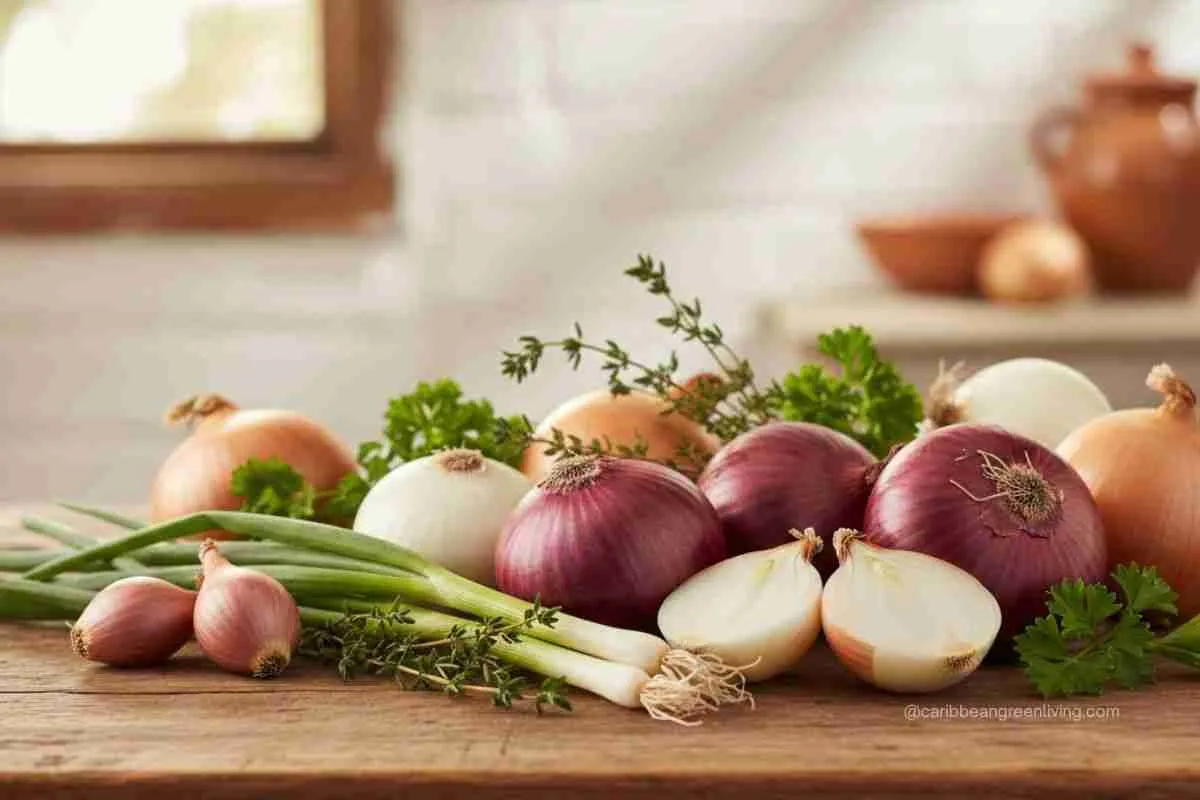
Onions as a Flavor Base: Why They Matter So Much
In Caribbean cooking, onions are rarely an afterthought. They are part of the flavor base, working alongside garlic, scallions, herbs, and fat (oil, butter, or rendered meat fat). Have you tried our Haitian Creole Sauce yet?
When onions hit hot oil, three things happen:
- Their sharpness softens
- Natural sugars are released
- Aromas develop that carry spices and herbs
This is why a dish can smell amazing long before it tastes finished.
If you skip this step or rush it, your food will taste flat, no matter how many seasonings you add later.
Raw vs Cooked Onions: Timing Is Everything
Raw Onions: Brightness & Bite
Raw onions add contrast. They’re used when you want:
- Crunch
- Sharpness
- Freshness
Best uses:
- Griot garnishes
- Salsas and relishes
- Pickled toppings
- Slaws and salads
Soaking raw onions in lime juice or vinegar softens the bite while keeping the texture.

Sautéed Onions: The Foundation
This is where most Caribbean dishes begin. A wide, heavy-bottomed stainless steel sauté pan gives onions enough surface area to soften evenly without steaming, which is key when building deep flavor.
Sautéed onions:
- Anchor the dish
- Carry spices evenly
- Create depth early
Cook them gently until translucent or lightly golden; never rushed, never burnt.
Best uses:
- Stews and sauces
- Rice dishes
- Beans and lentils
- Poultry and meat preparations
Caramelized Onions: Sweet Depth
Caramelization takes time and patience, but the payoff is big.
Slowly cooked onions become:
- Sweet
- Rich
- Almost jam-like
Best uses:
- Grilled fish or chicken
- Rice dishes need balance
- Plant-forward meals
- Sauces that need body without sugar
Choosing the Right Onion for the Job
Not all onions behave the same way. Choosing the right one makes your cooking easier and better.
A sharp knife also makes a huge difference when working with onions, helping you slice cleanly without crushing them or releasing excess bitterness. A well-balanced chef’s knife is one of the most-used tools in any Caribbean kitchen.
Yellow Onions: The Workhorse
These are your go-to onions for long cooking.
Use them when:
- Building stews or curries
- Cooking beans
- Starting soups or sauces
They hold up, soften beautifully, and create deep savory flavor.
Red Onions: Fresh and Bold
Red onions shine when used raw or lightly cooked.
Use them when:
- Making salsas
- Pickling
- Garnishing grilled foods
They add color, crunch, and a slightly sweet bite.
White Onions: Clean and Crisp
White onions are sharper and cleaner tasting.
Use them when:
- Making Creole-style sauces
- Adding crunch to griot
- Preparing slaws and fresh salads
They’re especially good when texture matters.
Scallions (Green Onions): The Essential Finisher
If there’s one onion that shows up everywhere in Caribbean cooking, it’s scallions.
Use them:
- In seasoning blends
- In rice and soups
- As a final garnish
They lift a dish without overpowering it.
Shallots: Subtle Flavor Builders
Shallots bring gentle sweetness and depth without shouting “onion.”
Use them when:
- Making dressings or marinades
- Cooking lighter sauces
- Pairing with citrus or coconut milk
They’re perfect for modern Caribbean cooking.

How Onions Work Inside Caribbean Flavor Bases
Onions rarely work alone. They combine with:
- Garlic
- Scallions
- Thyme
- Parsley
- Peppers
Together, they create seasoning blends and cooking bases that define Caribbean food.
The key is order:
- Fat heats first
- Onions soften and sweeten
- Garlic and herbs follow
- Spices bloom without burning
This sequence matters more than exact measurements.
Common Onion Mistakes to Avoid
Even experienced cooks slip up. Watch out for these:
- Adding onions too late
- Cooking them on heat that’s too high
- Using raw onions where cooked ones are needed
- Skipping onions to “save time.”
Flavor can’t be rushed.
FAQ: Onions in Caribbean Cooking
What role do onions play in Caribbean cooking?
Onions are a foundational ingredient in Caribbean cooking. They build flavor at the start of a dish by releasing natural sweetness and aroma when cooked in oil. Onions help carry herbs, spices, and seasonings throughout stews, rice dishes, sauces, and marinades.
Which type of onion is best for Caribbean stews?
Yellow onions are best for Caribbean stews because they soften slowly, hold up to long cooking times, and develop deep, savory flavor. They are commonly used in dishes like oxtail, goat curry, and chicken stews.
Can I use red onions instead of yellow onions in cooked dishes?
Yes, but the flavor will be different. Red onions are milder and slightly sweet, making them better suited for raw preparations, pickling, or quick cooking. Yellow onions are preferred for long-simmered dishes that require a deeper flavor.
Why are onions sautéed before adding other ingredients?
Sautéing onions first allows them to soften and release their natural sugars. This step creates a flavor base that enhances the taste of herbs, garlic, peppers, and spices added later. Skipping this step can result in flat or underdeveloped flavor.
What onions are best used raw in Caribbean dishes?
Red and white onions are most commonly used raw in Caribbean cooking. They add crunch and brightness to salsas, griot garnishes, salads, and pickled toppings. Soaking them briefly in lime juice can mellow their sharpness.
Are scallions and onions used differently in Caribbean cooking?
Yes. Scallions (green onions) are used for freshness and aroma, often in marinades, seasoning blends, soups, and as a garnish. Bulb onions are typically used to add flavor early in cooking.
Do Caribbean seasoning blends contain onions?
Many Caribbean seasoning blends and flavor bases rely on onions, either fresh or cooked, along with garlic, scallions, herbs, and peppers. These combinations help create depth and balance in traditional and modern Caribbean dishes.
What is the biggest mistake people make when cooking onions?
The most common mistake is cooking onions at too high a heat, causing them to burn rather than soften. Burnt onions add bitterness, while properly cooked onions add sweetness and depth.
Can onions be skipped in Caribbean recipes?
Onions can be reduced or substituted in some cases, but skipping them entirely often results in a lack of depth and aroma. When onions are avoided, additional herbs or flavor-building techniques may be needed to compensate.
How do onions affect the overall flavor of a dish?
Onions influence sweetness, savoriness, aroma, and texture. The type of onion used and how it is cooked can change the entire character of a dish, especially in Caribbean cuisine, where layered flavor is essential.

Final Takeaway: Onions Are Strategy, Not Filler
In Caribbean cooking, onions are not optional, and they’re not interchangeable.
They:
- Build structure
- Carry seasoning
- Balance heat
- Add depth
Once you understand when and how to use each type, your cooking becomes more intuitive and more flavorful. If you’ve ever wondered why one pot tastes richer than another, start by looking at how the onions were handled.
That’s where the magic begins.
This post contains affiliate links. As an Amazon Associate, Caribbean Green Living earns from qualifying purchases, at no extra cost to you.