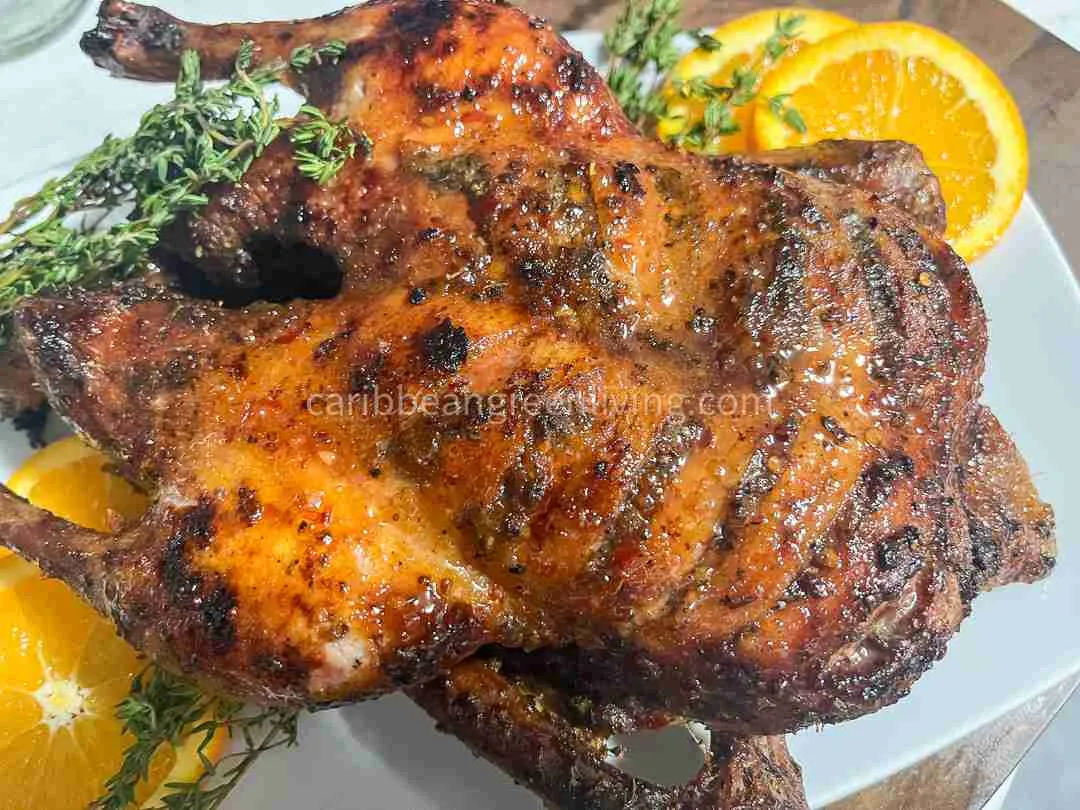
Haitian-Inspired Roasted Duck with Epis and Fresh Herbs
Crispy skin, juicy meat, and big Caribbean flavor—this one does not play.
If you’ve never roasted a duck the Haitian way, let me fix that real quick. This Haitian-inspired roasted duck with epis and fresh herbs is rich, aromatic, and unapologetically flavorful. We’re using Haitian epis as the backbone (because flavor should start strong), letting the duck render its own fat, and roasting it on a bed of vegetables instead of a rack—because waste not, flavor everything.
The result? Crispy skin, juicy meat, and vegetables soaked in ducky goodness. This is a Sunday dinner, holiday centerpiece, or “I’m cooking to impress” kind of recipe.
No shortcuts. No dry bird. Let’s cook.
Why This Duck Recipe Works (No Fluff)
This recipe works because Haitian epis delivers deep, layered flavor without complicated steps, handling the garlic, herbs, and aromatics in one go. Properly pricking the skin allows the duck’s fat to render slowly, giving you crisp, golden skin instead of a rubbery finish.
Roasting the duck on a bed of vegetables adds extra aromatics, eliminates the need for a roasting rack, and keeps the process low-waste. As the duck cooks, it also rewards your patience with rendered duck fat—true liquid gold that becomes a second ingredient for future meals. Duck takes time, but when you give it that time, it delivers every single time.
Ingredient Breakdown
The Duck
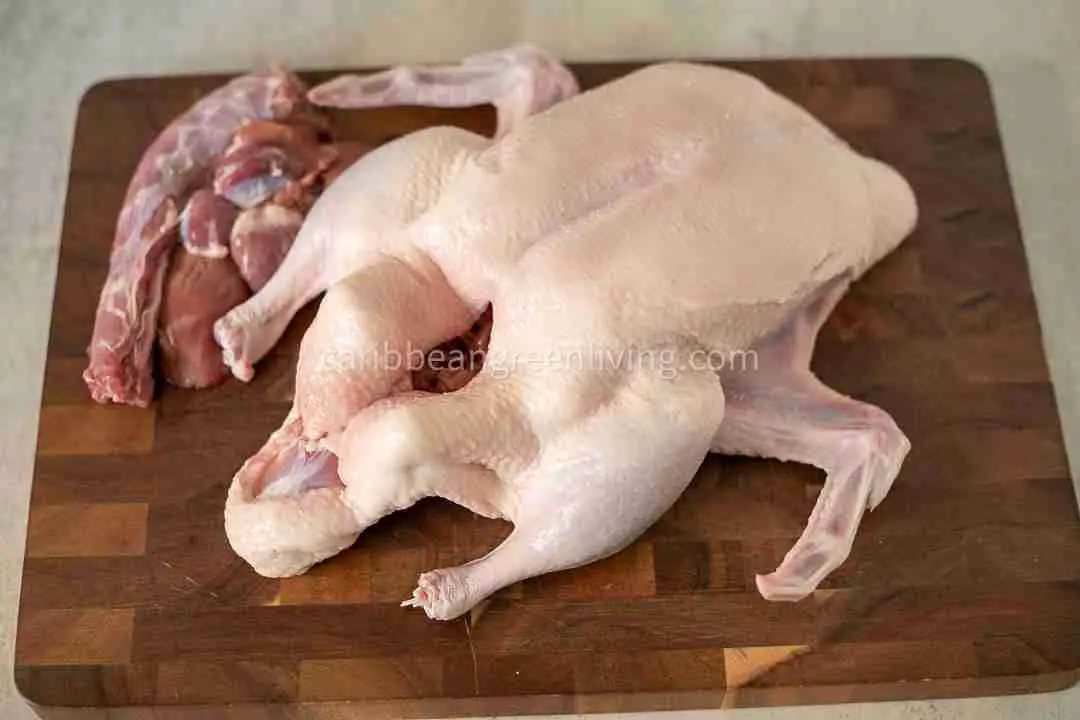
A whole duck (about 4 pounds) is the star of this dish. Duck is naturally rich and flavorful, with a generous layer of fat under the skin that renders during roasting. Fully thawing the bird and drying the skin thoroughly are essential for crisp results.
The Base Rub
- Haitian epis is the flavor foundation, bringing garlic, herbs, and aromatics that penetrate the meat deeply.
- Chicken bouillon powder enhances savoriness and rounds out the seasoning without overpowering the duck’s natural richness.
- Paprika adds warm color and subtle smokiness to the skin.
Optional bold twist:
For a spicier or more complex profile, swap paprika for Cajun seasoning, berbere, baharat, or jerk seasoning. Each brings its own personality while still pairing beautifully with epis.
The Cavity Stuffing
- Onion and lemon release moisture and gentle acidity as the duck roasts, keeping the meat fragrant and balanced.
- Fresh parsley and thyme infuse the bird with herbaceous aroma from the inside out.
This stuffing is about flavor, not eating—its job is to perfume the meat as it cooks.
The “Natural Rack”
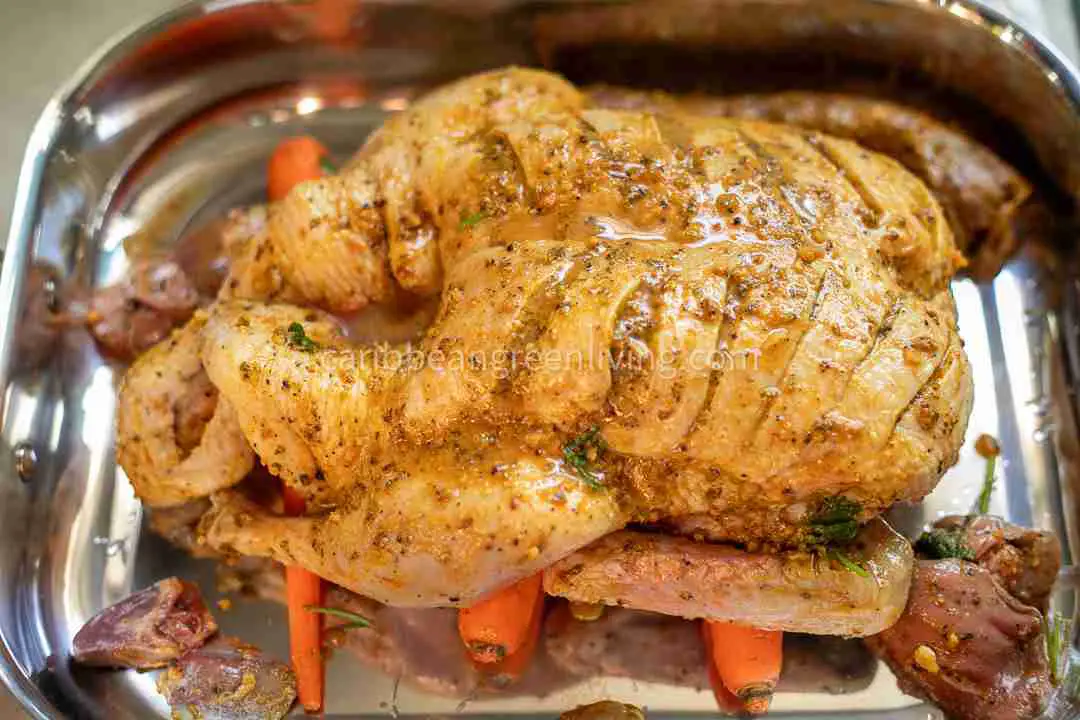
- Carrots and celery act as a roasting rack, lifting the duck slightly while absorbing rendered fat and flavor.
They prevent the bird from sitting in grease and become deeply savory by the end of roasting.
Here’s a quick summary on how to make this Roasted Duck.
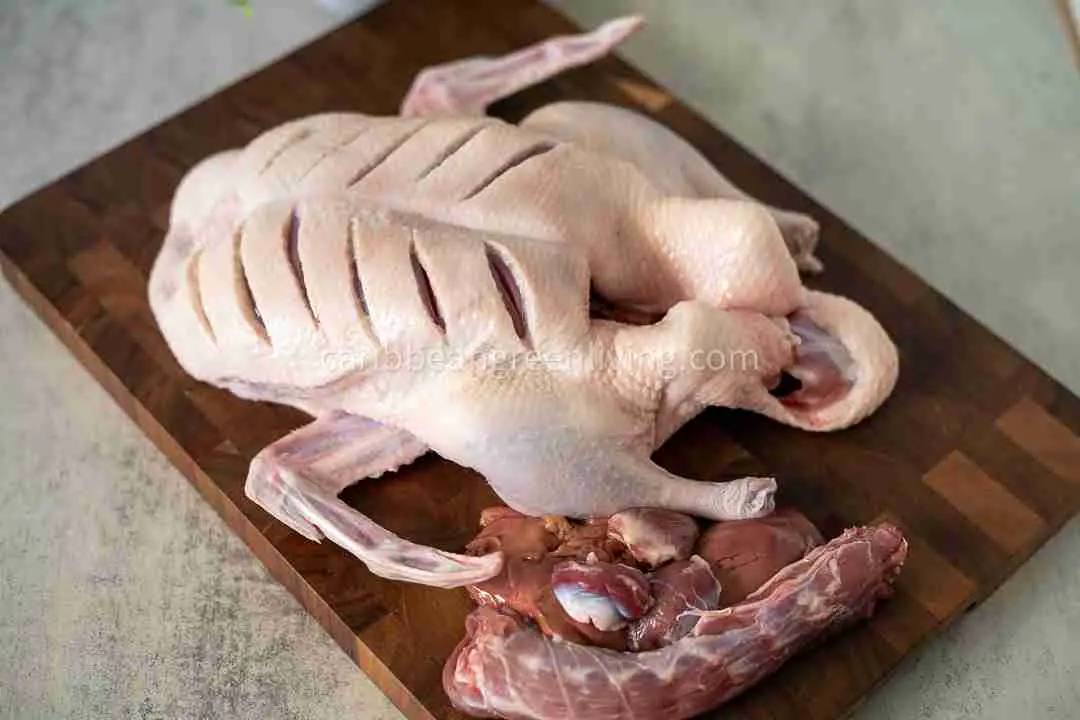
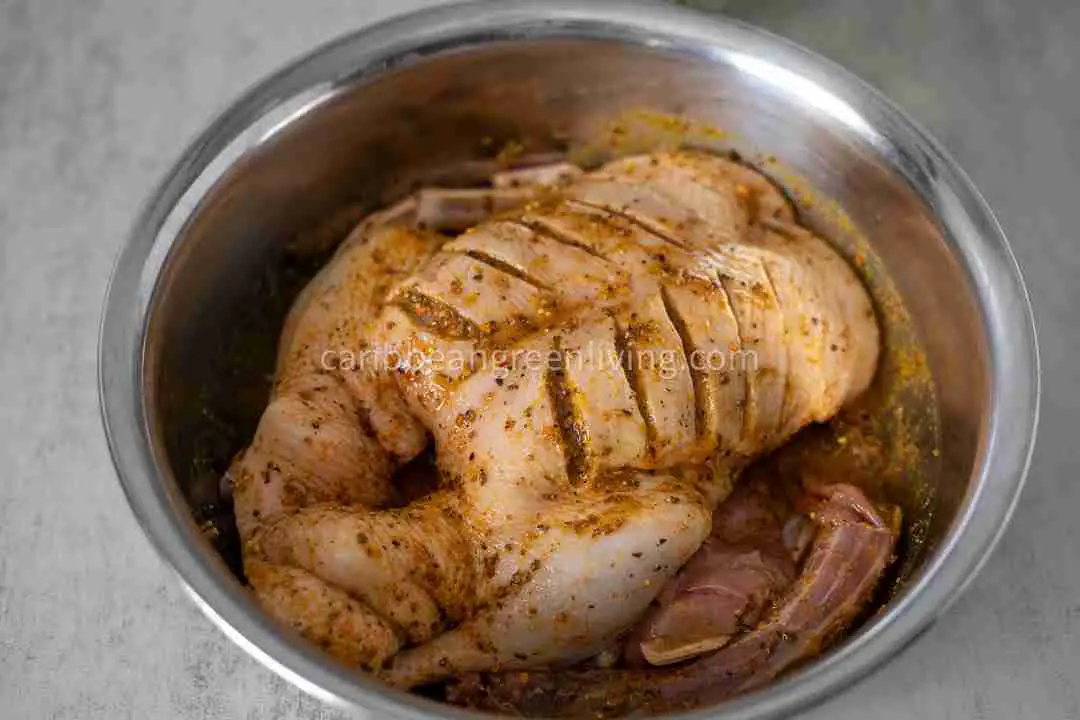
Start by preheating the oven to 350°F (175°C). Pat the duck completely dry, then prick the skin all over without piercing the meat to allow the fat to render properly.
Mix the Haitian epis, chicken bouillon, and paprika (or your chosen spice blend), and rub the mixture generously inside the cavity and over the entire surface of the duck.
Stuff the cavity with onion, lemon, parsley, and thyme. Arrange the carrots and celery in a baking pan or cast-iron skillet and place the duck breast-side up on top of the vegetables.
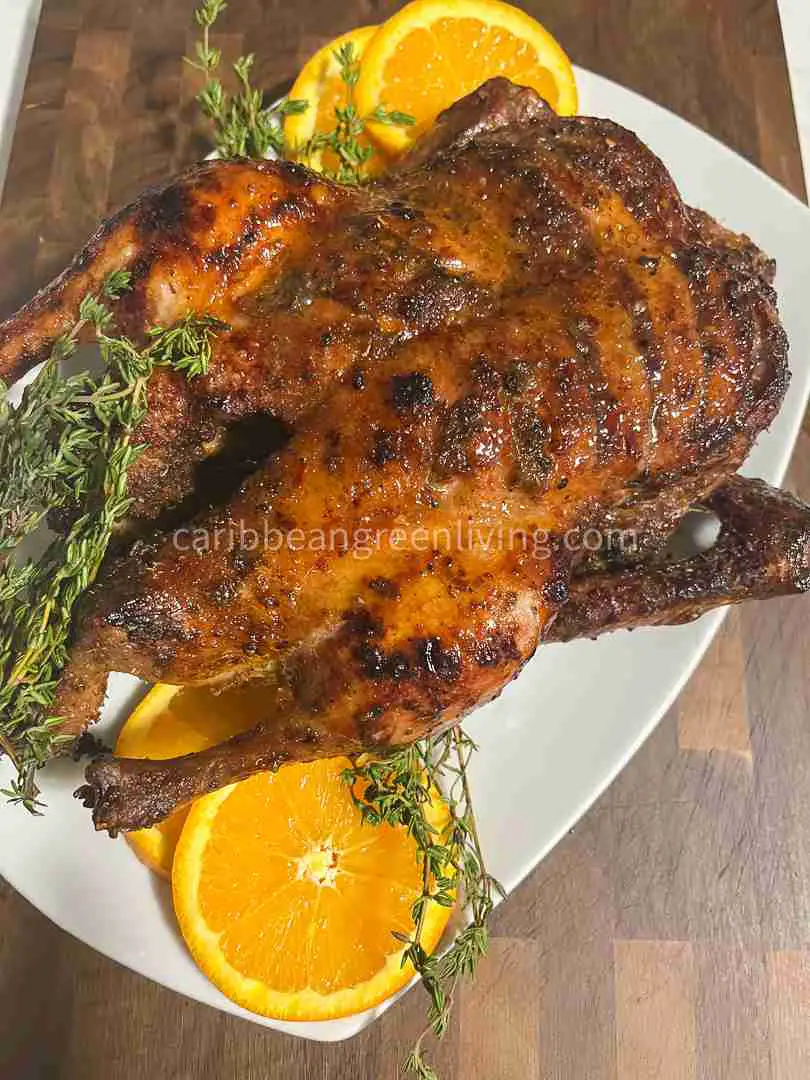
Roast uncovered for 2 to 2½ hours, pouring off the rendered fat halfway through cooking. During the final 15 minutes, increase the oven temperature to 400°F to achieve extra-crispy, golden skin. The duck is done when the internal temperature reaches 165°F (74°C).
Once roasted, allow the duck to rest for 15–20 minutes before carving to keep the meat juicy and tender.
FAQs & Serving Suggestions
How long should I roast a duck?
Plan 20–30 minutes per pound at 350°F. Always confirm with a thermometer.
What should I serve with roasted duck?
Classic Caribbean pairings:
- Diri ak Pwa (Haitian rice and beans) – non-negotiable
- Banan Peze (fried plantains) – sweet, salty, crunchy balance
- Pikliz – that acidity cuts through duck fat like a champ
Add a simple green salad if you want to feel virtuous.
How do I store leftovers?
- Duck meat: Airtight container, fridge, up to 4 days
- Duck fat: Strain through a fine-mesh sieve, refrigerate up to 3 months
Use that fat for:
- Roasted potatoes
- Frying eggs
- Root vegetables
- Basically anything that deserves joy
Ingredient Notes & Substitutions
- Haitian epis: Use homemade or store-bought. This is the flavor foundation of the dish.
- Paprika vs spice blends: Paprika keeps things mellow; Cajun, berbere, baharat, or jerk seasoning add heat and depth.
- Vegetables: Carrots and celery work best, but onions and parsnips are good additions.
Final Thoughts
This is not a weeknight chicken. This is a slow-roasted, flavor-forward, Caribbean-inspired showstopper. Haitian epis does the heavy lifting, the duck brings the drama, and the rendered fat makes you feel like a culinary genius.
Cook it once and you’ll start looking for excuses to make it again.
If you think duck is complicated, this recipe is here to prove you wrong. This Haitian-inspired roasted duck with epis and fresh herbs is bold, aromatic, and surprisingly straightforward. Haitian epis does the heavy lifting, while slow roasting renders the fat and delivers crisp skin with juicy, flavorful meat.
Instead of using a roasting rack, the duck sits on a bed of vegetables, infusing everything underneath with rich flavor while keeping the skin beautifully golden.
Bonus: You end up with rendered duck fat, and that alone is worth making this recipe.
This is the kind of dish you serve when you want people to remember dinner.
Haitian-Inspired Roasted Duck with Epis and Fresh Herbs
Equipment
- Oven for slow, even roasting
- Large roasting pan or baking dish wide enough to hold the duck and vegetables
- Cast-iron skillet (optional) great alternative for even heat retention
- Sharp knife or metal skewer for pricking the duck skin to render fat
- Paper towels essential for drying the skin thoroughly
- Small mixing bowl for combining the epis seasoning rub
- Measuring cups and spoons for accurate seasoning
- Tongs or sturdy spatula to safely handle the duck
- Heat-safe glass jar or fat separator for collecting rendered duck fat
- Instant-read meat thermometer to confirm doneness (165°F / 74°C)
- Cutting Board for resting and carving the duck
- Carving knife for clean slices after resting
- Fine-mesh strainer to strain duck fat for longer storage
- Aluminum Foil to tent the duck loosely while resting
Ingredients
The Bird
- 1 whole duck about 4 lbs, fully thawed
The Base Rub
- ½ cup Haitian epis green seasoning base
- 1 tablespoon chicken bouillon powder
- 1 tablespoon paprika
Optional Bold Twist:
- Replace paprika with Cajun seasoning berbere, baharat, or jerk seasoning for a spicier profile.
The Cavity Stuffing
- 1 small onion quartered
- 1 lemon halved
- Fresh parsley sprigs
- Fresh thyme sprigs
The “Natural Rack”
- 3 large carrots cut into chunks
- 3 celery stalks cut into chunks
Instructions
Step 1: Prep the Duck
- Preheat the oven to 350°F (175°C). Remove the duck from its packaging and pat the skin extremely dry using paper towels.
- Using a sharp knife or skewer, carefully prick the skin all over, especially around the breast and legs. Avoid piercing the meat. Carefully score the skin over both breasts, avoiding the meat.This step allows the fat to render properly and ensures crispy skin.
Step 2: Season
- In a small bowl, mix the Haitian epis, chicken bouillon powder, and paprika (or your chosen seasoning).
- Rub the mixture generously inside the cavity and all over the duck, making sure the skin is evenly coated.
Step 3: Stuff and Build the Bed
- Stuff the duck cavity with onion, lemon, parsley, and thyme.
- Arrange the carrots and celery in a baking pan or cast-iron skillet. Place the duck breast-side up directly on top of the vegetables.
Step 4: Roast
- Place the duck in the oven and roast for 2 to 2½ hours, depending on size.
- Halfway through cooking: Carefully pour off the rendered duck fat into a heat-safe glass jar. Reserve for later use.
- Final 15 minutes: Increase oven temperature to 400°F to achieve extra-crispy, deeply golden skin.
- The duck is done when the internal temperature reaches 165°F (74°C).
Step 5: Rest
- Remove the duck from the oven and let it rest for 15–20 minutes before carving. This keeps the meat juicy and flavorful.
Notes
Season the duck up to 12 hours ahead, then refrigerate uncovered for drier skin and better crispness. For even browning, turn the duck halfway through cooking so the back side faces up. This helps the underside develop color and render evenly. Turn the duck breast-side up again to finish roasting and achieve a beautifully golden, crisp skin. Handling tip: Use a stainless steel poultry lifter set or sturdy tongs to turn the duck safely. The bird will be heavy and hot, and using the proper tools will make the process much easier and safer. Storage:
Store leftovers in an airtight container for up to 4 days. Save rendered duck fat separately.
Please keep in mind that nutritional information is a rough estimate and can vary greatly based on the products used.
Nutrition info is automatically generated and provided as a courtesy and as an estimate only.