Caribbean Food as Medicine: Healing Teas, Soups, and Generational Remedies
In the Caribbean, food is more than nourishment—it is healing, heritage, and tradition woven into every cup of tea and every simmering pot of soup. For generations, Caribbean families have relied on the power of nature’s ingredients to soothe ailments, restore strength, and promote overall wellness. Herbal teas brewed from ginger, sorrel, lemongrass, and moringa are cherished remedies, while broths and soups rich in roots, vegetables, and herbs serve as comforting medicine for the body and soul.
These practices, passed down through elders and enriched by cultural storytelling, highlight a deep respect for the land and its bounty. Today, modern science is beginning to validate what Caribbean communities have known for centuries: that food is a powerful ally in health. From easing digestion to supporting immunity, Caribbean food traditions demonstrate how culture and wellness are beautifully intertwined.
Traditional Herbal Teas
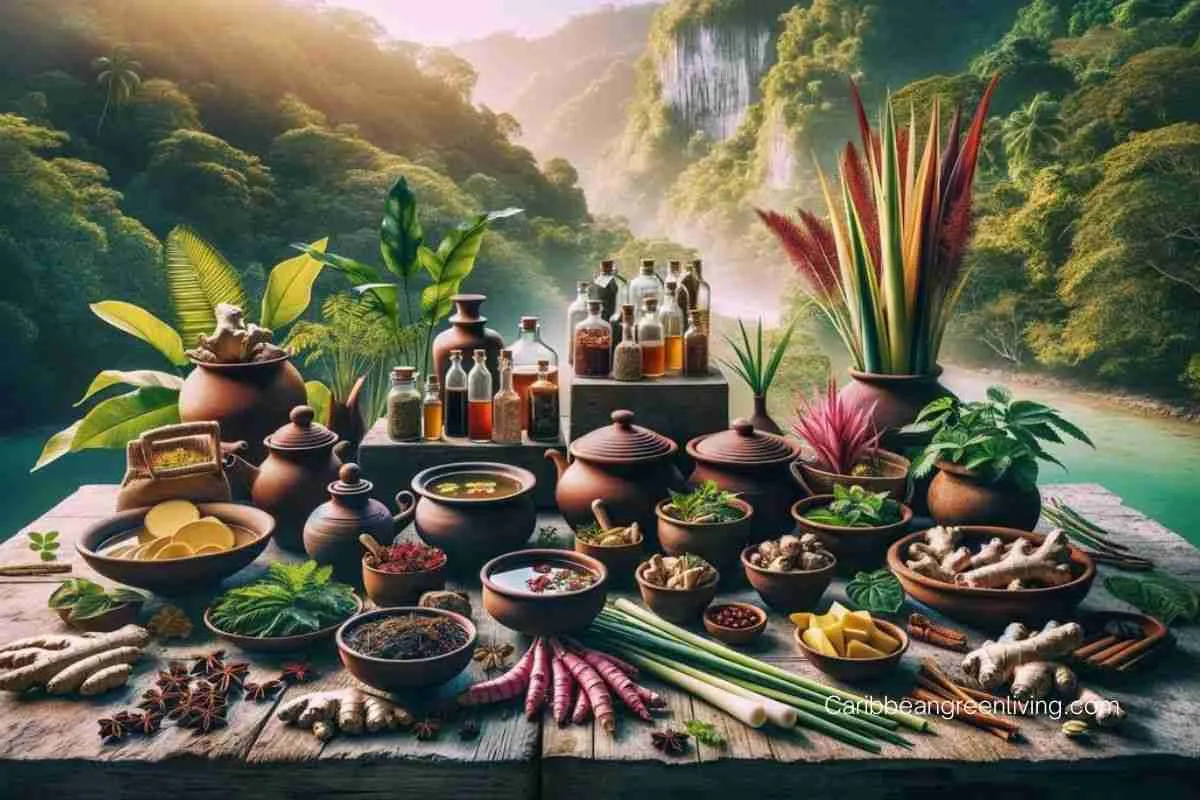
- Ginger tea, a Caribbean staple, soothes sore throats and eases congestion. Made by boiling fresh ginger, it’s often enhanced with lemon or honey.
- Peppermint tea, from steeped leaves, cools and calms. It aids digestion and relieves headaches, commonly enjoyed after meals.
- Sorrel tea, made from hibiscus petals and spiced with cloves and ginger, is believed to lower blood pressure and boost immunity due to its vitamin C content.
- Bush tea encompasses various herbal infusions. Lemongrass tea reduces anxiety and promotes sleep, while wild basil tea supports respiratory functions.
- In Jamaica, cerasee tea is used to purify blood and treat skin conditions, despite its bitter taste.
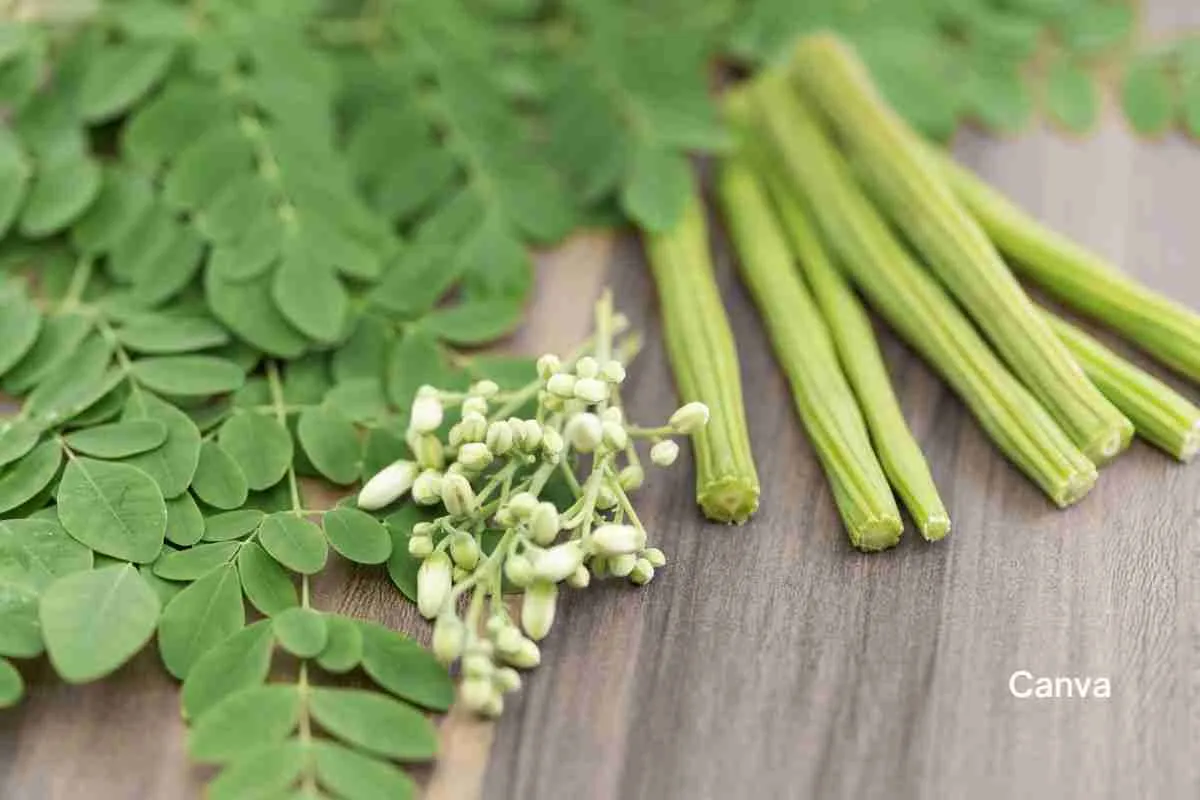
- Moringa tea, rich in vitamins and minerals, combats anemia, revitalizes energy, and enhances mental clarity.
- Soursop leaf tea relieves stress and tension, and is also praised for its potential anti-cancer properties.
In Caribbean culture, tea is a tradition, healer, and cherished family custom. Some of these tea leaves can be found in herbal food stores, Amazon, and noubess.com
Healing Broths and Soups
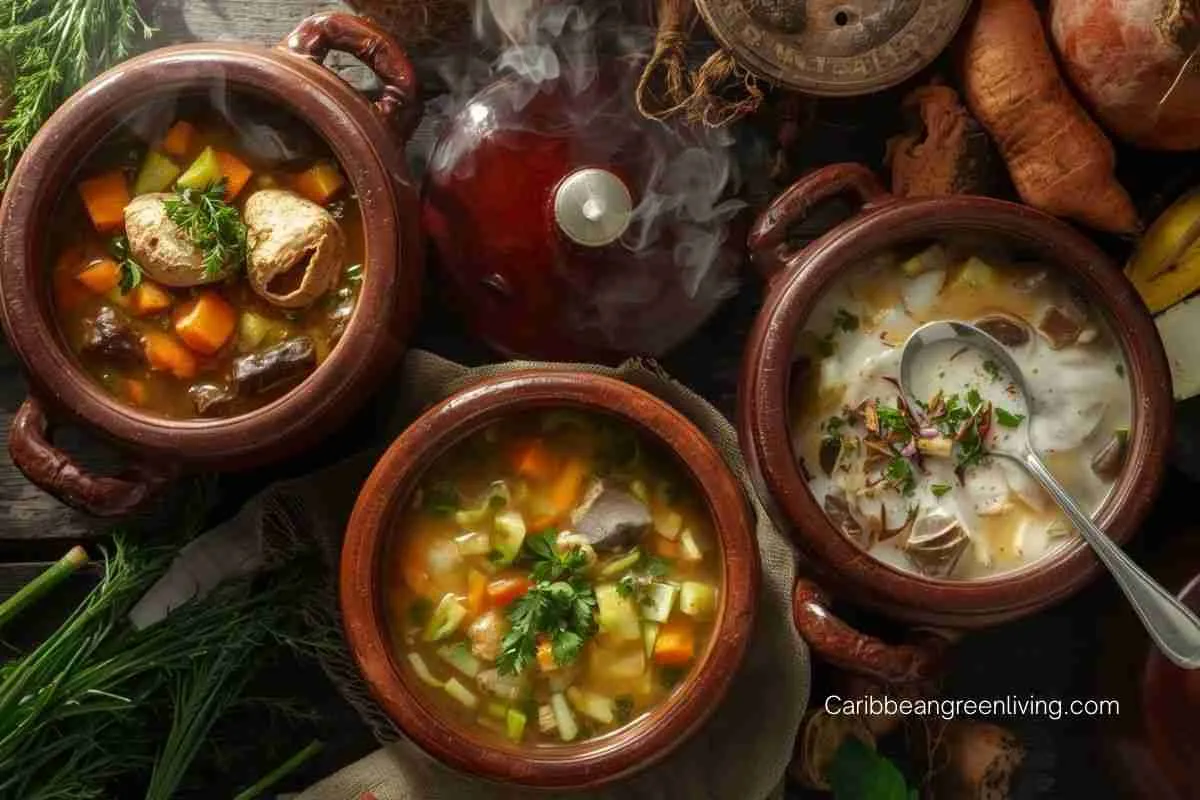
Caribbean broths and soups offer comfort and healing. Chicken soup, often called “chicken foot soup,” is made with vegetables, thyme, and scallions. It’s believed to strengthen immunity and speed recovery during illness. Chicken feet, rich in collagen, support joint health and skin elasticity.
Fish broth, made with fresh fish, herbs, and root vegetables, is considered beneficial for brain health due to omega-3 fatty acids. It’s used for rejuvenation after illness or fatigue.
Conch soup, a Caribbean specialty, is known for promoting vigor. Rich in protein and nutrients, it supports muscle growth and energy restoration. Enhanced with coconut milk, garlic, and scotch bonnet peppers, it’s rumored to be an aphrodisiac.
Goat head soup, or mannish water, is believed to aid stomach ailments. Its bold flavors come from garlic, green bananas, and pimento seeds, and it’s reputed to improve stamina.
Pea soup, made with split or red peas and seasoned pork, is nutritionally dense. Filled with dumplings, yams, and plantains, it replenishes energy and provides warmth.
These slowly simmered broths and soups represent the region’s rich flavors and traditions, offering a taste of home and heritage in each healing sip.
Generational Remedies
Caribbean families pass down medicinal knowledge through generations. Elders are respected as guardians of this heritage, teaching children about nature’s remedies from an early age.
This oral tradition enables each generation to inherit botanical knowledge, thereby becoming an integral part of the family’s identity. Elders share wisdom about brewing ginger tea or gathering lemongrass, whether in quiet moments or during busy days.
Despite the prevalence of modern medicine, many Caribbean families still consult their elders for ailments or complementary therapies. This blend of old and new enriches the community’s approach to health.
Preserving these practices requires intentionality. Elders encourage younger family members to appreciate and document traditions. Oral storytelling is supplemented by:
- Written recipes
- Digital archives
- Social media discussions
These methods appeal to tech-savvy generations, ensuring the continuation of traditional knowledge.
These generational remedies honor ancestry while offering hope, resilience, and empowerment. By cherishing these practices, Caribbean families connect their past to the present, creating a holistic approach to wellness that thrives in the modern era.

Expert Perspectives on Caribbean Medicinal Foods
Experts in nutrition and traditional medicine are increasingly interested in the Caribbean’s use of food as medicine. They emphasize integrating time-tested remedies with modern scientific insights to enhance health and wellness.
Dr. Alicia Thompson, a nutritionist specializing in ethnobotany and traditional diets, notes that many Caribbean medicinal foods have scientific backing. Ginger, popular in herbal teas, is known for its anti-inflammatory and antioxidant properties, which help manage inflammation and boost immunity. Studies show ginger’s effectiveness in reducing nausea, pain, and osteoarthritis symptoms.
Sorrel tea, rich in antioxidants and vitamin C, aligns with modern dietary advice for immune support and anti-inflammatory benefits. Clinical studies confirm that hibiscus, sorrel’s source, can help manage high blood pressure and cholesterol levels.
Dr. Richard Morales, a traditional medicine expert, describes Caribbean broths and soups as nutrient-dense elixirs. He explains that collagen from chicken feet contributes to skin and joint health, while vegetables and herbs provide essential vitamins and minerals.
Dr. Sandra Robertson, a herbal medicine researcher, supports the use of bush teas. She notes that lemongrass contains compounds believed to have anti-anxiety and sleep-promoting properties, validating its traditional use for relaxation and stress relief.
These experts advocate for a holistic approach to health that combines traditional knowledge and modern research. They suggest food-based therapies should complement conventional medicine, enhancing overall wellness. This perspective affirms cultural wisdom while encouraging new insights to elevate these traditions.
By fostering collaboration between knowledge keepers and researchers, the Caribbean inspires an inclusive approach to health. This fusion of ancestral knowledge and contemporary science ensures medicinal practices remain relevant in addressing today’s health challenges, preserving wellness legacies for future generations.

FAQ Section
Q1: What is Caribbean food as medicine?
Caribbean food as medicine refers to the use of traditional teas, soups, and remedies made from local herbs, roots, and foods to support wellness, boost immunity, and relieve common ailments.
Q2: What are the most popular Caribbean herbal teas?
Popular herbal teas include ginger tea for digestion and inflammation, sorrel tea for blood pressure and immunity, peppermint tea for headaches, cerasee tea for detoxification, lemongrass tea for relaxation, moringa tea for energy and clarity, and soursop leaf tea for stress relief.
Q3: Which Caribbean soups are known for their healing benefits?
Caribbean healing soups include chicken foot soup for immunity and collagen, fish broth for brain health, conch soup for energy and vigor, mannish water (goat head soup) for stamina, and pea soup for nourishment and energy.
Q4: How are traditional remedies passed down in Caribbean culture?
Medicinal knowledge is often shared orally through generations, with elders teaching children how to prepare herbal teas, broths, and remedies. Today, many families also preserve these traditions through written recipes, digital archives, and social media.
Q5: What does modern science say about Caribbean herbal remedies?
Research supports many traditional practices. For example, ginger has anti-inflammatory benefits, hibiscus (sorrel) lowers blood pressure, and lemongrass promotes relaxation. These findings validate ancestral wisdom while encouraging integration with modern wellness practices.
Caribbean traditions in herbal teas and healing broths demonstrate the enduring link between culture and wellness. Embracing these practices honors a legacy of resilience and holistic health that continues to inspire and nurture generations.
Caribbean food as medicine is more than a practice—it’s a way of life that connects generations, honors culture, and nurtures wellness. From the soothing warmth of herbal teas like ginger, sorrel, and moringa to the restorative comfort of soups such as chicken foot and fish broth, these traditions remind us that healing often begins in the kitchen.
By blending ancestral wisdom with modern science, Caribbean communities continue to inspire a holistic approach to health that values both nature and culture. These remedies are not just cures for the body—they are stories, memories, and bonds shared among families and communities.
We’d love to hear from you! Do you have a favorite Caribbean tea or healing soup that your family swears by? Share your traditions in the comments below and keep the legacy of Caribbean wellness alive.
For more inspiration, explore these related guides:
- 10 Best Healing Herbal Teas from the Caribbean
- Caribbean Superfoods Guide
- Haitian Bread Soup with Vegetables
References
- Grzanna R, Lindmark L, Frondoza CG. Ginger–an herbal medicinal product with broad anti-inflammatory actions. J Med Food. 2005;8(2):125-132.
- McKay DL, Chen CY, Saltzman E, Blumberg JB. Hibiscus sabdariffa L. tea (tisane) lowers blood pressure in prehypertensive and mildly hypertensive adults. J Nutr. 2010;140(2):298-303.
- Blanco MM, Costa CA, Freire AO, Santos JG Jr, Costa M. Neurobehavioral effect of essential oil of Cymbopogon citratus in mice. Phytomedicine. 2009;16(2-3):265-270.