Spice Up Your Life: A Guide to Caribbean Spices and Seasonings
Welcome to paradise! In the world of culinary delights, the Caribbean is a treasure trove of vibrant flavors and mouthwatering seasonings. The Caribbean islands are a vibrant tapestry of cultures, and their cuisine reflects this diversity. From the fiery Haitian Epis of Haiti to the aromatic blends of curry powder in Trinidad, Caribbean spices and seasonings add a unique depth of flavor to any dish. Step into a world where every dish tells a story, every bite fills you with the essence of the islands.
Get ready to embark on a journey through the richness of Caribbean spices and seasonings, as we unlock the secrets to creating unforgettable meals. From fiery jerk seasoning that tantalizes your taste buds to the intoxicating aroma of allspice that infuses dishes with warmth, Caribbean flavors are as diverse as the islands themselves. Sink your teeth into succulent curried goat, savor the tang of mango chutney, or transport yourself to the tropical beaches with a sip of rum-infused cocktail. The possibilities are endless.
Whether you’re a seasoned chef or a home cook looking to spice up your recipes, this article will be your guide to unlocking the true essence of the Caribbean. We’ll explore the history, the techniques, and the unique characteristics of Caribbean spices and seasonings. So get your taste buds ready for a culinary adventure like no other. Let’s dive into the flavors of paradise together!
The History and Cultural Significance of Caribbean Spices
Caribbean spices have a rich history deeply intertwined with the region’s indigenous roots, colonial past, and global trade routes. Before European colonization, the indigenous Taíno and Arawak peoples utilized native spices such as allspice and annatto for cooking, medicine, and preservation.
The arrival of Spanish, Dutch, French, and British explorers introduced new spices through the transatlantic trade, while African slaves and Indian indentured laborers brought their own spice traditions, further enriching Caribbean cuisine. Today, these spices represent the region’s cultural fusion, playing a key role in culinary identity, traditional medicine, and even religious ceremonies.
First let’s visit the most basic spices use in many cuisines.

Here are some of the most basic and versatile spices to have in your kitchen:
- Black Pepper: King of spices! Adds heat and complexity to almost any dish.
- Salt: Essential for flavor enhancement and balancing other flavors.
- Garlic Powder: Adds a pungent, savory flavor without the need to mince fresh garlic.
- Onion Powder: Similar to garlic powder, adds a subtle onion flavor.
- Paprika: Mildly sweet and slightly smoky, adds color and a touch of warmth.
- Oregano: A classic Italian herb, adds a slightly bitter, earthy flavor.
- Cumin: Earthy and slightly nutty, essential in many Mexican and Indian dishes.
- Chili Powder: A blend of spices, typically including chili peppers, cumin, oregano, and garlic.
A Guide to the Most Commonly Used Caribbean Spices and Seasonings
- Allspice (Pimenta dioica) – A signature spice in jerk seasoning and stews.
- Scotch Bonnet Peppers – A fiery chili essential in hot sauces and marinades.
- Thyme – A fundamental herb in soups, stews, and meat dishes.
- Ginger – Used in both savory dishes and beverages like ginger beer.
- Nutmeg and Mace – Popular in desserts and holiday drinks.
- Annatto (Achiote) – Imparts a rich color and subtle earthiness to dishes.
- Cinnamon and Cloves – Found in sweet and savory Caribbean recipes.
- Coconut and Bay Leaves – Commonly used to enhance flavors in rice and stews. Coconut can be use as a spices in many dishes in the Caribbean, South Africa and Thailand.
Wet Seasonings: Haitian Epis, Green Seasoning, and Jerk Seasoning
Many Caribbean dishes rely on wet seasonings, which are blended marinades used to infuse meats, seafood, and vegetables with robust flavors.
- Haitian Epis – A staple in Haitian cooking, epis is a flavorful blend of garlic, bell peppers, scallions, parsley, thyme, and citrus juice. It serves as the foundation for many Haitian dishes, from rice to stews and meats.
- Green Seasoning – Used across many Caribbean islands, green seasoning is a herbaceous blend of scallions, thyme, cilantro, parsley, garlic, and citrus juice. It varies slightly by island but remains a fundamental component in stews, soups, and grilled meats.
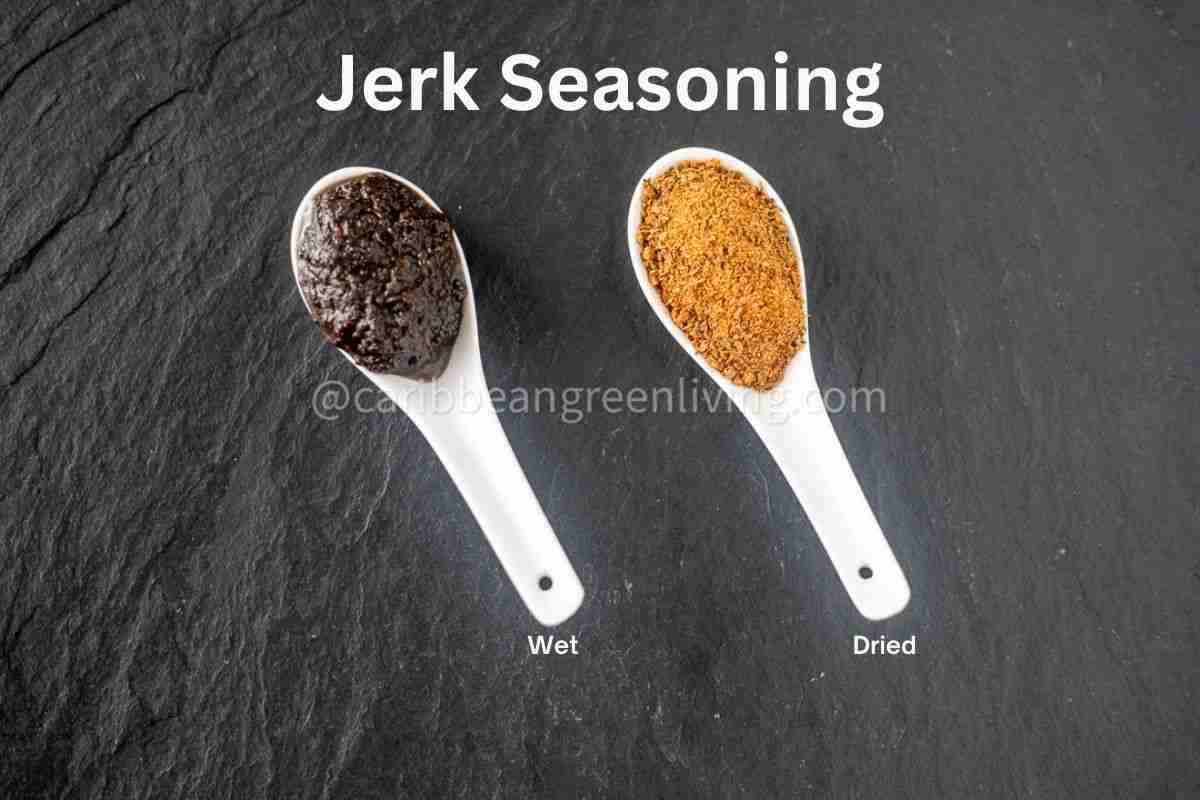
- Jerk Seasoning – While often used as a dry rub, jerk seasoning can also be made into a wet marinade by blending allspice, Scotch bonnet peppers, thyme, garlic, ginger, and soy sauce, creating a spicy, aromatic paste.

The Health Benefits of Caribbean Spices and Seasonings
- Anti-inflammatory properties – Turmeric, ginger, and allspice contain powerful anti-inflammatory compounds that help reduce pain and swelling.
- Digestive health – Cinnamon, cumin, and fennel seeds support digestion and alleviate bloating.
- Immune system support – Scotch bonnet peppers, garlic, and thyme are rich in vitamin C and antimicrobial properties.
- Heart health – Garlic, allspice, and bay leaves help regulate blood pressure and support cardiovascular wellness.
- Antioxidant-rich – Nutmeg, cloves, and bay rum leaves help combat oxidative stress and protect cells.
- Metabolism boost – Spicy ingredients like Scotch bonnet peppers and allspice can help accelerate metabolism and promote fat burning.
- Blood sugar regulation – Cinnamon and nutmeg have been shown to stabilize blood sugar levels.
- Respiratory health – Thyme and bay leaves are known for their ability to relieve congestion and improve respiratory function.
- Brain health – Nutmeg and turmeric contain compounds that support cognitive function and may help prevent neurodegenerative diseases.
- Bone health – Annatto and cumin provide essential minerals like calcium and phosphorus to strengthen bones.
Traditional Caribbean Recipes Featuring Spices and Seasonings
- Haitian Griot – Marinated pork chunks fried to crispy perfection, infused with Haitian epis and citrus flavors.
- Jamaican Jerk Chicken – Marinated with jerk seasoning and grilled to perfection.
- Trinidadian Curry Goat – A flavorful dish featuring a blend of Indian-inspired Caribbean spices.
- Bahamian Conch Chowder – Seasoned with thyme, bay leaves, and allspice.
- Puerto Rican Arroz con Gandules – Rice cooked with annatto, garlic, and sofrito.
- Grenadian Nutmeg Ice Cream – A sweet treat highlighting the “Spice Isle’s” prized nutmeg.
Where to Buy Authentic Caribbean Spices and Seasonings
If you don’t feel like making your own, authentic Caribbean spices can be found at:
- Local Caribbean grocery stores and markets.
- Online retailers specializing in Caribbean ingredients.
- Specialty food stores and international markets.
- Directly from Caribbean spice farms and cooperatives.
Tips for Incorporating Caribbean Spices into Your Cooking
- Start with small amounts and adjust to taste, as some spices can be intense.
- Use spice blends like jerk seasoning or green seasoning for an easy flavor boost.
- Experiment with fresh vs. dried spices for different flavor profiles.
- Combine spices with citrus juices, coconut milk, or vinegar for depth.
- Store spices in airtight containers away from heat to preserve freshness.
How to Store Caribbean Spices:
- Best Storage Container: Airtight glass jars are ideal for storing whole spices. For ground spices, use airtight containers with a tight-fitting lid to prevent moisture and oxidation.
- Shelf Life:
- Whole spices: Can last for several months to a year when stored properly.
- Ground spices: Generally last for 6-12 months.
Experiencing the Flavors of the Caribbean Through Travel and Cuisine
For a true immersion into Caribbean spice culture, consider the following:
- Visiting local spice farms in Grenada, known as the “Spice Isle.”
- Exploring street food markets in Jamaica, Trinidad, and the French Caribbean Islands.
- Taking Caribbean cooking classes to learn traditional spice techniques.
- Dining at authentic Caribbean restaurants to experience diverse flavors.
Best to Buy in Bulk
Buying spices in bulk ensures freshness and cost-effectiveness, particularly for spices that are commonly used in both savory and sweet dishes, as well as in tea infusions due to their health benefits.
- Allspice – A staple in many Caribbean dishes and a warm addition to baked goods and teas.
- Thyme – Versatile and widely used in cooking, soups, and herbal teas.
- Cinnamon – Used in both sweet and savory dishes, as well as for its warming properties in teas.
- Nutmeg – Essential in desserts and traditional Caribbean drinks, also great for digestion when infused in tea.
- Cloves – Commonly used in spice blends, baked goods, and as a natural remedy in tea infusions.
- Ginger – Perfect for seasoning, baking, and making soothing teas for digestion and inflammation.
- Bay Leaves – Used in stews, rice dishes, and herbal teas for respiratory and digestive health.
- Turmeric – A vibrant spice for curries, marinades, and anti-inflammatory tea blends.
- Fennel Seeds – Great for spice mixes, baking, and teas that aid digestion.
- Pimento (Jamaican Pepper) – Key for seasoning meats, stews, and spiced tea infusions.
Conclusion: Embracing the Vibrant Flavors of Caribbean Spices and Seasonings
Caribbean spices are more than just ingredients; they tell the story of the region’s diverse cultural heritage and resilience. By incorporating these bold, aromatic seasonings into your cooking, you can experience the essence of the Caribbean’s rich history and culinary traditions. Whether through traditional recipes, travel experiences, or everyday meals, embracing Caribbean spices brings warmth, depth, and authenticity to the table.
By incorporating these vibrant spices and seasonings into your cooking, you can unlock the rich flavors of the Caribbean and create delicious and authentic dishes.
Disclaimer: This information is for general knowledge and informational purposes only and does not constitute medical advice.