
Haitian Griot: How to Make Flavorful Haitian Fried Pork
Haitian griot is one of the most recognizable dishes in Haitian cuisine. Made with well-seasoned pork that is cooked until tender and then fried or browned until beautifully crisp on the outside, griot delivers a combination of tender meat, citrus, herbs, and savory spices in every bite.
Griot is often served for celebrations and gatherings, but you don’t have to wait for a special occasion to make it at home. Once you understand how to season the pork, choose the right size pieces, cook the meat until tender, and finish it properly, the process is quite manageable.
Traditionally, the cooked pork is fried to develop its characteristic browned exterior. If you prefer not to fry it, you can also finish the pork in the oven for a version that uses less added oil.
Serve griot with fried plantains and Haitian pikliz for a classic combination.
What Is Haitian Griot?
Haitian griot is a pork dish traditionally prepared by seasoning and marinating pieces of pork with citrus, herbs, aromatics, and spices. The pork is cooked until tender and then fried until the exterior is deeply browned.
That final step is important. Griot shouldn’t simply taste like stewed or roasted pork. The contrast between the tender interior and browned exterior is part of what makes the dish so satisfying.
The word griot can also refer to a West African storyteller or oral historian. In Haitian cuisine, however, griot refers to this beloved pork dish.

What Cut of Pork Is Best for Griot?
Pork shoulder or picnic shoulder is an excellent choice for griot.
These cuts contain enough fat and connective tissue to remain flavorful and tender during cooking. They also stand up well to the second cooking stage when the pork is fried or browned.
Pork shoulder is often sold in fairly large pieces. If you don’t want to break down a whole shoulder at home, ask the butcher to cut it into large chunks for you. You can then adjust the pieces to the size you prefer before seasoning them.

What Size Should You Cut Pork for Griot?
The size of your pork pieces makes a noticeable difference in the finished griot.
I prefer pieces approximately 2 to 3 inches in size. They don’t need to be perfectly uniform, but keeping them reasonably similar helps the pork cook at approximately the same rate.
If the pieces are too small, they can cook quickly and are more likely to dry out during the final frying or browning stage.
If the pieces are too large, they take longer to become tender and give you less browned exterior in proportion to the tender meat inside.
Pieces around 2 to 3 inches provide a good balance. They are large enough to remain tender and juicy inside while still providing plenty of surface area for those flavorful browned edges.
This is especially important because griot is cooked twice: first until the pork becomes tender and then again briefly to brown and crisp the exterior.
Preparing Pork for Griot
In Haitian cooking, pork is traditionally prepared with citrus such as lime or sour orange before it is seasoned.
If you follow the traditional practice of cleaning or preparing pork with citrus, handle the raw meat carefully and avoid splashing juices around your sink and surrounding work surfaces. Clean and sanitize your preparation area afterward.
It’s important to remember that citrus or rinsing does not make raw pork safe to eat. Proper cooking is what destroys harmful bacteria.
After preparing the pork, you’re ready to season and marinate it.
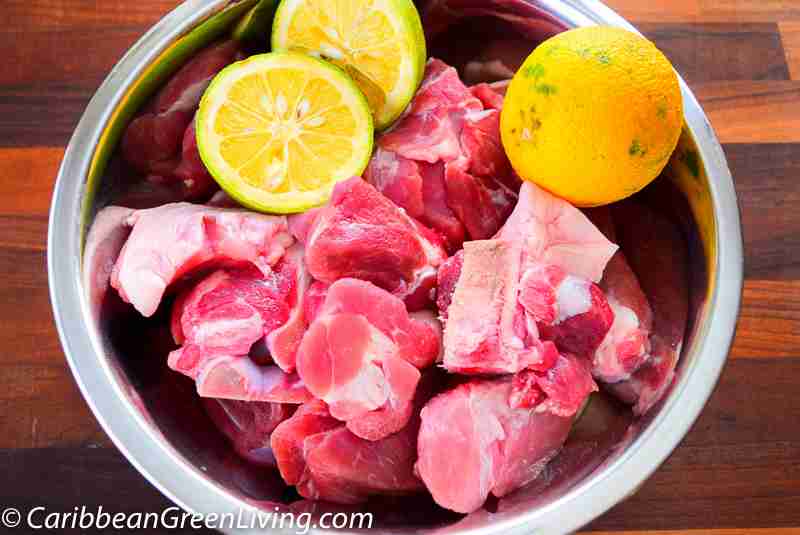
Key Ingredients for Haitian Griot
The ingredients for griot are relatively simple, but they work together to create the distinctive flavor of the dish.
Pork Shoulder or Picnic Shoulder
Pork shoulder has enough fat and connective tissue to remain tender during the initial cooking process while still developing an excellent exterior when fried or browned.
Sour Orange
Sour orange contributes the bright, tart citrus flavor traditionally associated with griot and many other Haitian meat preparations.
Fresh sour oranges aren’t always easy to find in the United States. Bottled sour orange juice is often available in the international, Caribbean, or Latin foods section of supermarkets.
Look for one with a distinctly tart flavor rather than a sweet citrus drink.
Fresh Lime
Fresh lime adds another layer of acidity and citrus flavor.
If sour orange isn’t available, lime can help provide the acidity you need, but use it thoughtfully. Too much lime can overpower the other flavors in the marinade.
Parsley
Fresh parsley contributes herbal freshness and works particularly well with the citrus and pork.
Thyme
Thyme is frequently used in Haitian savory cooking and adds an earthy aromatic note to the marinade.
Scallions
Scallions provide a mild onion flavor without overwhelming the other aromatics.
Salt and Black Pepper
Salt seasons the pork throughout, while black pepper contributes gentle warmth.
Scotch Bonnet Pepper
Scotch bonnet is optional but adds both heat and its distinctive fruity pepper flavor.
If you prefer mild griot, you can leave it out. If you’re using Scotch bonnet, handle it carefully and consider wearing gloves, particularly when cutting the pepper.
Oil for Frying
For traditionally fried griot, use a neutral cooking oil suitable for frying.
If you’re finishing your griot in the oven instead, considerably less added oil is needed.
How Long Should You Marinate Griot?
Give the pork enough time to absorb the flavors of the citrus, herbs, and aromatics.
If you’re short on time, marinate the pork for at least 30 minutes. For deeper flavor, marinate it for several hours or overnight in the refrigerator.
Longer isn’t always automatically better when a marinade contains a substantial amount of citrus. Extremely long exposure to acidic marinades can begin changing the surface texture of the meat.
For that reason, overnight is plenty.

How to Cook Haitian Griot
Making good griot involves two main cooking stages.
1. Cook the Pork Until Tender
After marinating, cook the seasoned pork with its marinade and aromatics until the meat is tender.
This first stage develops flavor and tenderizes the pork. The goal isn’t to crisp the exterior yet—that comes afterward.
Once the pork is tender, remove it from the cooking liquid and allow excess moisture to drain away before moving to the final browning stage.
The surface of the pork should not be excessively wet when it goes into hot oil.

2. Fry or Brown the Pork
The traditional finish is frying.
Heat a neutral cooking oil suitable for frying to approximately 350°F (175°C). Fry the cooked pork in batches until the exterior is deeply golden and crisp.
Don’t overcrowd the pot. Adding too much pork at once lowers the oil temperature and makes it more difficult to achieve good browning.
The pork is already cooked at this point, so you’re not trying to cook it for a long time. You’re developing that characteristic griot exterior.
Transfer the finished griot to a rack or paper-towel-lined surface to remove excess oil.
Can You Make Griot Without Frying?
Yes.
If you don’t want to deep-fry the pork, you can brown it in the oven instead.
Arrange the cooked pork pieces in a single layer with some space between them. This allows hot air to circulate around the meat and helps the exterior brown instead of steam.
Roast until the outside develops good color and slightly crisp edges, turning the pieces when necessary for more even browning.
The result won’t be exactly the same as traditionally fried griot, but oven browning is a convenient alternative that requires less added oil and less hands-on frying.
Tips for Making Better Griot
A few details can make a big difference in the finished dish.
Don’t cut the pork too small. Remember that the pork still has to go through a final frying or browning stage after it becomes tender.
Give the marinade time to work. Thirty minutes works when you’re in a hurry, but several hours will give the seasonings more time to flavor the pork.
Don’t overcrowd the frying oil. Work in batches so the oil maintains its temperature and the pork browns properly.
Drain the pork before frying. Excess liquid and hot oil are not a good combination. Allow the cooked pork to drain before adding it to the fryer.
Don’t overcook during the final stage. The pork has already been cooked until tender. Frying or oven browning is primarily about developing color and texture.
Adjust the heat to your preference. Scotch bonnet can be very hot. You can use less, leave it whole for gentler flavor, or omit it if you prefer mild griot.
What to Serve With Haitian Griot
Griot and pikliz are a natural pairing.
Haitian pikliz is a spicy pickled vegetable condiment whose acidity and heat balance the richness of the pork.
Fried plantains are another classic accompaniment and add a slightly sweet, starchy contrast to the savory pork.
You can also serve griot with rice, beans, or Sauce Ti Malice, depending on the meal you’re preparing.
For a simple plate, griot with fried plantains and pikliz is difficult to beat.
What to Do With Leftover Griot
Don’t overlook the leftovers.
Griot reheats well when you use a method that restores some of the crispness to the exterior. A skillet, oven, or air fryer works better for this than reheating it until soft.
You can serve the leftovers as another griot plate, add them to other meals, or shred the pork and turn it into a completely different lunch or dinner.
One of my favorite options is a Haitian Griot Sandwich made with shredded griot, avocado, sautéed bell peppers, and pikliz tucked inside a crusty baguette.
It’s an easy way to turn one batch of griot into two very different meals.

Bringing Haitian Griot to Your Table
Making griot at home takes a little time, but most of that work comes down to allowing the pork to marinate and cook until tender.
Pay attention to the details that matter: start with a flavorful cut of pork, don’t cut the pieces too small, season them well, cook the pork until tender, and give it a proper browned finish.
Whether you fry your griot traditionally or finish it in the oven, serve it with plenty of pikliz and your favorite Haitian sides.
And if you’re lucky enough to have leftovers, save them. Tomorrow’s griot sandwich might be just as good as today’s plate.

Haitian Griot
Equipment
Ingredients
- 3 pounds pork shoulder or picnic shoulder cut into 2- to 3-inch pieces
- 1/2 cup sour orange juice
- 1/2 cup fresh lime juice
- 1 tablespoon kosher salt
- 1 tablespoon chopped fresh parsley
- 1/2 tablespoon fresh thyme leaves
- 2 scallions chopped
- 1/4 teaspoon ground black pepper
- 1 Scotch bonnet pepper optional
- Neutral cooking oil for frying, if using the traditional fried method
Instructions
- Prepare the pork. Cut the pork shoulder into approximately 2- to 3-inch pieces, keeping them reasonably similar in size so they cook evenly.
- Season and marinate. Place the pork in a large bowl or nonreactive container. Add the sour orange juice, lime juice, salt, parsley, thyme, scallions, black pepper, and Scotch bonnet pepper, if using. Mix thoroughly so the pork is evenly coated.
- Marinate. Cover and refrigerate for at least 30 minutes. For deeper flavor, marinate for several hours or overnight.
- Cook until tender. Transfer the pork and marinade to a heavy-bottomed pot. Cook the pork until tender and fully cooked, stirring occasionally and adding a small amount of water if necessary to prevent the pot from becoming dry before the pork is tender.
- Drain the pork. Remove the cooked pork from the cooking liquid and allow it to drain. The exterior should not be excessively wet before frying or browning.
For Traditional Fried Griot
- Heat neutral cooking oil to approximately 350°F (175°C).
- Working in batches, carefully add the cooked pork to the hot oil. Fry until the exterior is deeply golden brown and crisp. Avoid overcrowding the pot.
- Remove the griot from the oil and transfer it to a rack or paper-towel-lined plate to drain excess oil.
For Oven-Browned Griot
- Preheat the oven to 350 degrees.
- Arrange the cooked pork in a single layer on a baking sheet, leaving some space between the pieces.
- Brown the pork until the exterior is golden with slightly crisp edges, turning the pieces as needed for even browning.
- Serve the griot hot with fried plantains, Haitian pikliz, rice, or your favorite Haitian sides.
Notes
Traditional Fried Griot Option
After cooking the pork until tender, drain it well. Heat neutral cooking oil to approximately 350°F. Working in batches, carefully fry the cooked pork until the exterior is deeply golden brown and crisp. Do not overcrowd the pot. Transfer the griot to a rack or paper-towel-lined plate to drain excess oil before serving. Pork size: Cut the pork into approximately 2- to 3-inch pieces. Pieces that are too small can dry out during the final browning stage, while very large pieces take longer to become tender. Slow browning: I prefer browning griot at 350°F because the lower temperature gives me more control over the color and texture. If needed, increase the temperature to 375°F toward the end. Scotch bonnet: Adjust according to your preferred heat level. You can omit it for milder griot. Marinating: Thirty minutes works when you’re short on time, but several hours or overnight gives the seasonings more time to flavor the pork. Before frying: If using the traditional fried method, drain the cooked pork well before placing it in hot oil to reduce dangerous splattering. Leftovers: Refrigerate leftover griot promptly in an airtight container. Reheat in the oven, a skillet, or an air fryer to help restore the browned exterior. Leftover griot can also be shredded and turned into a Haitian griot sandwich with avocado, sautéed bell peppers, and pikliz.Nutrition
Please keep in mind that nutritional information is a rough estimate and can vary greatly based on the products used.
Nutrition info is automatically generated and provided as a courtesy and as an estimate only.
Originally published on June 12, 2014. Updated on December 20, 2023. Republished and updated.


40 years ago as a new nurse my colleagues introduced me to this dish.
I have only had it made by my Haitian nursing sisters
I followed the recipe and my family who is southern loved loved it so flavorerful so tender !
It came out wonderful I made plantains black rice and salad as sides
Will make it at my next family reunion to introduce this scrumptous dish of love to others
Oh wow! Thanks, Beatrice. I am so glad to hear that you are enjoying our national dishes. Your dishes will be such a huge hit at the family reunion. Enjoy and thanks so much again.
I made this recipe for Thanksgiving and it was delicious. I have been using since. I have been looking for a good recipe and glad I found this one.
Enjoyed making this recipe. Added extra habanero for more kick! Definitely will be making this again.
I made for thanksgiving and it was so delicious. I have been using this recipe since.