
Unlocking the Flavor of Haitian Griot: Frying vs. Roasting vs. Grilling
Let’s clear up one thing right away. While griot in parts of West Africa can refer to skewered, grilled meat, Haitian Griot is its own glorious thing, and trust me, there’s no confusion once it hits the plate.
Haitian Griot is iconic. It’s bold, unapologetically pork-forward, deeply seasoned, and tied to celebration, Sunday meals, holidays, and backyard gatherings. Crispy on the outside, tender on the inside, and always paired with pikliz for that acidic punch, this dish is Haitian soul food at its finest.
But here’s where the friendly debate begins: fry, roast, or grill?
Let’s break it down.

Haitian Griot: A Pork Powerhouse
At its core, griot starts with pork shoulder (or pork butt), marinated in citrus, garlic, herbs, and spices. The pork is slowly cooked until tender and infused with flavor. What happens after that is where opinions and techniques diverge.
The Traditional Method: A Two-Step Process
Classic Haitian griot isn’t rushed. The pork is first marinated, then slow-cooked (often braised or roasted) until fork-tender. This step builds deep flavor and ensures the meat stays juicy.
The final step? Crisping. That’s where griot earns its reputation.
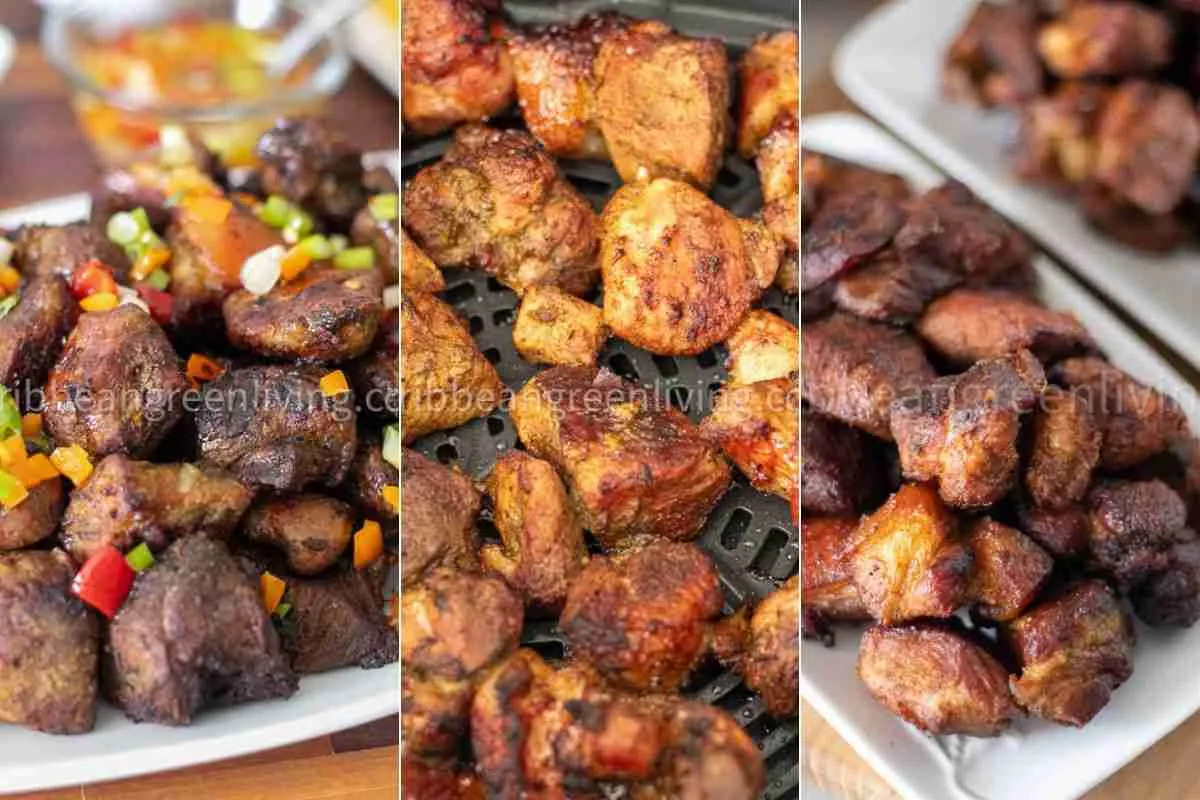
Frying: The Gold Standard for Texture
Frying delivers what most people expect from griot:
- Crispy, golden exterior
- Juicy, flavorful interior
- Bold, intensified seasoning
The hot oil seals the deal, creating that irresistible contrast between crunch and tenderness. This is the version you’ll most often find at fritay stands and family gatherings. It’s indulgent. It’s celebratory. And yes, it’s worth it.
Roasting: A Lighter, Practical Option
Roasting skips the deep oil and leans into convenience:
- Less fat
- Less mess
- Easy oven method
Roasted griot still tastes great, but let’s be honest, it won’t give you the same crackly crust as frying. If you’re roasting only, expect a more uniform texture. Still delicious, just different.
Pro move: roast first, then broil briefly to add surface crispness without fully frying.
Grilling: Smoky and Bold
Grilling griot brings a whole new personality to the dish:
- Smoky undertones
- Charred edges
- Lighter feel with big flavor
Grilled griot works especially well for summer cooking and outdoor meals. You lose some crunch, but you gain depth and aroma. It’s not traditional, but Haitian cooking has always adapted, and this method absolutely holds its own.
So… Which Method Wins?
Here’s the truth: there’s no wrong answer.
- Want classic Haitian griot? Slow-cook, then fry.
- Want less oil? Roast and broil.
- Want smoky flair? Grill it.
What matters most isn’t the method; it’s good pork, proper seasoning, patience, and cooking with intention.
Don’t Skip This: The Essential Pairing
No griot plate is complete without pikliz. That spicy, vinegary crunch cuts through the richness of the pork and balances the dish perfectly. Non-negotiable.
FAQ: Haitian Griot Cooking Methods
What cut of pork is best for Haitian griot?
Pork shoulder or pork butt is best for Haitian griot. These cuts have enough fat and connective tissue to stay tender during slow cooking and crisp beautifully when finished by frying, roasting, or grilling.
Is Haitian griot always fried?
Traditionally, Haitian griot is slow-cooked first and then fried for a crispy exterior. However, many home cooks now roast, broil, or grill griot as lighter alternatives while keeping the same marinade and seasoning.
Can you make Haitian griot without deep frying?
Yes. You can roast griot in the oven and finish it under the broiler to create crisp edges with less oil. Grilling is another option that adds smoky flavor while reducing fat.
Why is griot served with pikliz?
Pikliz balances the richness of griot. Its spicy, acidic crunch cuts through the fatty pork and enhances the overall flavor, making it an essential pairing in Haitian cuisine.
What’s the difference between Haitian griot and West African griot?
In Haiti, a griot is a marinated pork dish, while in parts of West Africa the term griot refers to a storyteller or, in some contexts, to grilled meat dishes. The two are culturally and culinary distinct despite sharing the same term.
Can Haitian griot be prepared in advance?
Yes. Griot can be cooked ahead and refrigerated after the initial slow cooking. Reheat and crisp just before serving by frying, broiling, or grilling for the best texture and flavor.

Can you season Haitian griot with other types of seasonings?
Yes. While citrus, garlic, and herbs are traditional, griot can be seasoned with other spice blends depending on taste, availability, and dietary needs. The key is balancing acidity, salt, and aromatics so the pork stays flavorful and tender.
Final Thought
Haitian Griot isn’t about rigid rules. It’s about flavor, texture, and joy. Cook it the way that fits your kitchen, your lifestyle, and your mood. If it’s seasoned well and made with care, you’re doing it right.
Now go cook. And don’t forget the pikliz.