How to Use Up Fresh Herbs: Practical Ideas from My Caribbean Kitchen
A few sprigs of thyme, half a bunch of parsley, and some leftover scallions can do a lot for your next meal. The trick is deciding how to use them while they still have good flavor and before they spoil.
In my kitchen, parsley often becomes parsley paste, sometimes blended with fresh garlic cloves. I chop and freeze scallions, chives, and leeks so they are ready when I need them. I also make Haitian epis in batches and store it in glass jars, and I use certain herbs to make herbal teas.
These habits help me waste less and make everyday cooking easier. When the aromatics are already prepared, a pot of rice, bean sauce, or sautéed vegetables comes together with less work.
Here are some practical ways to put your leftover herbs to use.
First, Check That Your Herbs Are Still Usable
There is a difference between herbs that have lost a little firmness and herbs that have spoiled.
Slightly wilted herbs may still be suitable for cooking if they otherwise look and smell fresh. Discard herbs that are slimy, moldy, rotten, or have an unpleasant odor. Blending, freezing, or steeping spoiled herbs will not make them suitable to eat.
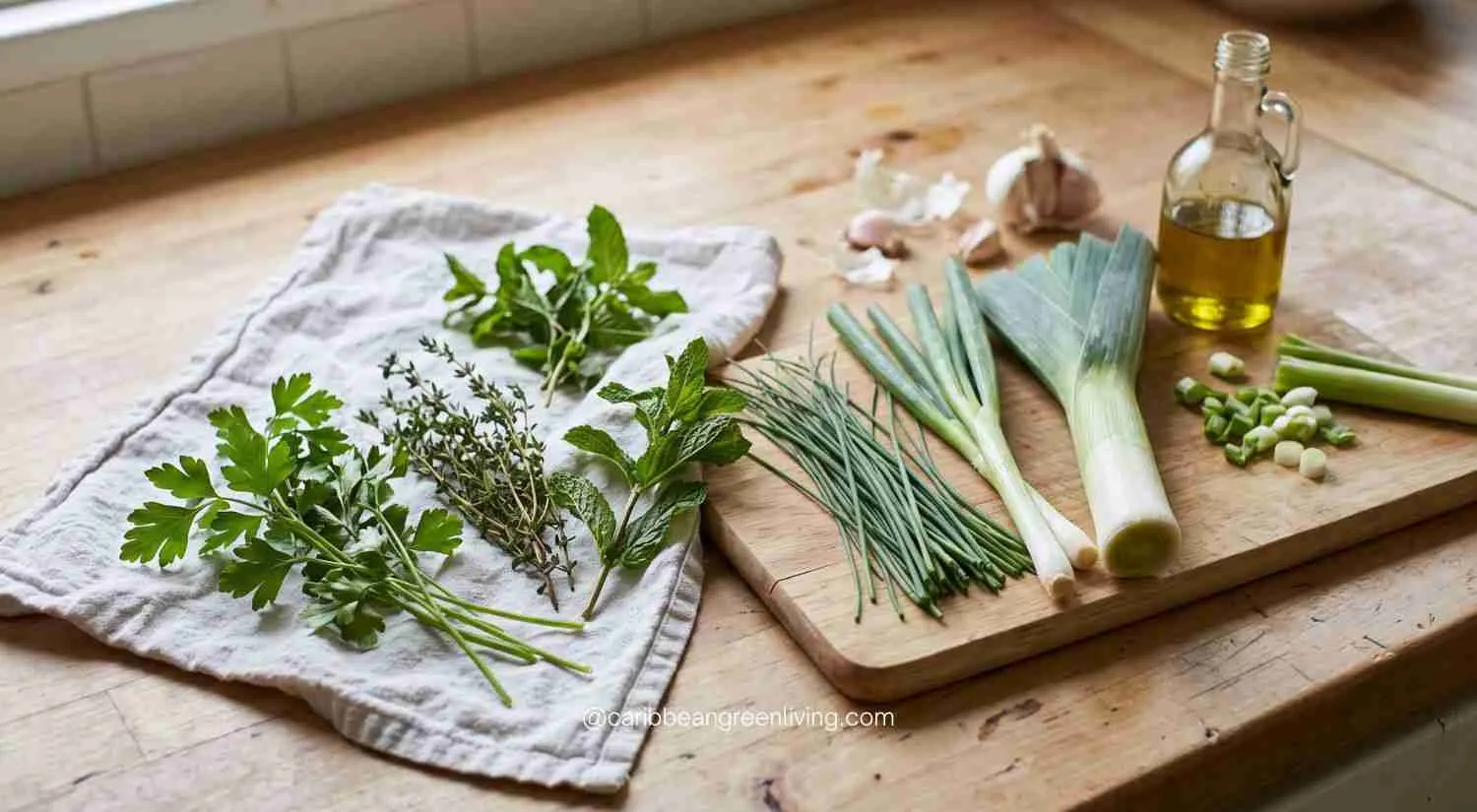
Sort your herbs, rinse the usable portions under running water, and dry them well before preparing them.
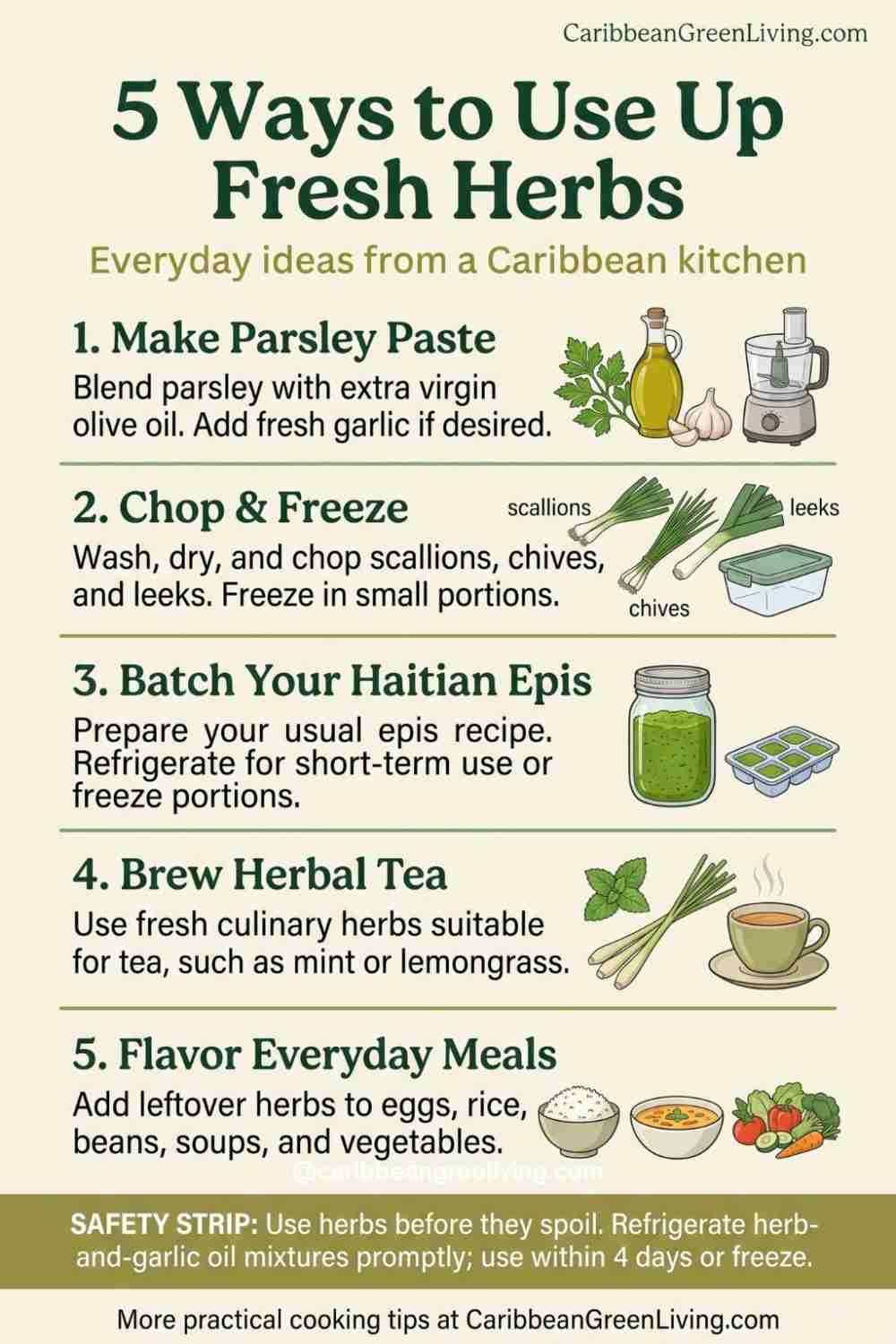
1. Turn Leftover Parsley into Parsley Paste
Parsley paste is one of my favorite ways to use a bunch of parsley before it goes bad. I blend the parsley with extra virgin olive oil so I have a prepared ingredient ready to add flavor whenever I cook.
Sometimes I add fresh garlic cloves. Other times, I use just parsley and extra virgin olive oil so I can choose the additional seasonings when preparing the dish.
A small food processor or mini chopper works well for small amounts. Remove damaged leaves and tough stems, wash and thoroughly dry the parsley, then blend with extra virgin olive oil until you reach your preferred consistency.
Refrigerate the paste promptly and use it within four days, or freeze it in small portions for longer storage.
Ways to use parsley paste
- Stir it into the seasoning base for rice or bean sauce.
- Add it to Haitian legim or sautéed vegetables.
- Use it when seasoning chicken, fish, or meat.
- Mix a little into a sauce or dressing.
- Add it to soups and stews during cooking.
Portion some paste into freezer-safe containers to make it easier to use a little at a time.
Storage note: If your paste contains oil, especially with fresh garlic, refrigerate it promptly and use it within four days, or freeze it for longer storage. Adding a little citrus juice does not make it shelf-stable.
2. Chop and Freeze Scallions, Chives, and Leeks
I chop scallions, chives, and leeks and freeze them for future meals. Although they are not all herbs, they belong in this conversation because they are everyday aromatics that can easily get forgotten in the refrigerator.
Having them prepared saves chopping time and helps me use what I purchased.
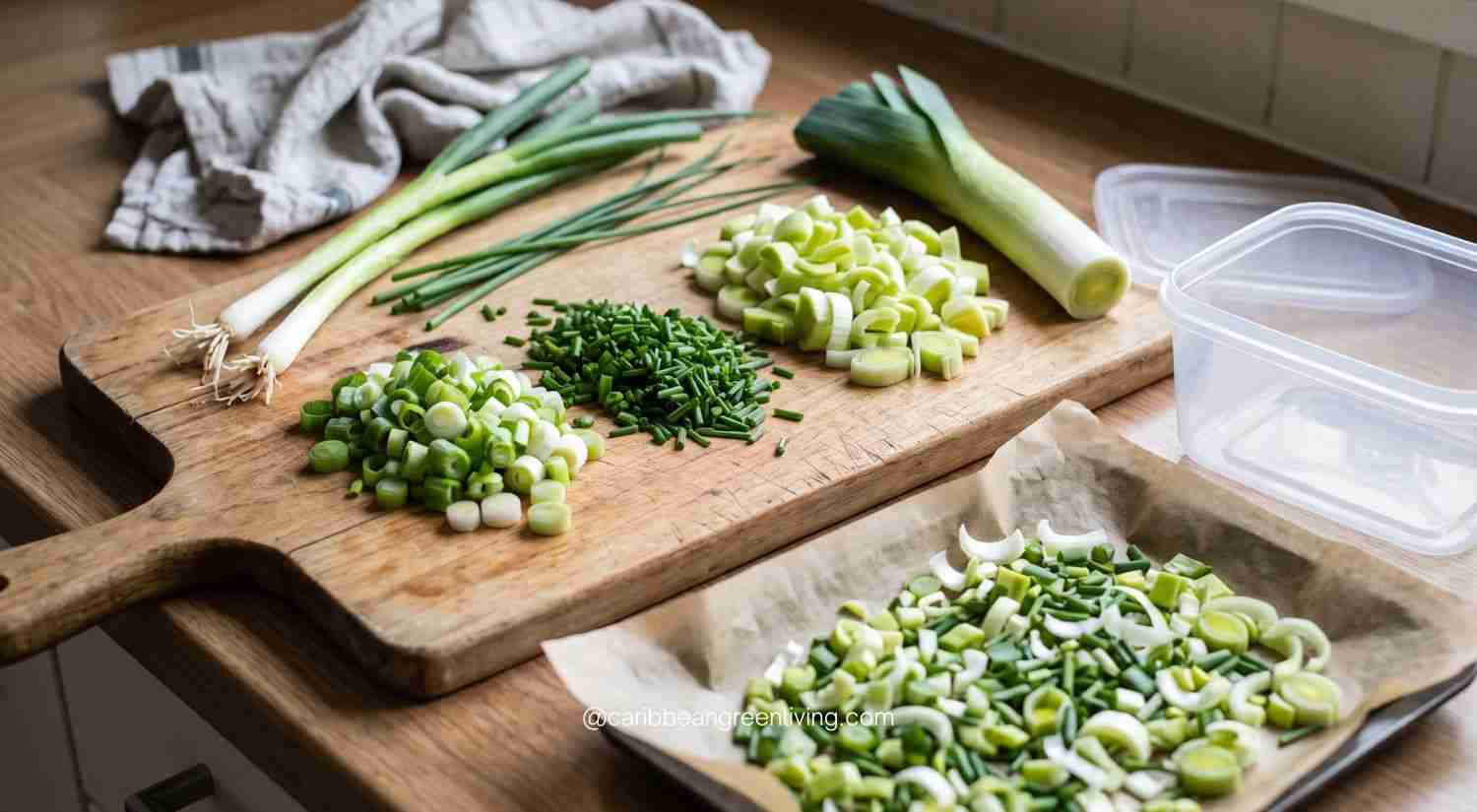
How I prepare them for freezing
- Remove damaged portions and trim as needed.
- Wash thoroughly. Separate leek layers to remove trapped dirt.
- Dry well, then slice or chop.
- Spread on a lined tray and freeze until firm.
- Transfer to a freezer-safe container or bag, label, and return to the freezer.
Freezing the pieces separately first helps keep them from forming one solid block.
Read my Leeks guide and Scallions guide.
Where to use them
Add frozen portions directly to scrambled eggs, soups, rice, bean dishes, sauces, or sautéed vegetables.
Expect a softer texture after freezing. I use these portions for cooking and keep fresh pieces for dishes that need a crisp garnish.
3. Make Haitian Epis in Batches
Making Haitian epis in batches is another way I keep fresh aromatics working in my kitchen. It brings several ingredients together into a seasoning base I can use across different meals.
I store my epis in glass jars. Preparing it ahead means I do not have to wash, trim, and chop every ingredient each time I season a dish.
When you have enough herbs and aromatics for a batch, follow your usual epis recipe rather than adding every leftover simply because it is available. The balance of ingredients still matters.
Put epis to work in everyday meals
Use it to season chicken, fish, and meat, or add it to the cooking base for vegetables, rice, and beans.
Keep refrigerated epis cold and use a clean utensil each time. Freeze portions you will not use promptly. For epis containing fresh garlic and oil, use the conservative four-day refrigerated limit or freeze it for longer storage.
If freezing in glass, use freezer-safe jars and leave adequate headspace. Small portions are especially helpful when you only need enough seasoning for one meal.
4. Make Herbal Teas and Simple Drinks
Certain herbs also have a place in my cup. Making herbal tea gives me another way to enjoy their flavor before they lose freshness.
Use familiar culinary herbs that you know are suitable for tea, such as mint or lemongrass. Choose herbs that are still fresh and sound, rinse them well, and prepare them according to the herb or your established recipe.
Mint makes a refreshing hot or iced tea. Lemongrass adds a citrusy aroma and pairs well with ingredients like ginger.
Make a small amount you can enjoy rather than turning leftover herbs into another large batch to store. The goal is a flavorful drink; it doesn’t need to be a health promise.
5. Add Small Amounts to Meals You Already Cook
You do not need enough herbs for a full batch of paste or epis. A small handful can still contribute to dinner.
| What you have | A practical way to use it |
|---|---|
| Parsley | Chop into eggs, vegetables, or a dressing, or make a small amount of parsley paste. |
| Thyme | Add sprigs to bean sauce, soup, or stew; remove woody stems before serving. |
| Scallions | Slice into eggs, rice, sautéed cabbage, or a seasoning base. |
| Chives | Snip over cooked vegetables or stir into eggs and herb butter. |
| Leeks | Cook into soups, sauces, or a vegetable sauté. |
| Cilantro | Add leaves and tender stems to a sauce or finish a rice dish. |
| Mint | Use in tea, fruit salad, or a familiar dressing. |
Think about what you are already planning to cook. A few thyme sprigs may belong in tomorrow’s beans, while parsley and scallions can help season tonight’s vegetables.
Try a small amount of herb butter
Finely chopped parsley, chives, or thyme leaves can also be mixed into softened butter. Add garlic or pepper if you like, and adjust the salt to suit the butter and the meal.
Use a little over-warm boiled yuca, corn, roasted vegetables, or fish. Prepare only what you need, or freeze small portions for future meals.
Freeze or Dry What You Cannot Use Soon
If you cannot use the herbs while they are fresh, choose a preservation method that suits how you plan to cook with them.
Freeze herbs for cooked dishes
Parsley, cilantro, chives, and other herbs can be frozen in small portions. Depending on the intended use, freeze chopped herbs on their own or in cubes with water or oil.
Water-based cubes work well in soups and stews. Oil-based portions can be useful when starting a cooked dish. Keep oil mixtures frozen until needed.
Frozen herbs generally lose their fresh texture, so save them for cooking rather than expecting them to look like a fresh garnish. Label each container with the herb and date.
Dry herbs for your seasoning shelf
Thyme, rosemary, and oregano are useful candidates for drying. Use small bunches with good airflow or follow a reliable dehydrator method.
Once thoroughly dry, store the herbs in airtight containers away from heat and light. Keeping dried leaves whole until needed helps preserve their aroma.
Keeping dried leaves whole until needed helps preserve their aroma.
Make an Herb Check Part of Your Meal Planning
Before shopping, check the herbs and aromatics you already have.
Decide what you will use fresh, what can become paste or epis, and what needs to go into the freezer. You may find that the parsley is ready for paste, the scallions can be chopped for another day, and the thyme belongs in a pot of bean sauce.
Using herbs well does not require a complicated system. A few familiar habits can reduce waste, save preparation time, and keep good flavor within reach.
What do you usually have left over: parsley, thyme, scallions, or something else? Share how you use it in your kitchen.