
Beginner’s Guide to Salted Mackerel: How to Desalt and Cook It
Salted mackerel is one of those ingredients that surprises people the first time they cook with it. It is salty, rich, flavorful, and deeply rooted in traditional cooking around the world. From Caribbean kitchens to Asian and African cuisines, salted fish has long been valued for its bold flavor, long shelf life, and practicality before refrigeration became common.
Unlike fresh mackerel, salted mackerel has been cured with salt, giving it a firmer texture and a more concentrated taste. While it may seem intimidating at first, learning how to prepare salted mackerel properly is actually very simple once you understand how to remove excess salt and balance its flavor.
The key is not to fight the saltiness completely. Even after soaking, some salt will remain in the fish, and that is exactly how it should be. Instead of adding more salt, the best approach is to build flavor with fresh herbs, aromatics, citrus, and good cooking techniques.
If you are new to cooking salted fish, this guide will help you understand how to soak, prepare, season, and cook salted mackerel without overpowering the dish.

What Is Salted Mackerel?
Salted mackerel is fresh mackerel preserved with salt. In some cases, the fish may also be partially dried. Salting fish is an old preservation method that allowed fishing communities to store and transport seafood long before refrigeration existed.
Because mackerel is naturally oily, it develops a rich and savory flavor when salted. The texture also becomes firmer and meatier than fresh fish.
Today, salted mackerel remains popular because it is:
- affordable
- flavorful
- pantry-friendly
- versatile
- easy to pair with starches and vegetables
It is commonly used in Caribbean, Asian, African, and European cuisines. You can find mackerel in your local and specialty food markets
Health Benefits of Mackerel
Mackerel is considered one of the most nutritious oily fish you can eat. It is naturally rich in protein, healthy fats, vitamins, and minerals that support overall wellness. According to WebMD, mackerel contains important nutrients such as omega-3 fatty acids, vitamin D, vitamin B12, selenium, iodine, and several B vitamins that help support the body in different ways.
Rich in Omega-3 Fatty Acids
Mackerel is especially known for its omega-3 fatty acids. These healthy fats may help support:
- heart health
- brain function
- reduced inflammation
- healthy blood circulation
Omega-3-rich fish are often recommended as part of a balanced diet because they may help reduce triglycerides and support cardiovascular health.
Excellent Source of Protein
Mackerel is high in protein, making it a satisfying ingredient that helps keep you full longer. Protein is important for:
- muscle maintenance
- tissue repair
- energy production
- overall body function
Because salted mackerel has such a strong flavor, a small amount can go a long way in a meal.
Contains Important Vitamins and Minerals
Mackerel naturally contains:
- vitamin D
- vitamin B12
- selenium
- iodine
- phosphorus
- magnesium
These nutrients help support:
- bone health
- nerve function
- immune health
- energy metabolism
- thyroid function
Vitamin B12 is especially important for red blood cell formation and maintaining healthy nerve cells.
A Few Things to Keep in Mind
While mackerel offers many health benefits, salted mackerel is still high in sodium because of the curing process. That is one reason why properly soaking the fish before cooking is important.
It is also best to avoid adding extra salt until after tasting the cooked dish. Fresh herbs, onions, garlic, citrus, and black pepper can help build flavor naturally without increasing sodium levels too much.
Additionally, some larger species such as king mackerel may contain higher mercury levels. Smaller varieties like Atlantic mackerel are generally considered better lower-mercury options.
Why Salted Fish Is Still Popular Today
Salted fish is more than a traditional ingredient. It is also practical cooking.
Many cultures continue to use salted fish because it:
- stores well
- stretches meals
- adds strong flavor to simple ingredients
- works beautifully with rice, root vegetables, dumplings, and bread
The strong flavor also means that a small amount of fish can season an entire meal. This style of cooking reflects resourcefulness and zero-waste kitchen traditions that still make sense today.
How to Desalt Salted Mackerel Properly
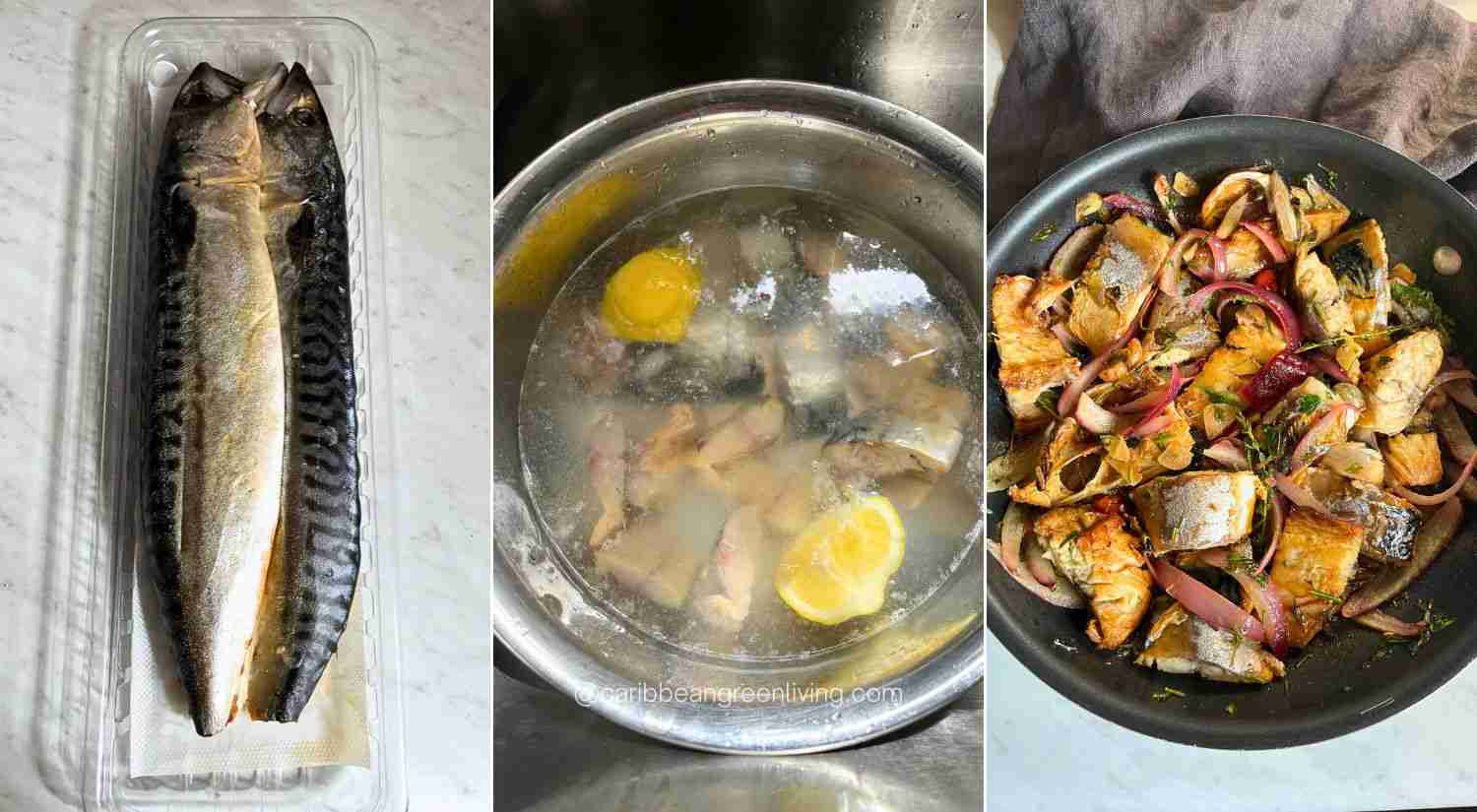
The most important step when preparing salted mackerel is removing some of the excess salt before cooking. A quick rinse will do the trick.
Unlike salted cod, overnight soaking is not always necessary or recommended for salted mackerel. Because mackerel is softer and oilier, soaking too long can affect the texture and remove too much flavor.
Recommended Soaking Method
1. Rinse the Fish
Rinse the fish thoroughly under cold running water to remove surface salt.
2. Soak in Water
Place the fish in a bowl of cold water.
Soak for about:
- 4–6 hours, depending on thickness
- Change the water once or twice if needed
3. Optional Vinegar Method
You can also soak the fish in a mixture of water and a small splash of vinegar.
The vinegar helps:
- reduce excess saltiness
- freshen the fish
- balance strong aromas
Do not use too much vinegar, or it may overpower the fish.
4. Taste Before Cooking
After soaking, remove a small piece and taste it carefully for saltiness.
Remember: some salt will still remain in the fish, and that is normal.
Should You Boil Salted Mackerel?
Boiling salted mackerel is generally not recommended unless you plan to shred the fish for recipes such as:
- savory pastries
- fish spreads
- chicquetaille
- fillings
- croquettes
Boiling can remove too much flavor and may cause the fish to become overly soft or dry, depending on the cut. For most recipes, soaking alone works best.
Do Not Add Salt Right Away
One of the biggest mistakes people make when cooking salted mackerel is adding extra salt too early.
Even after soaking, the fish still contains natural salt from the curing process.
Instead of adding salt immediately:
- cook the dish first
- taste carefully
- adjust gradually only if necessary
Personally, I prefer cooking salted mackerel without adding any extra salt. Fresh herbs, onions, garlic, citrus, and black pepper usually provide enough flavor while allowing the fish itself to shine.
If you prefer additional seasoning, use a low-salt or salt-free seasoning blend carefully.
Best Herbs and Seasonings for Salted Mackerel
Fresh ingredients work best with salted mackerel because they naturally balance its richness and saltiness.
Best Herbs
- parsley
- thyme
- garlic
These ingredients brighten the flavor without overpowering the fish.
Other Excellent Ingredients
- onions
- scallions
- black pepper
- hot peppers
- lemon juice
- lime juice
- tomatoes
- coconut oil
- olive oil
A splash of lemon or lime juice added during cooking helps cut through the fish’s richness and bring freshness to the dish.
Best Cooking Methods for Salted Mackerel
Salted mackerel can be:
- sautéed with onions and herbs
- cooked in tomato-based sauces
- added to rice dishes
- paired with dumplings
- served with root vegetables
- mixed into breakfast dishes
- used in pastries and savory fillings
Because the fish is naturally rich, it pairs especially well with simple starches and fresh vegetables.
What to Serve with Salted Mackerel
Salted mackerel pairs beautifully with:
- rice
- boiled plantains
- breadfruit
- potatoes
- dumplings
- cassava
- yams
- avocado
- fresh salads
- sautéed vegetables
The balance between salty fish and mild starches is what makes these meals so satisfying.

Frequently Asked Questions
How long should I soak salted mackerel?
Usually 4–6 hours, depending on the fish’s thickness.
Can I soak salted mackerel overnight?
It is generally not recommended because the fish may lose too much flavor and texture
Should I boil salted mackerel?
Only if you plan to shred it for fillings, pastries, or spreads.
Do I need to add salt when cooking salted mackerel?
Usually no. Taste first before adding any additional salt.
What herbs go best with salted mackerel?
Parsley, thyme, and garlic work especially well.
Why add lemon or lime juice?
Citrus helps brighten the rich flavor and balance the saltiness.
Conclusion
Salted mackerel is a simple ingredient with deep culinary roots around the world. Once you learn how to soak and season it properly, it becomes one of the easiest ways to create flavorful and satisfying meals without needing many ingredients.
The secret is balance. Instead of trying to remove all the salt, work with it. Fresh herbs, onions, garlic, black pepper, and citrus can transform salted mackerel into a rich and comforting dish that feels both practical and deeply traditional.
Sources:
- https://www.webmd.com/diet/what-are-health-benefits-mackerel
- https://draxe.com/nutrition/mackerel-fish/