Sea Urchin (Uni): Taste, Uses & Caribbean Traditions
Sea urchin may be best known today by its Japanese name, uni, especially if you’ve encountered it at a sushi restaurant or seafood market. But sea urchins are also found throughout the Caribbean, where edible species have long been harvested and enjoyed on several islands.
Depending on where you are in the Caribbean, you may hear sea urchins called sea eggs or oursins, the French word for sea urchin.
I wasn’t familiar with sea urchin as a food when I was living in Haiti. It was through traveling to other parts of the Caribbean that I became more aware of this incredible ingredient and the different ways it can be prepared.
That discovery is also a reminder of how diverse Caribbean cuisine really is. An ingredient that may not be familiar in one Caribbean country can have a long culinary history somewhere else in the region. If you’re exploring the broader traditions behind the food, start with my Haitian Cuisine Guide.
Today, I can find fresh uni much closer to home. I buy it at H Mart, a Korean market where I purchase much of my seafood and produce. The uni is sold fresh and already cleaned, which makes experimenting with this unusual seafood considerably easier.
And there is much more you can do with uni than serve it on sushi. Its rich, briny flavor can work beautifully in fritters, soups, stews, sauces, compound butter, seafood dishes, and pasta.

What Is a Sea Urchin?
Sea urchins are small marine animals belonging to the echinoderm family, which also includes starfish and sea cucumbers.
Their rounded bodies are protected by a hard shell, technically called a test, covered with movable spines. Those spines help protect the animal and also play a role in movement.
Sea urchins live in oceans around the world, from tropical waters to colder coastal environments. Different species vary considerably in size, color, appearance, and culinary importance.
Several species occur throughout the Caribbean.
One of the most significant edible Caribbean species is the white sea urchin (Tripneustes ventricosus), often called the West Indian sea egg or simply sea egg.
It inhabits relatively shallow coastal environments, including seagrass beds and areas around reefs, where sea urchins graze on algae and other available plant material.
Are Sea Urchins Found in the Caribbean?
Yes.
The white sea urchin is widely distributed throughout the Caribbean and has historically supported commercial and subsistence fisheries in parts of the eastern Caribbean.
Sea urchin traditions vary considerably from island to island. This is important because there isn’t one universal “Caribbean” way of preparing or eating sea urchin.
In some English-speaking Caribbean islands, edible sea urchins are commonly called sea eggs.
In the French Caribbean, you may encounter oursin, the French word for sea urchin.
Historically, islands including Martinique, Saint Lucia, Barbados, Grenada, and Saint Vincent and the Grenadines have had sea urchin fisheries or traditions associated with eating sea eggs.
As with so many Caribbean ingredients, local availability helped shape how communities prepared them.
Sea Urchin in Caribbean Cooking
Sea urchin isn’t exclusively associated with Japanese or Mediterranean cuisine. It also has a place in Caribbean food traditions, particularly in parts of the eastern Caribbean and French Caribbean.
Preparations vary according to island and local tradition.
Sea urchin can be incorporated into dishes such as fritters, soups, stews, sauces, and other seafood preparations. In French Caribbean cooking, you may also encounter preparations using oursin, including seasoned fritters.
Some preparations are simple and allow the sea urchin’s natural marine flavor to remain prominent, while others combine it with herbs, aromatics, peppers, citrus, and other local ingredients.
This is one of the reasons I find sea urchin so interesting from a Caribbean cooking perspective. Its flavor is distinctive, but it also works surprisingly well with many ingredients already familiar in the Caribbean kitchen.
What Is Uni?
The terminology surrounding sea urchin can be confusing because sea urchin and uni aren’t exactly the same thing.
Sea urchin refers to the entire marine animal.
Uni is the culinary term commonly used for the edible portion found inside the sea urchin.
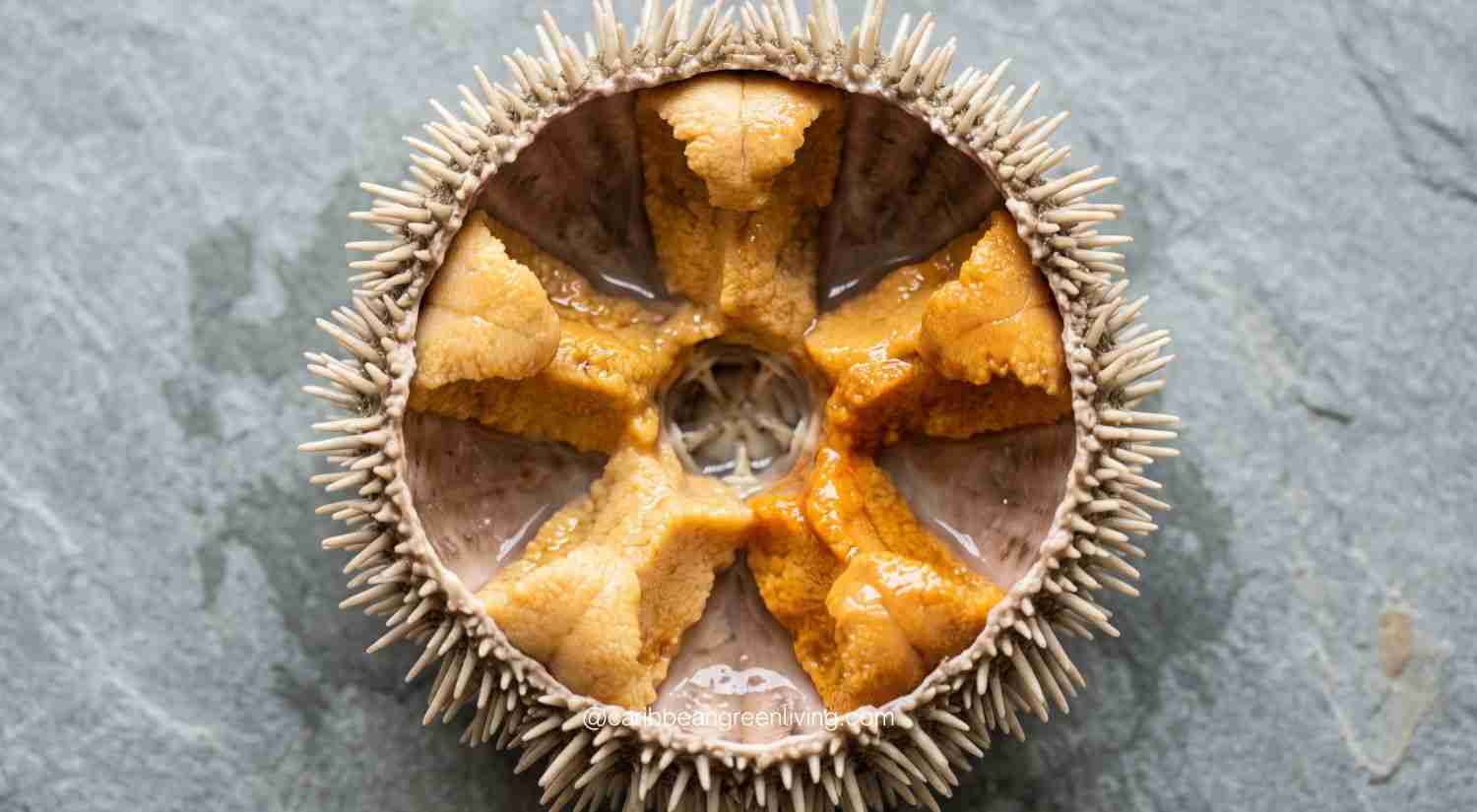
When a sea urchin is opened, five yellow, gold, or orange sections are arranged inside the shell. These are the animal’s gonads, or reproductive organs.
These delicate sections are the part we eat.
You’ll frequently see uni described as sea urchin roe, especially on menus and seafood packaging. That terminology is widely understood, but it isn’t technically precise because the edible gonads can contain eggs or sperm depending on the animal.
For everyday cooking, however, uni has become the familiar culinary name for this edible part of the sea urchin.
Sea Urchin, Sea Egg, Oursin and Uni: What’s the Difference?
These terms are related, but they don’t necessarily mean exactly the same thing.
Sea urchin refers to the marine animal itself.
Sea egg is a common Caribbean name for edible sea urchins, particularly the white sea urchin in parts of the eastern Caribbean.
Oursin is simply the French word for sea urchin, so you’ll encounter it in French and French Caribbean cooking.
Uni is the Japanese culinary term for the edible gonads of sea urchins, widely used internationally.
Understanding these terms makes it much easier to recognize the ingredient when you encounter it in different cuisines.
What Does Uni Taste Like?
Uni has one of those flavors that isn’t easily compared with another ingredient.
Good-quality fresh uni is generally:
- briny
- slightly sweet
- creamy
- savory
- rich in umami
- distinctly ocean-like
It shouldn’t simply taste aggressively fishy.
The flavor can vary depending on the sea urchin species, its diet, where it was harvested, season, freshness, and how it was handled after harvesting.
Texture is just as important as flavor. Fresh uni has a very soft, creamy texture but should still have enough structure to hold its shape. When placed on your tongue, it almost seems to melt.
That combination of sweetness, salinity, richness, and umami is what makes uni such an interesting ingredient for sauces and compound butter.
Why Is Uni So Popular?
Uni offers something many ingredients cannot easily reproduce: richness and ocean flavor at the same time.
It can add depth to a dish without requiring a large quantity. This makes it especially interesting when paired with relatively simple ingredients such as:
- butter
- pasta
- rice
- bread
- eggs
- seafood
- fresh herbs
- citrus
- shallots
- scallions
- garlic
The key is balance. Uni has a delicate character despite its strong personality. Too many competing flavors can completely overwhelm it.
How to Buy Fresh Uni
If you have access to a well-stocked Asian or international market or a reputable seafood market, you may be able to find fresh uni already cleaned and packaged.
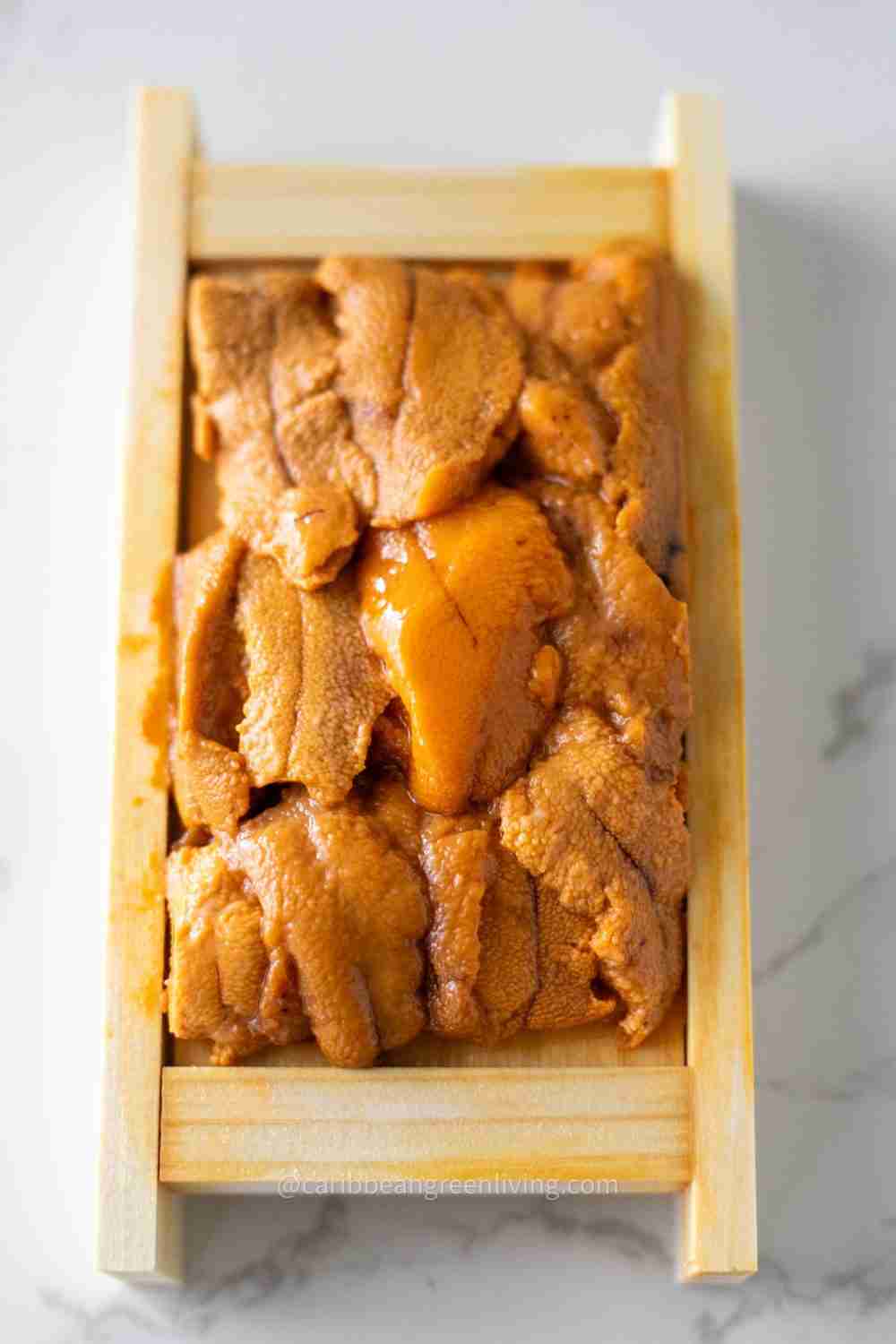
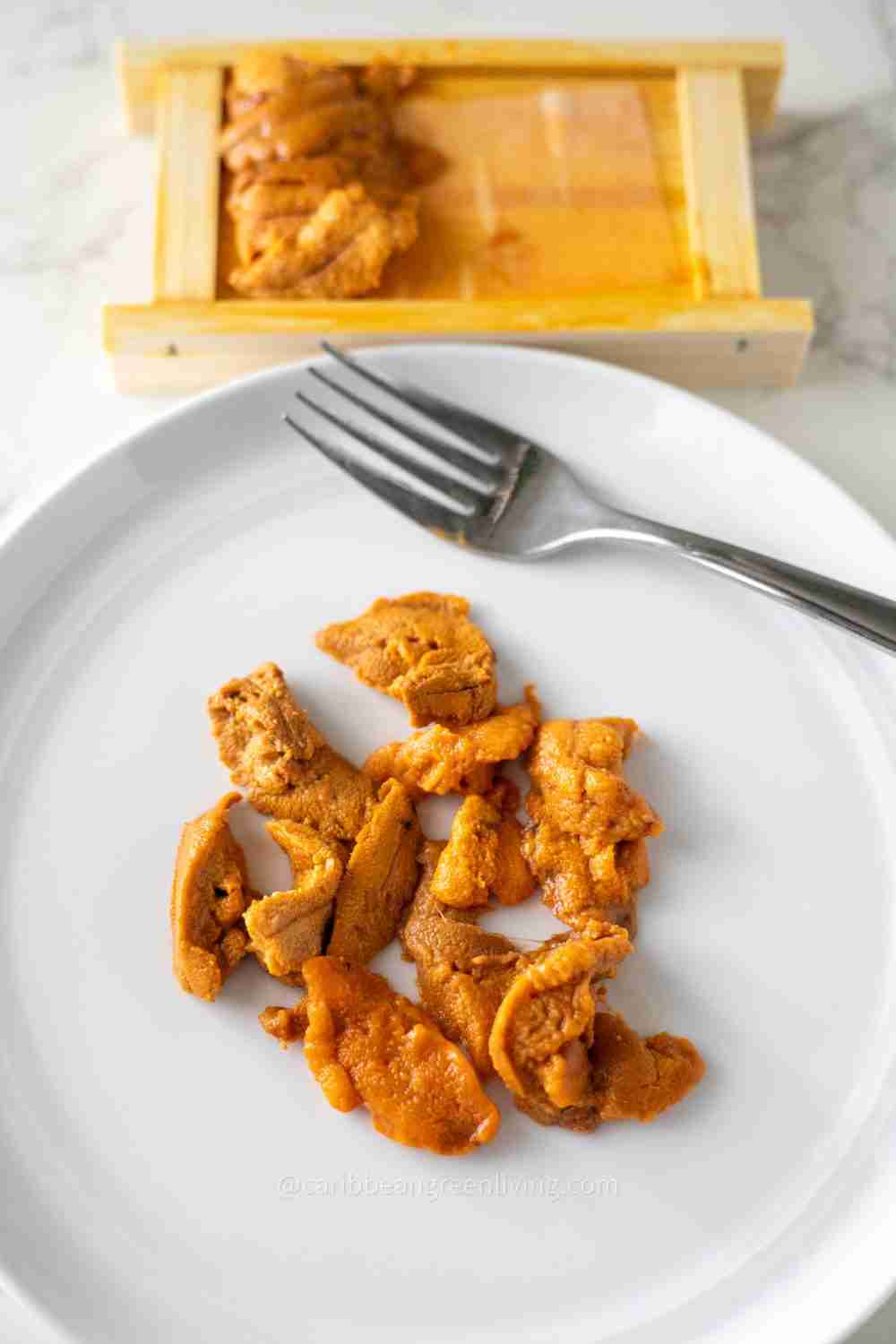
This is how I purchase mine. I find fresh uni at my local H Mart, a Korean market where I also buy much of my seafood and produce. It comes already removed from the sea urchin and arranged in a tray. Availability can vary by store, so check your local seafood department if you’re looking for fresh uni.
For a home cook, this makes uni much more approachable. You don’t have to purchase a whole sea urchin, handle the spines, open the shell, or clean the edible portions yourself.
When shopping for fresh uni, look for pieces that:
- appear plump and relatively intact
- aren’t completely broken down
- have minimal excess liquid
- have been kept properly refrigerated
- come from a seafood department or supplier you trust
Uni naturally varies in color from pale yellow to deep gold and orange. Darker or brighter orange doesn’t automatically mean better quality.
Freshness, flavor, texture, handling, and origin are more useful indicators. Always check the package date, use-by date, country or area of origin when available, and any storage instructions provided by the supplier.
Fresh vs. Frozen Uni
Fresh uni is particularly prized for its delicate texture, but it isn’t available everywhere.
Frozen uni can also be useful, especially when the ingredient will be incorporated into another preparation rather than served intact.
The best choice depends on what you’re making. If you’re serving uni simply, texture and appearance become particularly important, so good-quality fresh uni may be preferable.
If you’re incorporating uni into a sauce or compound butter, its perfect visual appearance matters considerably less. Quality still matters, though. Freezing doesn’t turn poor-quality seafood into good seafood.
How to Store Fresh Uni
Uni is highly perishable and should be handled accordingly.
Keep fresh uni refrigerated and follow the storage and use-by recommendations provided on the package or by your seafood supplier.
Don’t leave the tray sitting on the kitchen counter while preparing the rest of your meal. Take out what you need and return the remainder to the refrigerator promptly.
If you’re using frozen uni, thaw it according to the manufacturer’s instructions, preferably under refrigeration. Once thawed, treat it like fresh seafood and use it promptly.
Do You Need to Wash Uni?
If you’re purchasing uni already cleaned and packaged for eating, follow the instructions provided by the seafood supplier.
Generally, you don’t want to unnecessarily rinse delicate prepared uni under running water. It can damage the texture and wash away some of its flavor.
If there is excess liquid in the container, handle the uni gently when removing it.
Whole freshly harvested sea urchins require an entirely different cleaning process.
Can You Eat Uni Raw?
Uni is frequently served raw, but raw seafood always requires careful sourcing and handling.
If you intend to eat uni without cooking it, purchase it from a reputable seafood supplier and make sure the product is intended for that type of consumption.
When in doubt, ask the seafood department how the product should be handled and whether it is appropriate for your intended preparation.
How to Cook with Uni
One of the most common mistakes when first cooking with uni is assuming that more ingredients will make the dish better.
Usually, the opposite is true.
Start simply.
Uni already provides richness, saltiness, umami, sweetness, and marine flavor. Think about what the other ingredients are contributing rather than piling flavors onto it.
Butter and cream can enhance its richness.
Lemon or lime can provide acidity.
Shallots, scallions, and garlic add aromatic depth.
Fresh herbs can bring freshness.
Chile peppers can add heat, but use them carefully. You still want to taste the uni.
Ways to Use Uni at Home
Once you stop thinking of uni exclusively as something served at a sushi restaurant, many possibilities open up.
Try incorporating it into:
Pasta
Uni’s creamy texture makes it particularly suited to pasta sauces. It can be blended with butter or another fat and loosened with pasta water to create a silky sauce.
Compound Butter
This is one of my favorite ways to use it.
Uni can be blended with good butter, herbs, aromatics, citrus, and carefully controlled heat to create an intensely savory compound butter.
Seafood
Uni naturally complements shrimp, scallops, lobster, crab, and other seafood. It can become part of a sauce rather than competing with the seafood itself.
Toast or Bread
A small amount of uni or uni butter spread over good bread can make a simple appetizer.
Rice
A little uni can bring richness and umami to rice dishes without requiring a complicated sauce.
Soups and Stews
Caribbean culinary traditions also offer another way of thinking about sea urchin: as an ingredient in seasoned soups, stews, fritters, and seafood preparations rather than something that must always be eaten raw.
Making Uni Butter
My own experiments with uni eventually led me to compound butter.
It made sense.
Butter has enough richness to complement uni while also carrying its savory, briny flavor throughout a dish.
For my uni butter, I combine fresh sea urchin with unsalted butter, shallots, parsley, garlic, thyme, Scotch bonnet pepper, and a little fresh lemon juice.
I prefer unsalted butter because it gives me more control over the sodium. Uni already brings natural salinity to the recipe, so automatically starting with heavily salted butter can make balancing the final flavor more difficult.
Shallots can also be replaced with finely chopped red or white onion, and finely sliced scallions are another option.
The result is a compound butter with layers of richness, herbs, gentle heat, citrus, and deep seafood umami.
It can be used with pasta, shrimp and other seafood, vegetables, bread, and more.
Try next: How to Make Uni Butter (Sea Urchin Compound Butter). Recipe coming soon
Sea Urchin and Sustainability in the Caribbean
This is an important part of understanding sea urchin as a Caribbean ingredient. Sea urchins may be abundant in some places, but that doesn’t mean every population can support unrestricted harvesting.
The white sea urchin has historically supported fisheries on several Caribbean islands, but populations have also declined substantially in some areas.
As a result, Caribbean governments and fisheries authorities have used measures such as closed seasons, harvest restrictions, and moratoriums to help protect sea urchin populations.
Regulations can also change as populations are reassessed. So if you’re visiting the Caribbean and see sea urchins in shallow water, don’t assume you can collect them for dinner.
Check the current fisheries regulations for that particular country or territory before harvesting, buying locally harvested sea urchin, or encouraging someone else to collect it for you.
Responsible enjoyment of Caribbean ingredients also means understanding when an ingredient needs protection. For most home cooks outside the Caribbean, purchasing uni from a reputable seafood supplier is the more practical option.
Frequently Asked Questions About Sea Urchin and Uni
Are sea urchins found in the Caribbean?
Yes. Several species live in Caribbean waters. The white sea urchin (Tripneustes ventricosus) is widely distributed throughout the Caribbean and has historically supported fisheries in several eastern Caribbean islands.
Is uni the same thing as sea urchin?
Not exactly. Sea urchin refers to the entire animal. Uni is the culinary term commonly used for the edible gonads found inside it.
Is uni sea urchin roe?
Uni is commonly called sea urchin roe, but technically the edible portions are the sea urchin’s gonads, or reproductive organs.
What are sea eggs?
Sea egg is a Caribbean term used for edible sea urchins, particularly the white sea urchin in parts of the eastern Caribbean.
What is oursin?
Oursin is the French word for sea urchin. You may encounter the term when exploring French and French Caribbean cuisine.
What does uni taste like?
Fresh uni is generally creamy, briny, slightly sweet, savory, and rich in umami, with a distinctive ocean flavor.
Is uni supposed to taste fishy?
Fresh, good-quality uni should taste distinctly of the sea, but it shouldn’t simply taste unpleasantly or overwhelmingly fishy. Strong off-flavors can indicate quality or freshness problems.
Can you cook uni?
Yes. Uni can be eaten raw or incorporated into cooked preparations, including sauces, pasta, compound butter, soups, stews, and other seafood dishes.
Where can I buy fresh uni?
Look at reputable seafood markets and well-stocked Asian or international grocery stores. Availability varies considerably by location. I purchase mine fresh and already cleaned from H Mart.
Can I use frozen uni for cooking?
Yes. Good-quality frozen uni can work particularly well when you’re blending it into a sauce, butter, or another preparation where maintaining perfectly shaped pieces isn’t necessary.
Can you harvest sea urchins in the Caribbean?
Possibly, but never assume harvesting is legal. Regulations vary by country and territory, and some Caribbean sea urchin fisheries have closed seasons, restrictions, or prohibitions. Always check current local fisheries regulations first.
Final Thoughts
Sea urchin is a wonderful example of why exploring Caribbean cuisine means looking beyond the foods most commonly associated with the region.
I didn’t grow up eating sea urchin in Haiti. Traveling through other parts of the Caribbean made me more aware of it and helped me appreciate another layer of the region’s incredibly diverse food traditions.
Today, being able to buy fresh uni from a local market gives me the opportunity to explore those flavors in my own kitchen.
And I don’t believe uni needs to remain confined to the sushi plate.
Its creamy texture, natural salinity, subtle sweetness, and deep umami make it an exciting ingredient for sauces, seafood dishes, pasta, soups, stews, fritters, and compound butter.
If you’re new to uni, you don’t need to start with an elaborate preparation.
Start with good-quality uni, pair it with ingredients that complement rather than hide its flavor, and let this unusual seafood show you what it can do.