
Mastering Haitian Legume (Légim): The Ultimate Guide to Depth, Texture, and Flavor
If you ask any Haitian home cook what dish defines patience, love, and true culinary technique in their kitchen, Haitian Legume (Légim) sits right near the top of the list.
Despite the name, Haitian legume is not a light vegetable sauté or a brothy soup. It is a slow-braised, deeply savory, melt-in-your-mouth vegetable stew where humble market produce- eggplant, chayote, cabbage, carrots, and leafy greens—is cooked down until tender, crushed into a velvety mash, and simmered with aromatic Haitian Épis and rich braised meats or seafood.
Done right, it is rich, glossy, and intensely savory. But if you have ever attempted to make légim at home, you might have faced the common pitfalls: a watery pot of mush, a bitter aftertaste, or a gray, uninspiring color.
Making incredible Haitian legume isn’t just about dumping vegetables into a pot. It is about understanding vegetable moisture, mastering the traditional mash (pile), and knowing how to reduce the stew until the flavors concentrate.
Here is the masterclass guide on how to build, balance, and truly master authentic Haitian Légim.

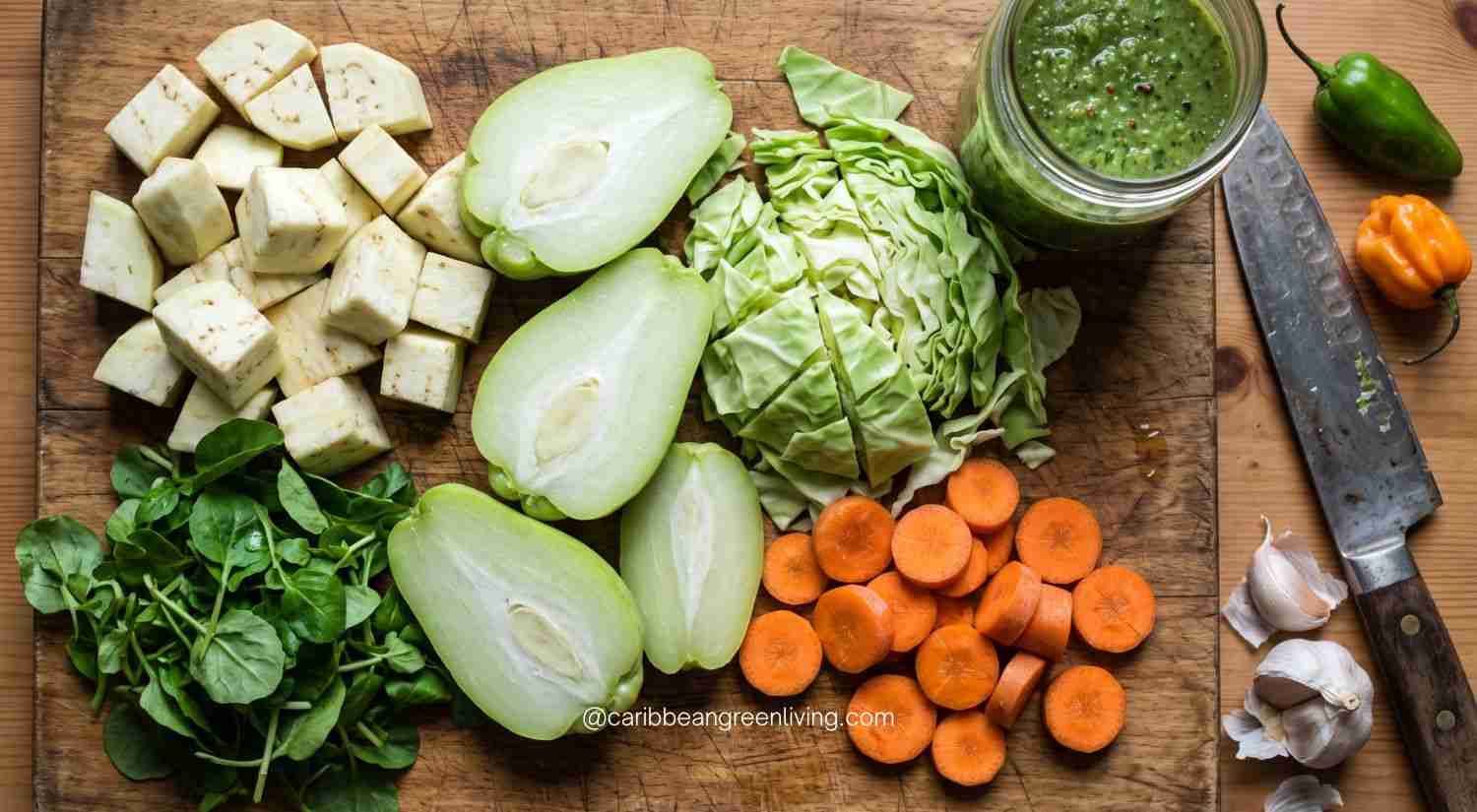
1. The Vegetable Cast: Selecting & Prepping the Foundation
The soul of a good legume lies in the balance between watery, tenderizing vegetables and sweet, structural vegetables.
The Creamy Body: Eggplant (Bòbòy)
- The Role: Eggplant provides the lush, velvety body that binds the stew together.
- The Prep Rule: Always peel your eggplant completely. Leaving the skins on will turn your legume dark gray and introduce tough, rubbery bits and unwanted bitterness. Choose firm, medium eggplants with fewer seeds to avoid bitter undertones.
- Check out our complete Eggplant Guide for more selection tips.
The Moisture & Mild Sweetness: Chayote / Mirliton (Christophine)
- The Role: Chayote gives the dish natural moisture, so you rarely need to add water to the pot. It breaks down into a soft, succulent texture.
- The Prep Rule: Peel thoroughly, halve, remove the soft inner seed core, and cut into chunks.
- Learn more in our Christophine (Chayote) Guide.
The Texture & Foundation: Green Cabbage
- The Role: Cabbage lends sweetness, body, and earthiness. It cooks down dramatically, adding weight to the mash.
- The Prep Rule: Remove the tough outer leaves and core, then roughly chop into medium wedges.
The Sweet Balancers: Carrots
- The Role: Carrots introduce a gentle natural sugar that balances the acidity of the citrus, the pungent garlic in the épis, and the floral heat of peppers.
- The Prep Rule: Peel and slice into thick rounds so they hold their integrity during the initial simmer.
The Verdant Finish: Watercress (Kreson) or Spinach
- The Role: Leafy greens bring an earthy depth and color. Watercress is deeply traditional in Haiti and adds a signature peppery bite, but baby spinach or tender Lalo (Jute Leaves) work beautifully as well.
- The Prep Rule: Wash thoroughly in cold water to remove grit, then roughly chop.
2. Choosing Your Savory Anchor: Meat, Seafood, or Plant-Based
While the vegetables are the body of the dish, the fond (the caramelized brown bits) at the bottom of the pot creates the savory backbone of the sauce.
- Beef & Oxtail: Beef chuck, brisket, or beef neck bones offer rich collagen that melts into the vegetables.
- Pork & Ti Salé: Salted pork belly or cured pork (ti salé) introduces traditional savory depth. (Be sure to desalt boiled meats first—see our guide on How to Clean & Desalt Meat Caribbean Style).
- Blue Crab & Conch (Lanbi): Coastal variations of légim feature fresh blue crabs tucked directly into the vegetables as they simmer, perfuming the stew with sweet seafood essence.
- Plant-Based / Vegan: To make a rich vegan legume, omit meat entirely and build umami using sautéed mushrooms, a touch of Djon Djon broth, or hearty lima beans.
3. The 3 Golden Rules of Authentic Technique of Haitian Legume
The difference between mediocre boiled vegetables and a restaurant-worthy Haitian legume comes down to three crucial stages:
Rule 1: Let the Vegetables Create Their Own Broth
Do not drown your vegetables in cups of water or stock. Once your seasoned meat is browned with Haitian Épis, layer the prepared cabbage, peeled eggplant, chayote, and carrots directly over the meat. Cover tightly with a heavy lid and turn the heat to medium-low.
As the vegetables steam, the chayote and eggplant will release their natural water, creating a rich vegetable broth that simmers the pot from within.
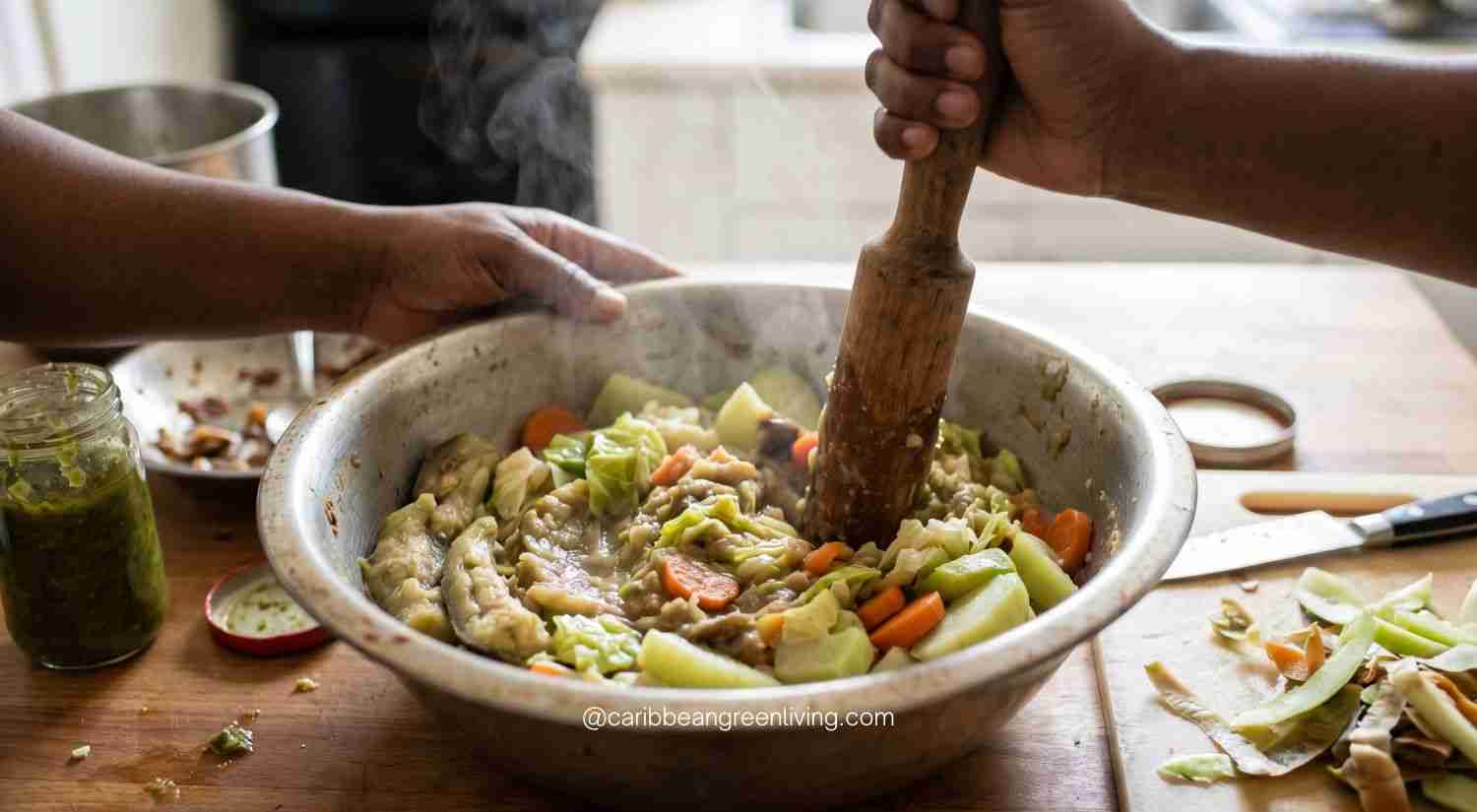
Rule 2: The Art of the Mash (Pile)
You cannot skip or rush the mashing step, but never use a blender or food processor. Pureeing the vegetables in a machine makes them gummy, aerated, and baby-food smooth.
- Once fork-tender, remove the vegetables from the pot using a slotted spoon into a wide bowl.
- Use a traditional wooden pestle (pilon), a heavy wooden spoon, or a potato masher to press and crush them.
- Aim for a thick, textured, uniform mash where small flecks of carrot and cabbage are still visible.
Rule 3: The Evaporation & Reduction Stage (Kwit Légim lan)
This is the single most important secret to Haitian legume.
Return the mashed vegetables to the pot with the braised meats and any pan juices. Stir well to incorporate the flavors, then leave the lid off or slightly ajar over medium-low heat.
Allow the excess vegetable liquid to simmer away slowly. Stir occasionally to prevent sticking. You will know your legume is ready when:
- The stew thickens and clings to your spoon.
- The color deepens from pale and translucent to a rich, warm golden-amber.
- A light, fragrant sheen of savory oil gently gathers at the perimeter of the pot.
4. How to Serve Haitian Legume
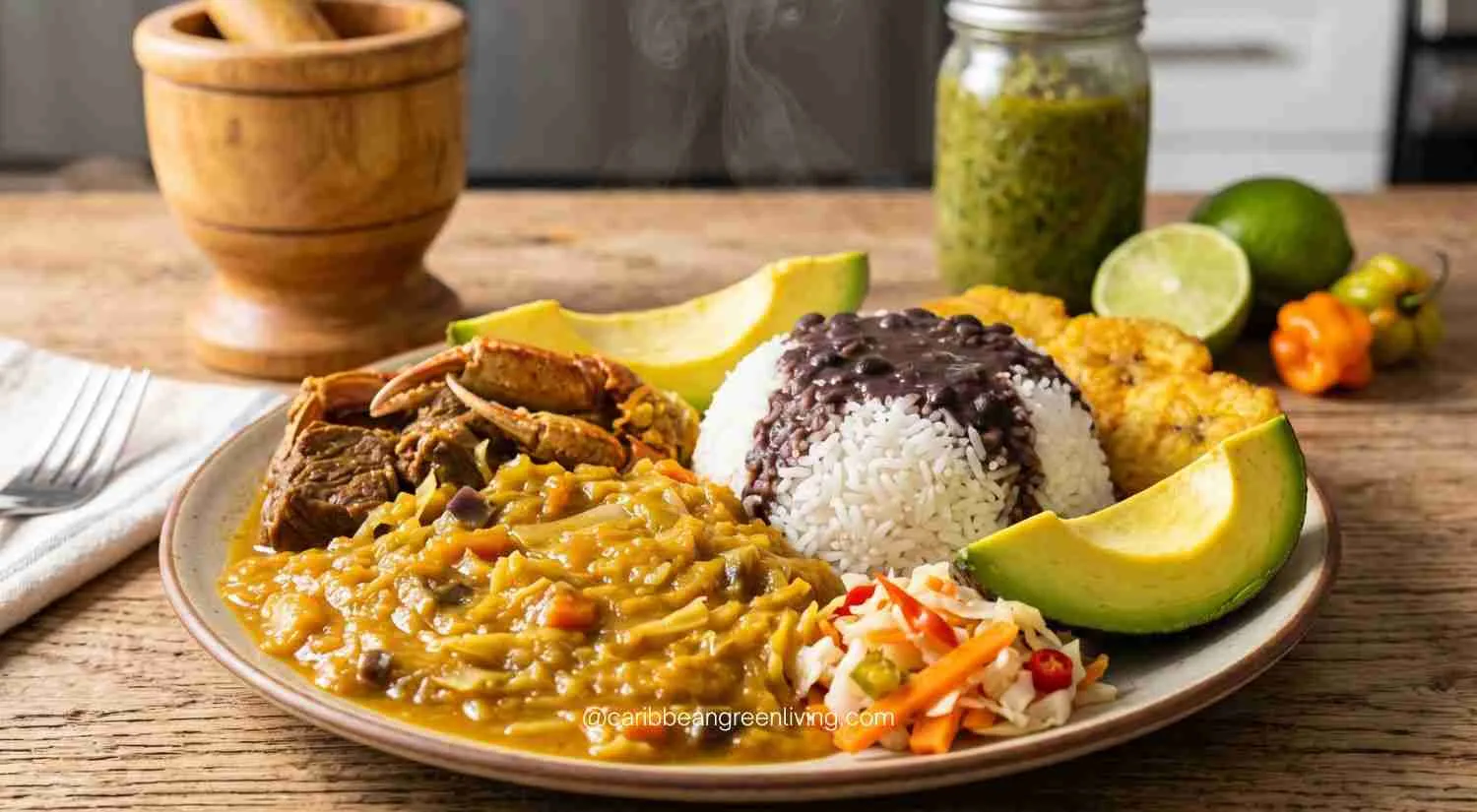
In Haitian homes, légim is never eaten in isolation—it is the centerpiece of a carefully harmonized plate:
- Fluffy White Rice (Diri Blan): The neutral canvas that absorbs the savory vegetable sauce.
- Black Bean Sauce (Sos Pwa Nwa): Ladled generously over the rice right alongside the legume.
- Thick Slices of Fresh Avocado: Cool, buttery, and strictly served on the side. The cool fat of the avocado balances the warmth and savory spices of the stew.
- Crisp Pikliz: A spoonful of sharp, spicy pickled cabbage and scotch bonnet provides a bright, acidic bite that cuts through the richness.
- Fried or Steamed Plantains: Sweet yellow plantains (bannann peze) or tender steamed green plantains complete the traditional spread.
5. Haitian Legume Troubleshooting & FAQs
Why is my legume bitter?
Bitterness usually comes from two things: leaving the skin on standard purple eggplants, or using old, oversized eggplants with heavy seed cores. Always peel your eggplant completely and salt the flesh for 10 minutes to draw out bitter liquids before simmering if using larger varieties.
Why did my legume turn out watery?
Vegetables like chayote and cabbage contain over 90% water. If your finished pot looks like soup, simply take the lid off and let it simmer on medium heat for an additional 15–20 minutes. Stir frequently so the bottom doesn’t scorch until the water cooks out and the sauce thickens.
Can I make legume ahead of time?
Yes! In fact, Haitian legume is famous for tasting even better the next day. As it sits in the refrigerator overnight, the vegetables absorb more of the epis and aromatics. It keeps well in an airtight glass container in the fridge for up to 4 days, and freezes exceptionally well for up to 2 months.
Ready to Cook?
Pair this technique with our step-by-step Haitian Beef Legume Recipe and make sure your pantry is stocked with homemade Haitian Épis before you begin!
Originally published on April 20, 2024. Revised and updated.


