Potato Guide: How to Choose, Prep & Cook Potatoes in Haitian Cuisine
Potatoes are one of those everyday ingredients that quietly show up everywhere in Haitian cooking. They may not always be the star of the dish, but they are an essential staple used in soups, salads, stews, side dishes, and simple home-cooked meals.
In Haitian cuisine, potatoes can be boiled, steamed, fried, baked, or roasted and are also an important ingredient in soups, stews, and salads. Their mild flavor works well with Haitian herbs, aromatics, and seasonings, making them a versatile addition to many everyday and traditional dishes.
Potatoes are especially familiar in dishes such as Soup Joumou and Salade Russe, but their usefulness goes well beyond those two classics.
Whether you are choosing the right potato for a Haitian recipe, wondering whether to peel it, or trying to decide between boiling, roasting, steaming, and frying, this guide covers the basics.

What Are Potatoes?
Potatoes are underground tubers and one of the world’s most widely used staple foods. Although they are often grouped with root vegetables in everyday cooking, potatoes are technically tubers, the enlarged underground portion of the plant where nutrients are stored.
Their relatively mild flavor is one of their biggest advantages in the kitchen. Potatoes readily take on the flavors of herbs, spices, aromatics, broth, sauces, and seasoning blends.
That makes them particularly useful in Haitian cooking, where ingredients such as garlic, parsley, thyme, scallions, onions, peppers, epis, and other seasonings create layers of flavor.
Potatoes in Haitian Cuisine
Potatoes have an established place in Haitian home cooking. They are practical, filling, versatile, and work with many of the ingredients already used in the Haitian kitchen.
Unlike an ingredient that is prepared primarily one way, potatoes can play several roles.
They can be a starchy side dish, a vegetable in a soup, Haitian bouillon (bouyon) or stew, part of a cold salad, or the base of a simple fried or roasted dish.


Soup Joumou
One of the most recognizable uses of potatoes in Haitian cuisine is Soup Joumou.
Potatoes are added alongside other vegetables and provisions and cook in the squash-seasoned broth. As they soften, they absorb the surrounding flavors while adding body and texture to the soup.
The goal is usually to cook them until tender without letting them fall apart.
Salade Russe
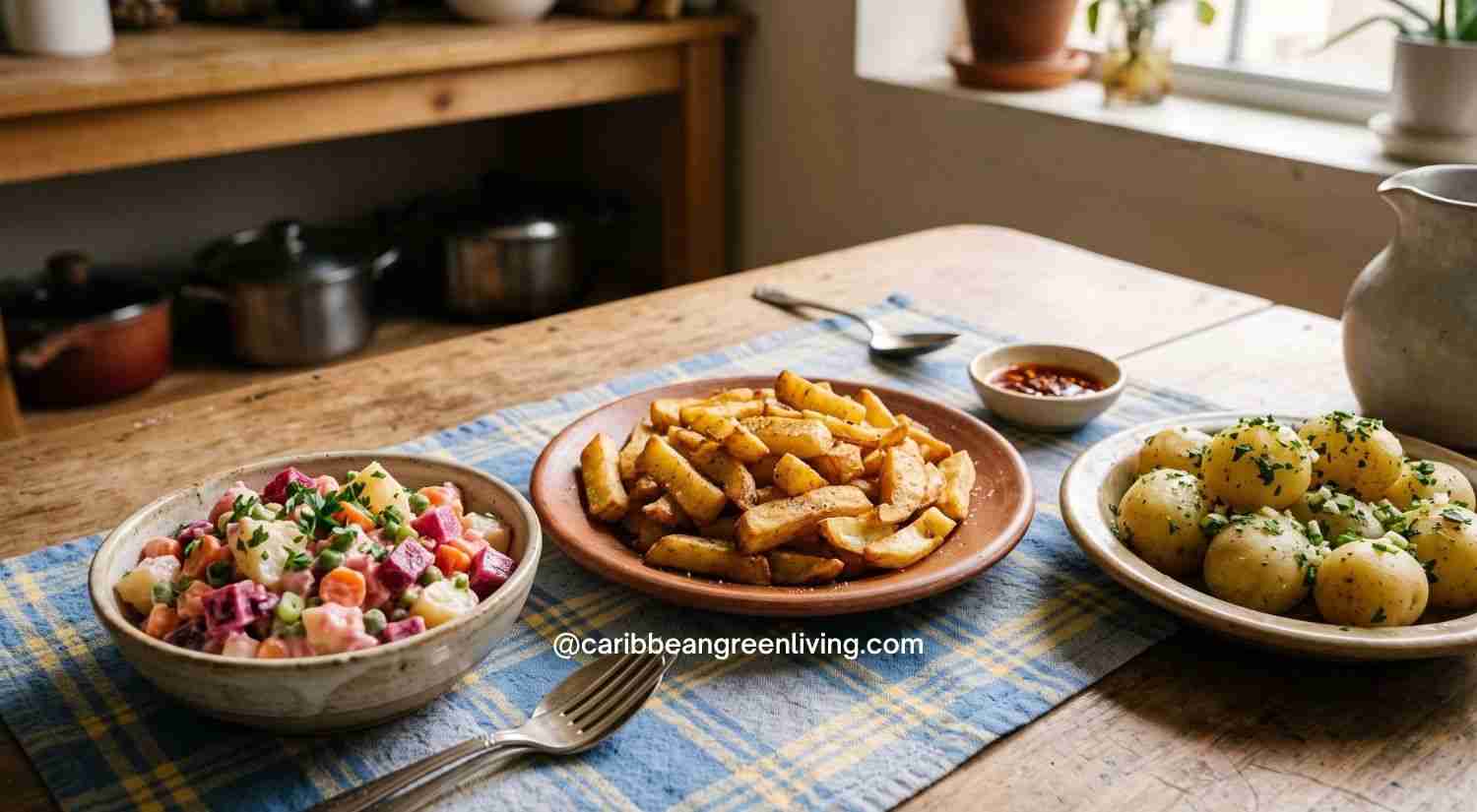
Potatoes are also essential to Haitian-style Salade Russe, or Russian salad.
Cooked potatoes are combined with vegetables such as beets and carrots and dressed to create the creamy, colorful salad commonly served as a side dish for special meals, Sunday dinners, holidays, and celebrations.
For this preparation, potato texture matters. The potatoes need to become tender while remaining firm enough to hold their shape when cut and mixed with the other ingredients.
Soups and Stews
Beyond Soup Joumou, potatoes can be added to Haitian soups, broths, and stews.
Because potatoes absorb liquid and seasoning as they cook, they work particularly well in dishes containing a flavorful broth or sauce.
Larger pieces are usually preferable when potatoes need to simmer for an extended period because smaller pieces can break down too quickly.
Boiled or Steamed Potatoes
Boiled and steamed potatoes are among the simplest ways to prepare them.
Serve them alongside meat, poultry, fish, seafood, vegetables, or a flavorful sauce. A simple potato doesn’t have to be bland—seasonings, sauce, or an accompanying dish can add plenty of flavor.
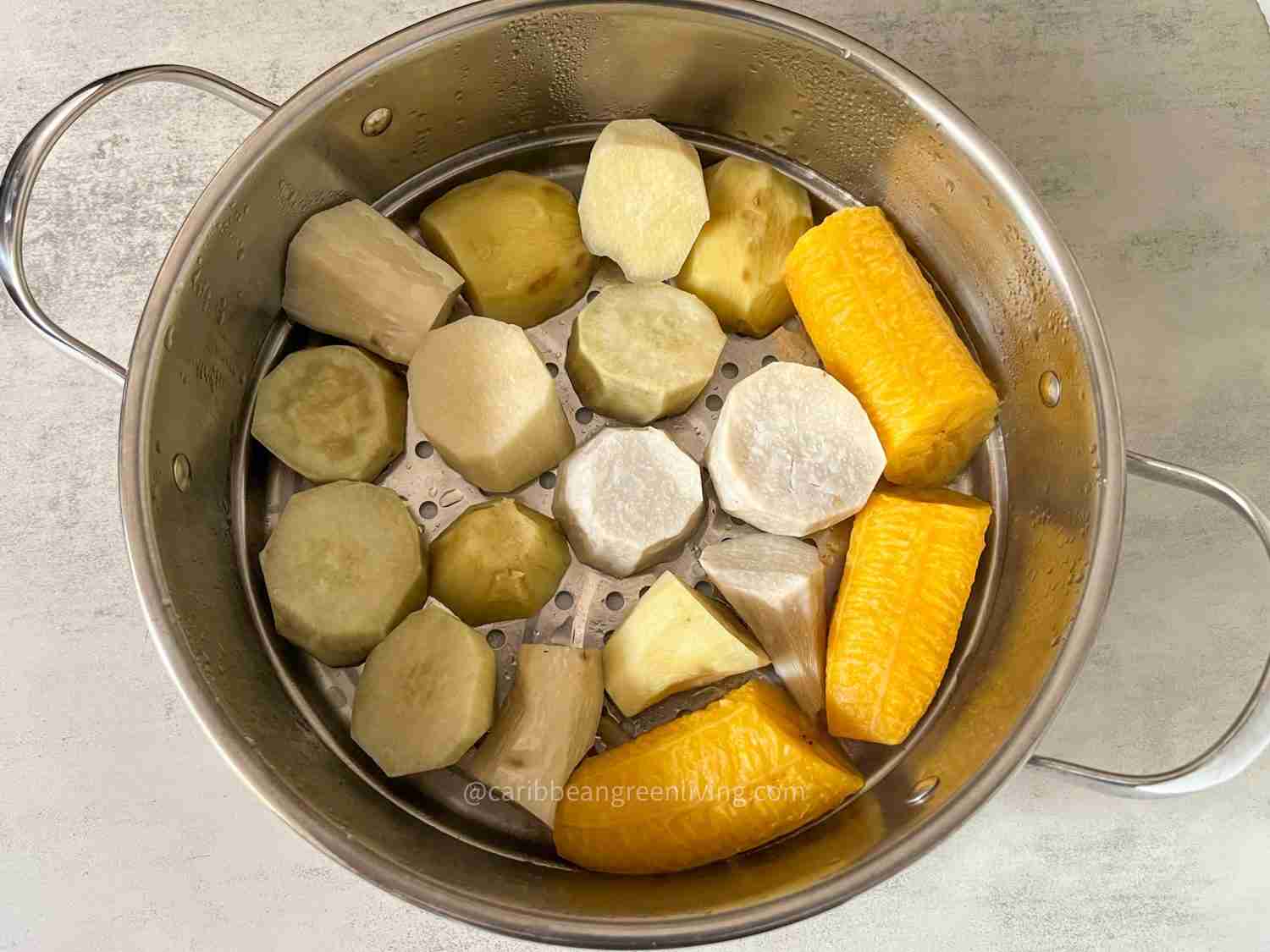
Steaming is especially useful when you want tender potatoes without letting them absorb as much water as they would during boiling.
A steamer basket makes it easy to steam potatoes without submerging them in water. I prefer this method when I want the potatoes tender while still holding their shape.
Fried Potatoes
Fried potatoes are another easy way to turn this basic ingredient into a satisfying side dish.
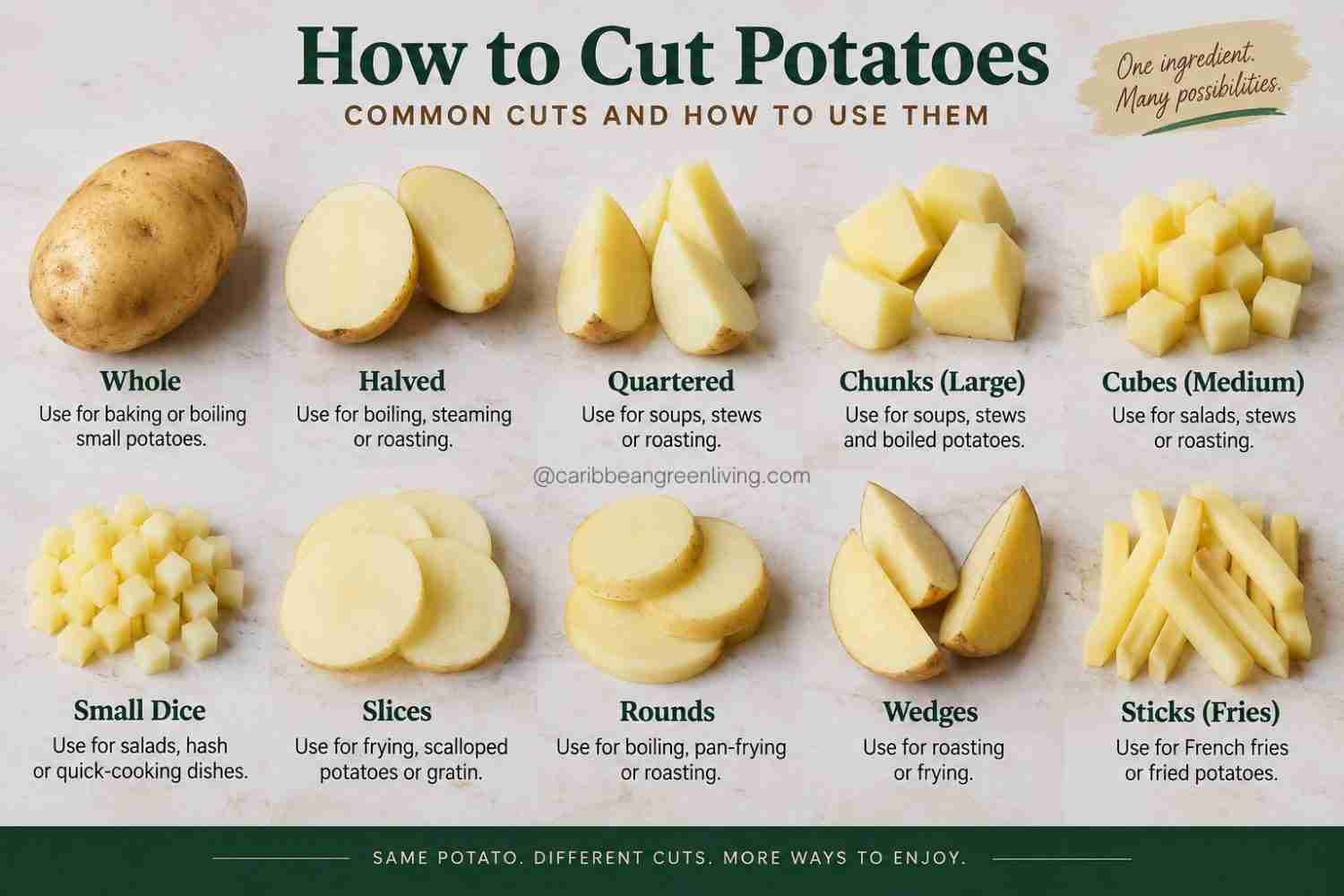
Cut them into slices, wedges, cubes, or strips, then fry until the outside is golden while the inside stays tender.
Potatoes can also be partially cooked before frying, depending on the recipe and desired texture.
Baked and Roasted Potatoes
Roasting brings out a different side of potatoes.
The oven’s dry heat creates browned, slightly crisp edges while keeping the interior soft. You can roast potatoes with onions, garlic, herbs, peppers, and seasonings, or serve them alongside roasted meat or poultry.
This method is also easy when you’re preparing several components of a meal at once.
Common Types of Potatoes
Not every potato cooks the same way. A potato’s starch and moisture content affect whether it becomes fluffy, creamy, firm, or crisp.
Russet Potatoes
Russets are high-starch potatoes with a fluffy interior.
Best for: baking, mashing, and frying.
They crisp particularly well when fried or roasted but can break apart more easily in soups if cooked too long.
Yukon Gold Potatoes
Yukon Gold potatoes have yellow flesh and a naturally creamy texture.
Best for: boiling, roasting, baking, soups, stews, and potato salads.
Their versatility makes them a useful all-purpose potato for many home-cooked dishes.
Red Potatoes
Red potatoes have a waxier texture and tend to hold their shape well after cooking.
Best for: boiling, steaming, roasting, soups and salads.
Their ability to remain intact makes them particularly useful when you want clearly defined pieces of potato in the finished dish.
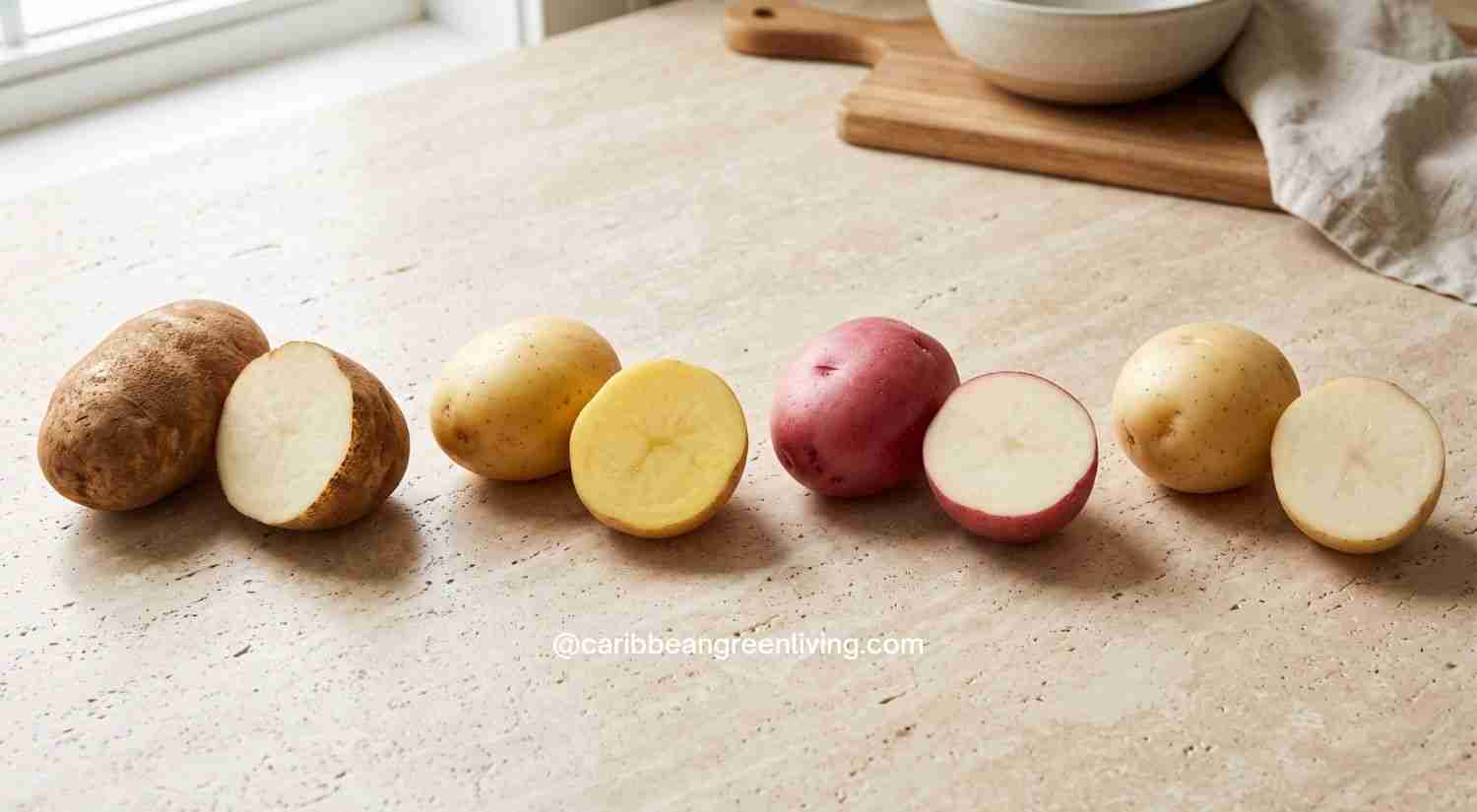
White Potatoes
White potatoes have relatively thin skins and a balanced texture that falls between very starchy and very waxy potatoes.
Best for: boiling, frying, roasting, soups and stews.
They are another useful all-purpose option for everyday cooking.
Baby and Fingerling Potatoes
Small potatoes are convenient for roasting, steaming, and boiling.
You can simply scrub them and cook them whole or cut them in half, making them especially useful for quick side dishes.
Which Potato Is Best for Haitian Cooking?
There isn’t one potato that is best for every Haitian recipe.
For soups and stews, choose potatoes that can become tender without immediately disintegrating. Yukon Gold, red, and white potatoes are good choices.
For Salade Russe, a potato that holds its shape after boiling is especially useful. Yukon Gold, red, or another waxy or all-purpose potato works well.
For frying, Russets are an excellent choice when you want a crisp exterior and fluffy center.
For roasting, Yukon Gold, Russet, red, white, and baby potatoes can all work. The choice depends on whether you prefer a creamier or fluffier center.
Should You Peel Potatoes?
Not necessarily.
Whether you should peel potatoes depends on the recipe, potato variety, skin condition, and the texture you want.
Thin-skinned potatoes such as red, white, and baby potatoes can often be cooked with their skins intact after thorough cleaning.
For certain Haitian soups, salads, and other traditional preparations, peeling may provide the texture and appearance you want.
If the potato skin is green, badly damaged, or heavily sprouted, trim generously or discard the potato when appropriate.
How to Prepare Potatoes
Before cooking, inspect the potatoes and remove any damaged areas.
- Wash and scrub them thoroughly, particularly if you plan to leave the skin on.
- Peel when necessary and cut according to your recipe.
Try to keep the pieces relatively uniform. Similar-sized pieces cook at approximately the same rate, which helps prevent some potatoes from falling apart while others remain undercooked.
If peeled or cut potatoes will not be cooked immediately, place them in cold water for a short period to help prevent discoloration. Drain and dry them well before roasting or frying.
How to Boil Potatoes
For evenly cooked potatoes, place the cut potatoes in a pot and cover them with cold water.
- Bring the water to a boil and cook until the potatoes can be easily pierced with a fork or knife.
Avoid cooking them longer than necessary, especially when preparing potatoes for salads. Overcooked potatoes can absorb excess water and fall apart during mixing.
How to Steam Potatoes
Steaming is an excellent alternative to boiling.
- Place similarly sized potato pieces in a steamer basket over simmering water, cover, and cook until tender.
Because the potatoes are not submerged, steaming can help preserve their texture and prevent them from becoming waterlogged.
How to Roast Potatoes
For good roasted potatoes, moisture is the enemy of browning.
- After washing or parboiling the potatoes, dry them thoroughly. Toss with oil and your preferred seasonings and spread them in a single layer on a baking sheet or roasting pan.
Avoid overcrowding the pan. Giving the potatoes room allows hot air to circulate and encourages browning instead of steaming.
Roast until golden on the outside and tender inside, turning as necessary for even browning.
How to Fry Potatoes
The best fried potatoes start with relatively dry potatoes.
- After cutting or soaking them, drain and dry thoroughly before they come into contact with hot oil.
- Depending on the size and style of the potatoes, they can be fried from raw or partially cooked first.
Season while they are still hot so the seasoning adheres well.
How to Keep Potatoes From Falling Apart in Soup
The potato variety, size of the pieces, and cooking time all matter.
- Choose a potato that holds its shape reasonably well and avoid cutting it too small. Add the potatoes at the appropriate point in the cooking process rather than automatically adding them at the beginning.
- Once the potatoes are tender, prolonged simmering can cause them to break down.
That may be desirable when you want to thicken a soup, but it is less desirable when you want distinct pieces of potato in dishes such as Soup Joumou.
How to Store Potatoes
Store uncooked potatoes in a cool, dark, dry, well-ventilated place.
- Avoid storing them in direct sunlight or next to heat-producing appliances.
- Do not wash potatoes before storing them. Extra moisture can encourage spoilage. Wash them when you are ready to cook.
It is also helpful to keep potatoes away from onions during storage. Both release moisture and gases that can contribute to faster deterioration when stored together.
Check your potatoes periodically and remove any that have spoiled.
Can You Freeze Potatoes?
Raw potatoes generally do not freeze particularly well without preparation because freezing can negatively affect their texture.
- For better results, potatoes can be partially or fully cooked before freezing, depending on how they will eventually be used.
- Roasted, mashed, or par-cooked potatoes generally freeze more successfully than completely raw potatoes.
For soups and stews, keep in mind that previously frozen potatoes may have a softer or slightly different texture after reheating.
What Flavors Pair Well With Potatoes?
One reason potatoes work so well in Haitian cooking is their ability to carry strong flavors.
They pair especially well with:
- Garlic
- Onion
- Scallions
- Parsley
- Thyme
- Bell peppers
- Hot peppers
- Black pepper
- Epis
- Citrus
- Broths and sauces
- Meat and poultry
- Fish and seafood
Instead of thinking of potatoes as a bland side dish, think of them as a base capable of carrying the flavors already present in the meal.
Potatoes vs. Other Haitian Provisions
Potatoes are only one part of the much larger group of starchy vegetables and provisions used in Haitian and Caribbean cooking.
Plantains, sweet potatoes, yams, malanga, cassava, breadfruit, and other provisions each bring their own flavor and texture to the table.
Potatoes are especially convenient because they are inexpensive, widely available, easy to prepare, and adaptable to many cooking methods.
Understanding how potatoes differ from other provisions also makes it easier to choose the right ingredient for a particular dish rather than assuming they are interchangeable.


Frequently Asked Questions
What potatoes are best for Soup Joumou?
An all-purpose or waxier potato that holds its shape well is a good choice. Yukon Gold, red, and white potatoes can work well. Avoid overcooking the potatoes if you want distinct pieces in the finished soup.
What potatoes are best for Salade Russe?
Choose potatoes that become tender but maintain their shape after boiling. Yukon Gold and red potatoes are good options.
Do potatoes need to be peeled before boiling?
No. You can boil potatoes with or without their skins. The best choice depends on the recipe and desired texture.
Can I steam potatoes instead of boiling them?
Yes. Steaming is an excellent way to cook potatoes and can help prevent them from absorbing excess water.
Why do my potatoes fall apart in soup?
They may be a very starchy variety, cut too small, or simply cooked too long. Use larger, evenly sized pieces and add them according to the cooking time required by the recipe.
Should potatoes be soaked before frying?
Soaking cut potatoes in cold water can remove some surface starch and can help produce a crisper result with certain frying methods. Dry the potatoes extremely well before frying.
A Haitian Kitchen Staple Worth Knowing
Potatoes may be simple, but that simplicity is exactly what makes them so useful.
In Haitian cuisine, they move easily from a bowl of Soup Joumou to a colorful Salade Russe, a pot of stew, a plate of fried potatoes, or a simple boiled or steamed side dish.
Knowing which potato to choose and how boiling, steaming, roasting, baking, and frying change its texture makes this everyday ingredient even more versatile.
The next time potatoes are on the menu, don’t think of them as merely a side dish. They are one of those dependable kitchen staples that can absorb the seasonings and flavors around them and become part of an entirely different dish.